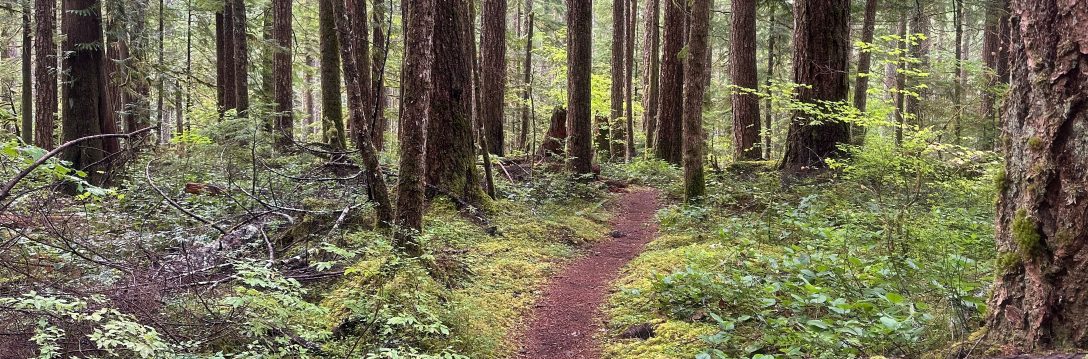
Rain. A word with the power to stop plans dead in their tracks. On any given Friday from November through May I’ll hear it interspersed throughout the conversations in the office. “Well we were going to do this hike this weekend but we can’t because it’s going to rain.” If one were to live by this logic out here, they would rarely get out. And this region is too beautiful to spend 6 months of the year staying dry and warm. If I’ve learned anything in my two years here in the PNW it’s this: if you want to do something outdoors, make a plan and do it. Forget the forecast. Just go.
And so that’s what I do. I go because I have the time and also because I aspire to be a sea-run angler. To fly fish the Puget Sound with confidence year-round and to unlock the secrets of its trout and salmon. Maybe I’ll catch my first sea-run cutthroat trout from the beach this trip, hopefully I’ll learn something new. Either way it’s an opportunity to work on my double haul casting, a technique used predominantly in saltwater flats fly fishing for distance and speed in the wind.
I step outside with a Tupperware bin full of my gear. The rain is pounding and the temps are in the low 40s. I pull up the hood on my rain jacket and load the car. It’s 9am, much later than I would usually get a start on a trip to a stream. But I’m trying to arrive at the beach just as the incoming tide picks up. Playing the tides and all that. Things that I’m trying to get dialed in on.
I start the car, queue up “Rain in Soho” by The Mountain Goats and head west. It’s an hour drive to the beach I’m headed to, a Washington state owned shellfish research station on public land in the Olympic Peninsula. There are closer beaches for sure, but revisiting this one has been in the back of my mind since my first trip there almost a year ago. Besides, the drive is so scenic that an hour feels like 30 minutes. There’s one truck at the research station when I arrive but the parking area for the general public is vacant. There are no parking stalls, I pull right up parallel to the beach.
I open the trunk and started getting ready. The rain is blowing in sideways from the wind rendering the overhead protection of my trunk useless. I slip into my waders and zip both jackets up to my chin creating as much water resistant coverage as I can. It’s only been a couple of minutes but my hands are already cold and wet. My fingers require a few focused breaths of hot air in order to secure a solid knot. I’m halfway soaked through my jacket already and haven’t made a single cast.
I tie on a small chum salmon fry pattern to start. This is the first baitfish to appear in the Puget Sound each spring and heralds the onset of a cutthroat feeding frenzy on the beaches. Or so I’m told. I’ve never actually seen a chum fry or trout going crazy after them in the handful of early spring beach trips I’ve been on. I flick my fry pattern in the shallow water and give it a few strips to test the action. It looks striking as it streaks holographic flashes against the dark pebbled substrate. Chum fry present or not, I have confidence in this fly.
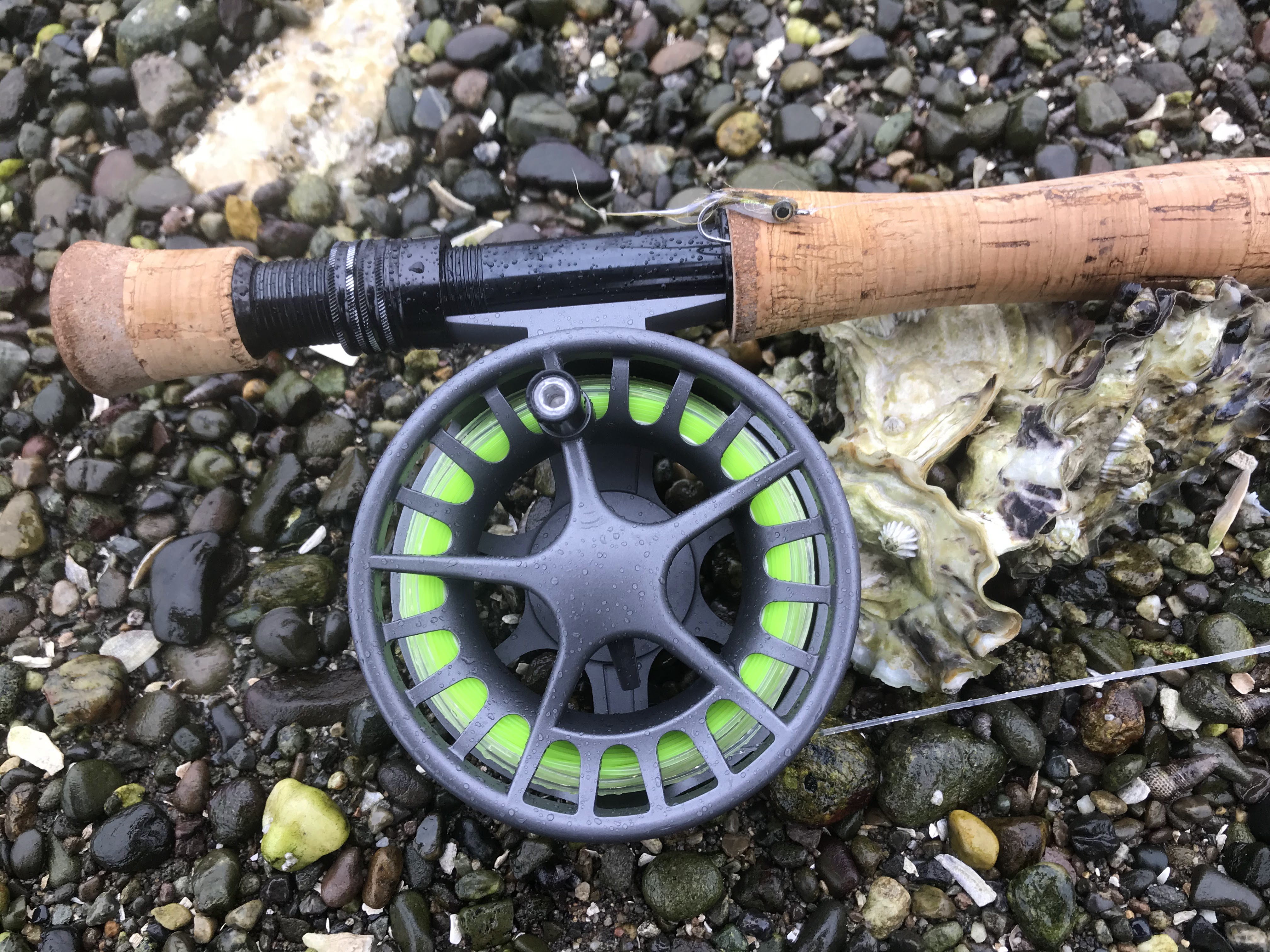
The wind is downright nuking around the point as I begin peeling line off of my reel to begin casting. I’m facing straight out and I feel it pushing at my right side, coming up the beach. I throw out some false casts to find my rhythm and length and wait for the wind to die down a bit before shooting out the line. Timing casts between the gusts can be unpredictable.
Cast. Strip. Strip. Striiiiiiip. Strip.
My rod tip is pointed down and hovering just above the water as I play around with different retrieval styles. Casting is going well, I’m finding my rhythm. But eventually I shoot out a cast and a gust of wind takes it, throwing my unfurling loop into an awkward somersault. Crap.
I strip the line in quickly hoping that my suspicion isn’t correct. My fears are confirmed – the fresh tapered leader has tied itself into a massive wind knot three feet up from the fly, wasting a solid third of the leader. I trim the knot off and pull the spool of tippet from my wader pouch to extend the leader with a blood knot. It’s been at least six months since I’ve tied one of these knots and I screw the order of operations up. Just like riding a bike, it comes back to me eventually. My second attempt fails from cold fingers. I pepper them with a series of hot breaths and try again. The third attempt starts out well but falls apart at the critical moment. I put the spool of tippet away and fish with a shorter leader.
Part of becoming a sea-run angler is building a well rounded fly box. There are the important baitfish species that are present from spring to fall – chum fry, herring, and sand lance. Then there are a myriad of non-baitfish food sources like shrimp, squid, and euphasiids (krill). There are all sorts of impressionistic patterns out there that don’t imitate any one thing in particular but just look like easy calories to a fish. The naturalist in me is more drawn to replicating specific species as closely as possible. In doing so, I’m able to better educate myself on the biodiversity of species found within the Puget Sound that I would be otherwise unaware of.
Last week I spent some time reading about krill which compose a large part of a sea-run cutthroat’s diet throughout the winter and early spring (along with shrimp and squid). I studied existing krill patterns and along with some reference photos of real specimens, sat down at the vise and freestyled my own pattern. With no sign of chum fry in the water, I figured I would give the new pattern a try.
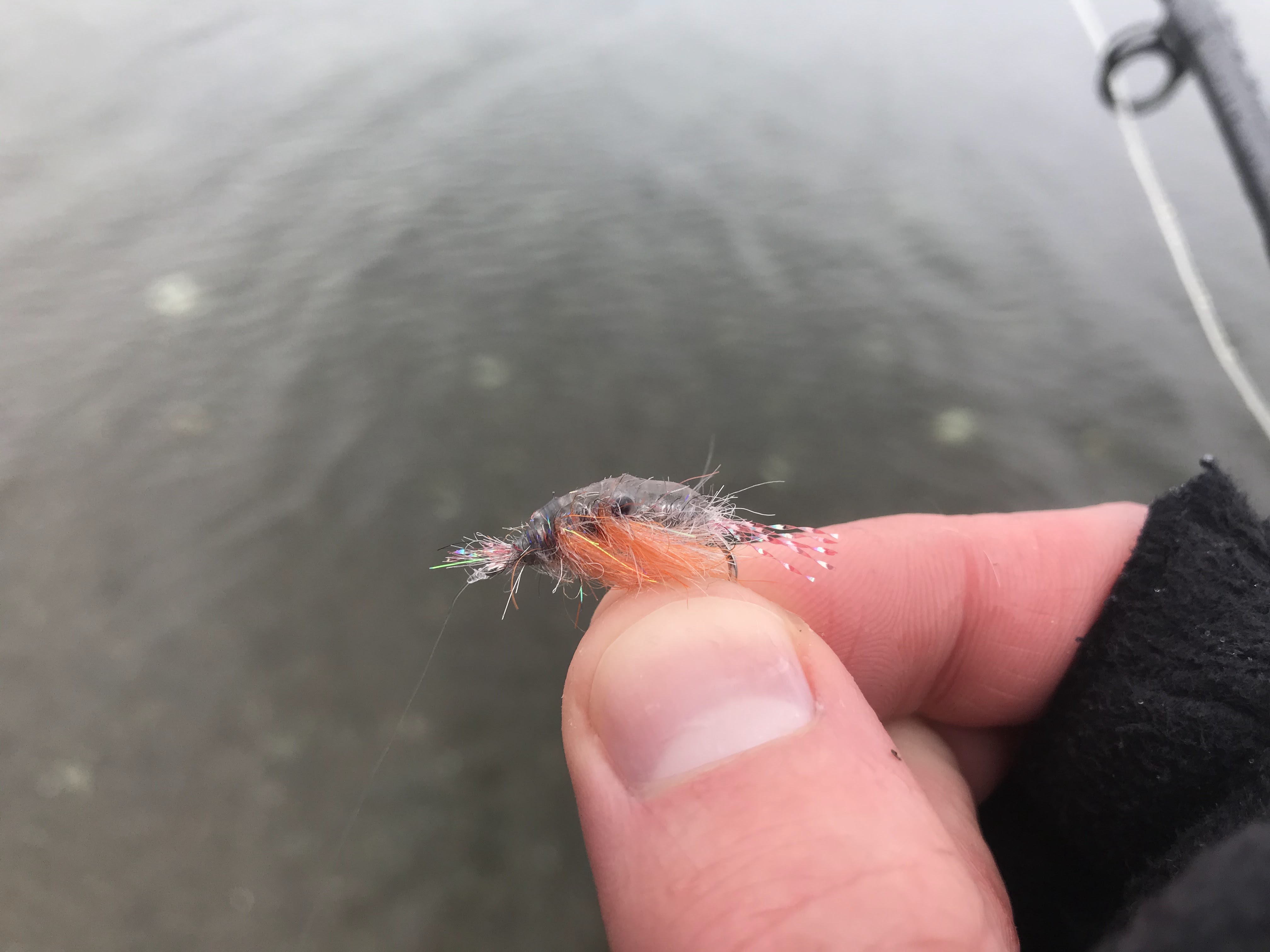
Cast. Striiiiiiip. Pause. Striiiiiip. Pause.
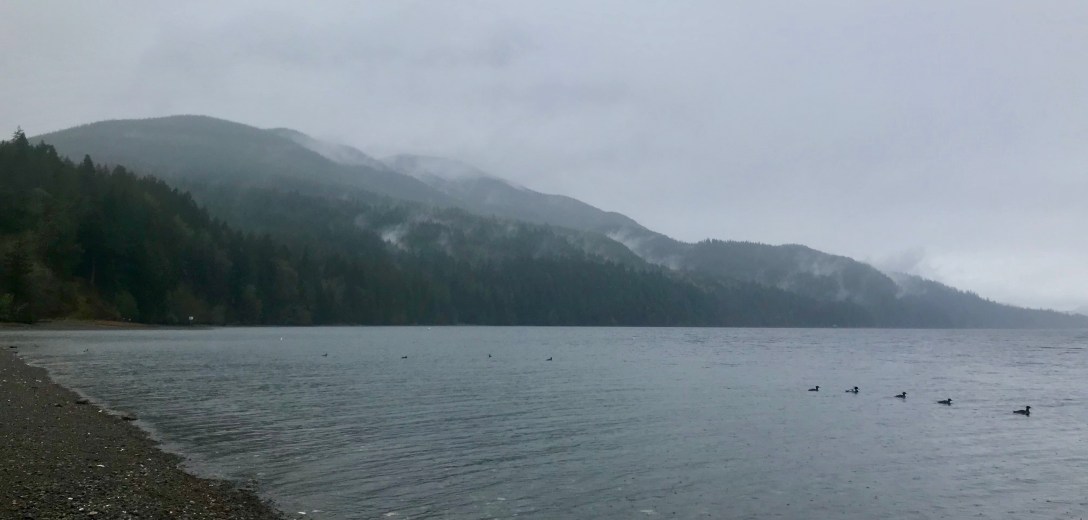
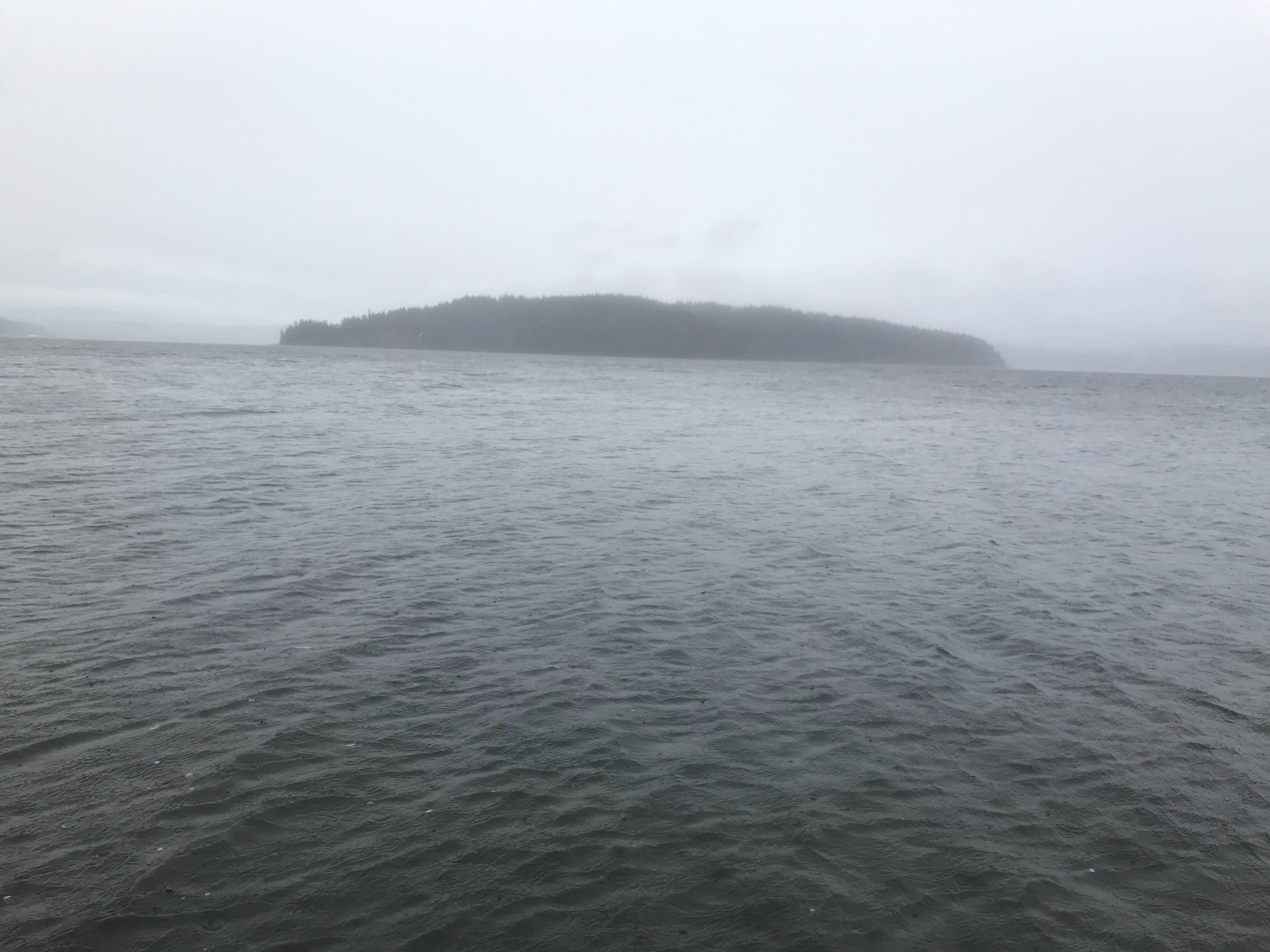
I slow my retrieval speed down considerably. This gives me time to take in my surroundings. There is a a hazy fog rising off of the mountains to my left. I look directly across the bay and try to estimate how far away the next shoreline is. Numerous species of waterfowl patrol the bay just outside of my casting range, diving and coming up with mouths full of seaweed. I feel resistance on a few retrievals and instinctually strip set. I come up with some seaweed as well.
The wind is really picking up now. One of my casts lands without making a splash and I feel no weight at the end of the line. I finish the retrieval and am left staring down at a bare leader. My fly must’ve struck the beach behind me in the wind and popped off. I turn around and start combing the beach for it. A few paces up the beach I spot the shimmer of tinsel. I pick my fly up off of the beach and head back towards the car. Some hot coffee sounds good right now.
Editor’s Note: After nearly six years of existence as thepathlessflyfished.wordpress.com, the blog is entering into a new era…welcome to tplff.com! I’m grateful for the platform this blog has given me to showcase two of the things I love to do most: fly fishing and writing. It was long overdue for a URL face lift. Thanks for reading and riding with me. -Sam
Discover more from The Path Less Fly Fished
Subscribe to get the latest posts sent to your email.

 The Path Less Fly Fished
Hi Sam,
I love your blog! Thank you for sharing your fly fishing adventures with us. I feel like I’m tagging along with you. Your writing is marvelous.
LikeLike
Thank you for the kind words, Sara, this means a lot. And thank you for being so supportive of my interests from such a young age. You’ve made a lasting impact on me for sure. I hope you’re doing well!
LikeLike