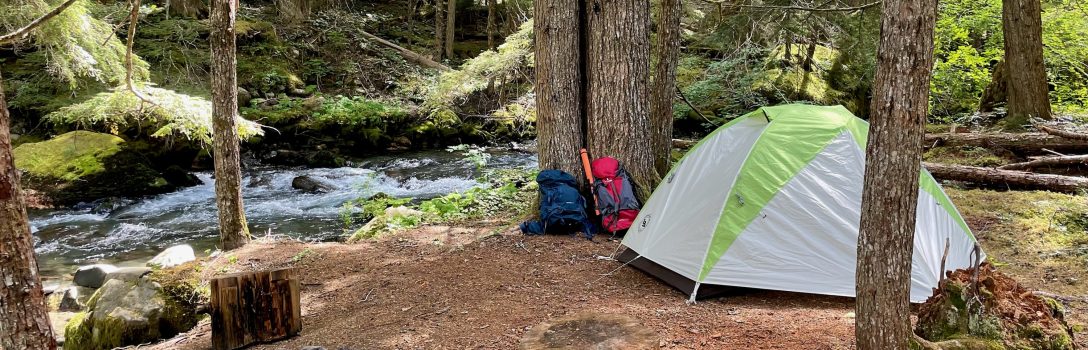
The shrill of a solitary olive-sided flycatcher sounds like an alarm clock reverberating through the woods. I roll over in my sleeping bag to grab my phone from the pocket overhead and check the time, 4:58AM. Two minutes before my digital alarm is set to sound. I’ll take the flycatcher any day.
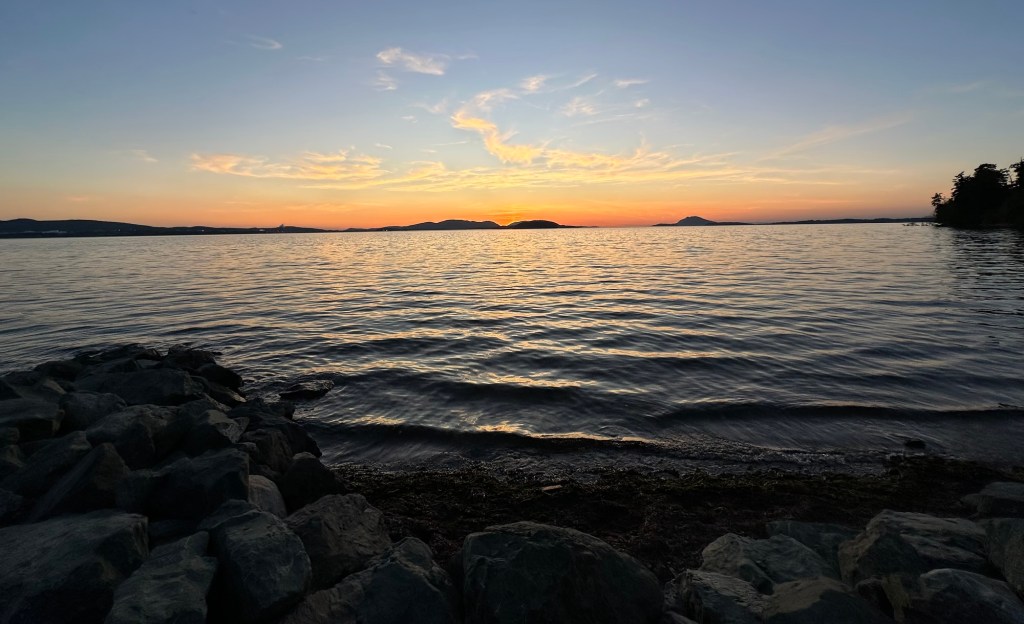
Unzipping the tent, I crawl out and gaze around; all is still at the campground on a Friday morning in early July. I waste no time in breaking down camp, I am on a solo mission this weekend. The previous evening, I took the ferry over to the Seattle side of the water and spent the night at Bay View state park. I made it over just in time to set up camp in the waning light of golden hour before catching a brilliant sunset from the beach. My goal in camping here is to better position myself to secure a first come, first served campsite at a small campground deep in the North Cascades. If all goes to plan, it will serve as the perfect base camp to some native cutthroat trout filled adventures. Trust the plan.
It’s a three hour session behind the wheel to the campground. I top off the gas tank and fill up my own with a cup of black coffee and a breakfast sandwich from a coffee hut aptly named Angler’s Coffee (couldn’t resist…). I’m ready for the open road.
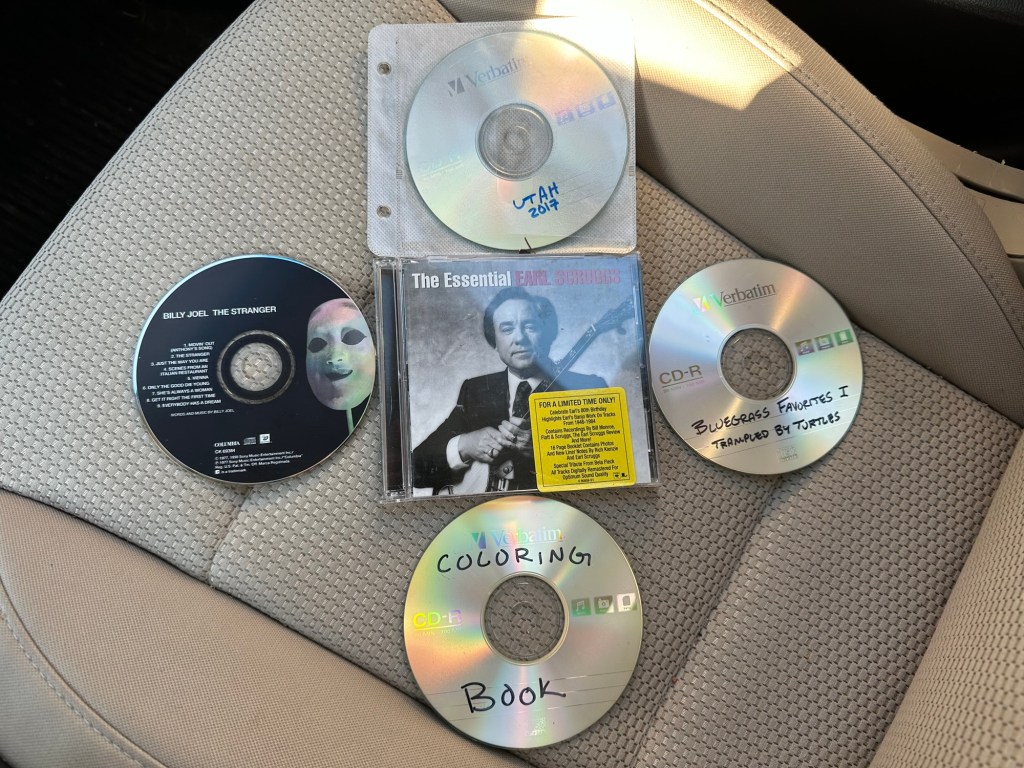
I made a rule for myself on this road trip and that is, no streaming music or podcasts. Only CDs. It was a nostalgic rush digging through my collection of discs and pulling out contenders for the drive. At the risk of sounding old and snobby, there is just something different about CDs. Something that digital files can never be. These are mementos of a time and place as much as they are a form of media. They have accompanied me on some incredible trips. They have laid the back track to so many great memories. They have shared the same physical space with people that I love. I will keep them around and use them as long as I’m able.
The anticipation grows as each hour passes. By the fifth CD, I’m turning off of the North Cascades Highway and only thirty minutes out from camp. I pass a couple of groups of hopeful PCT hitchhikers (sorry, car’s loaded with gear) and leave the pavement for one of the most forsaken potholed hell rides I’ve ever had the pleasure of experiencing. Rounding the final bend with all tires still inflated, I can see it sticking out like a sore thumb in the distance; a single vacant campsite. It’s fully exposed to the blazing sun, but it will give me a place to pitch my tent within close striking distance to a number of small streams that I plan to explore. Plus, any campsite with a trout stream flowing in earshot of your sleeping bag is worth its weight in gold. I set up camp enough to show signs of occupancy, deposit the ten dollar per night use fee and set off on my next mission; finding cutthroat trout.
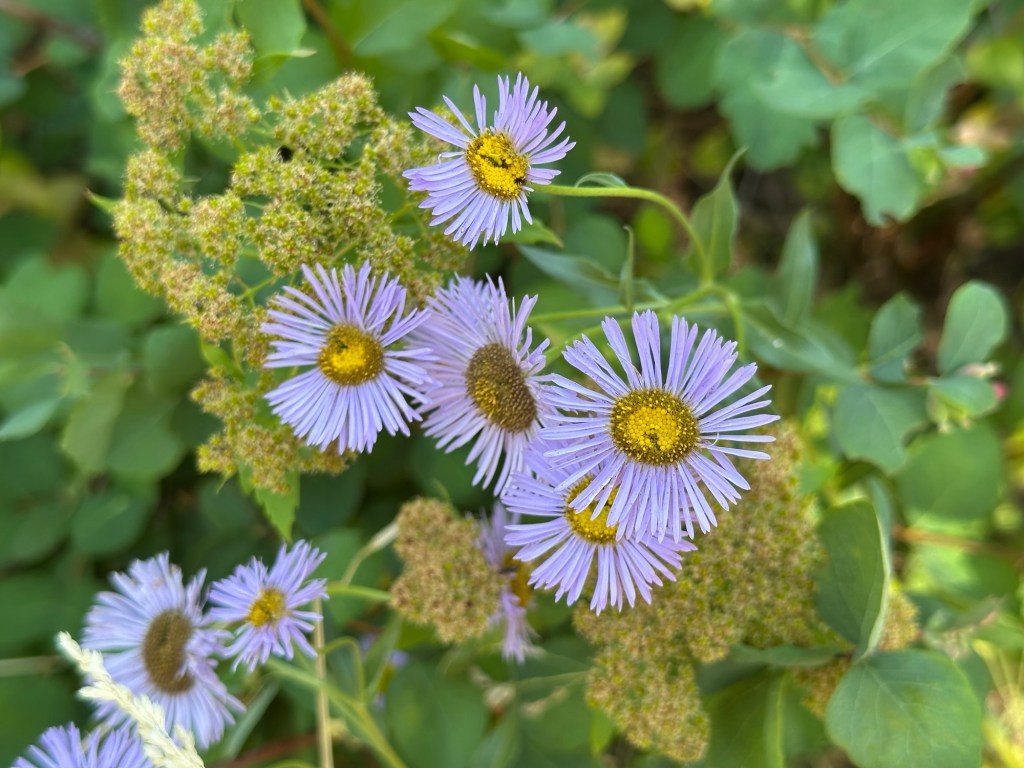
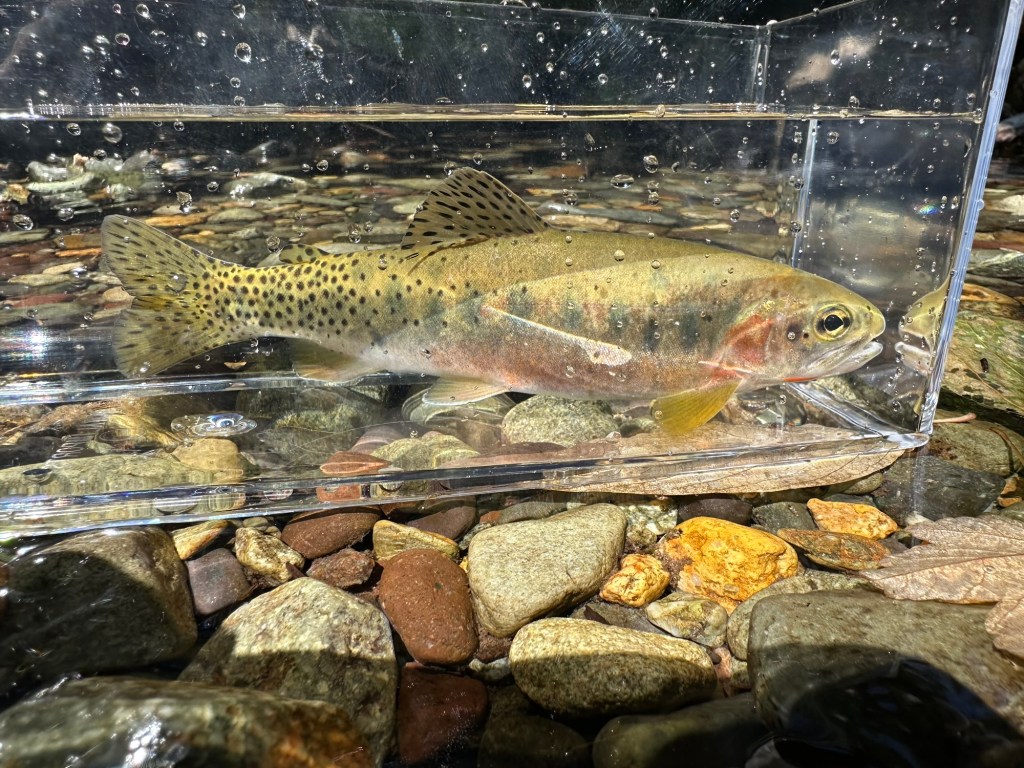
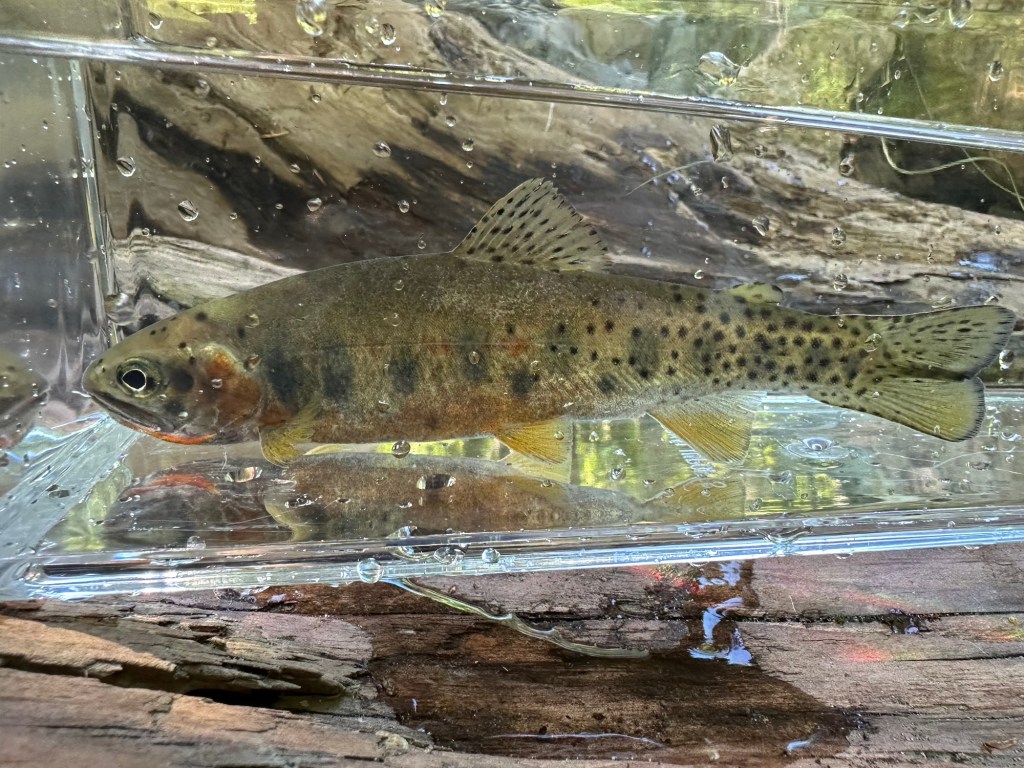
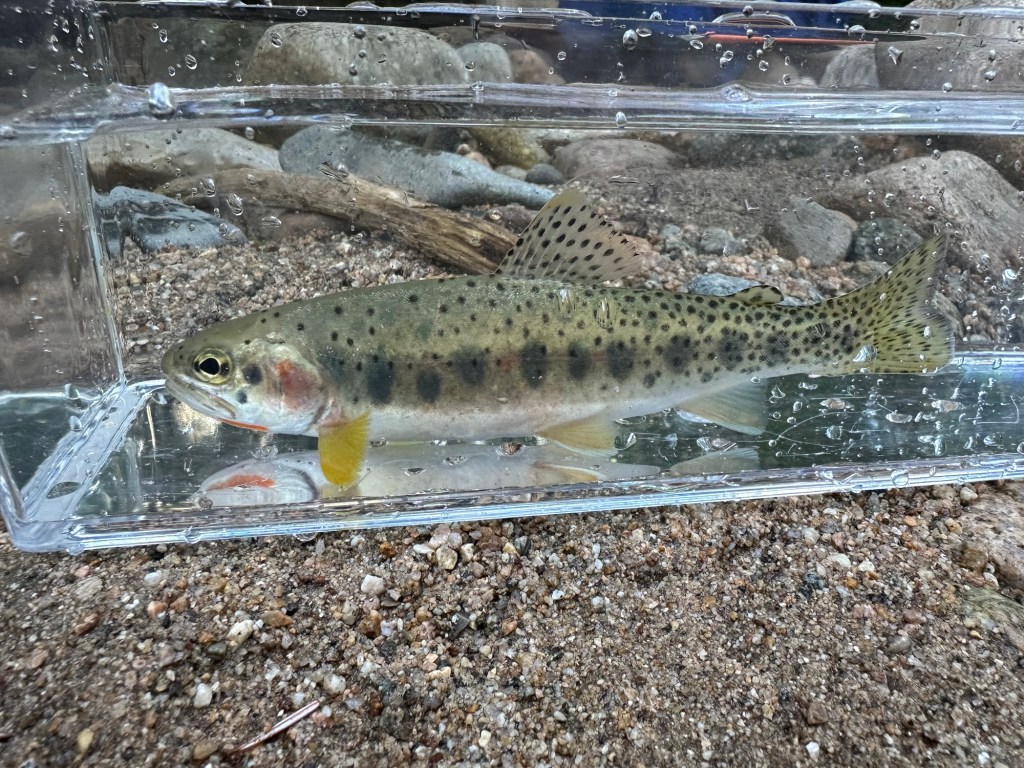
Specifically, the Westslope cutthroat trout. More specifically, the Clearwater-Eastern Cascades subspecies of Westslope cutthroat trout. With the help of a bona fide fisheries biologist, fellow Washingtonian and native trout enthusiast (shoutout to Gary at Native Trout Fly Fishing), I was able to access a number of scientific reports containing details about where this species was observed to exist at one point in time. This wouldn’t be my first trip targeting this species in the Cascades. I’ve been fortunate enough to catch a handful of these palm sized gems from small headwater streams over the past few seasons; at least enough to know that they’re special and worthy of devoting a multi-day trip towards.
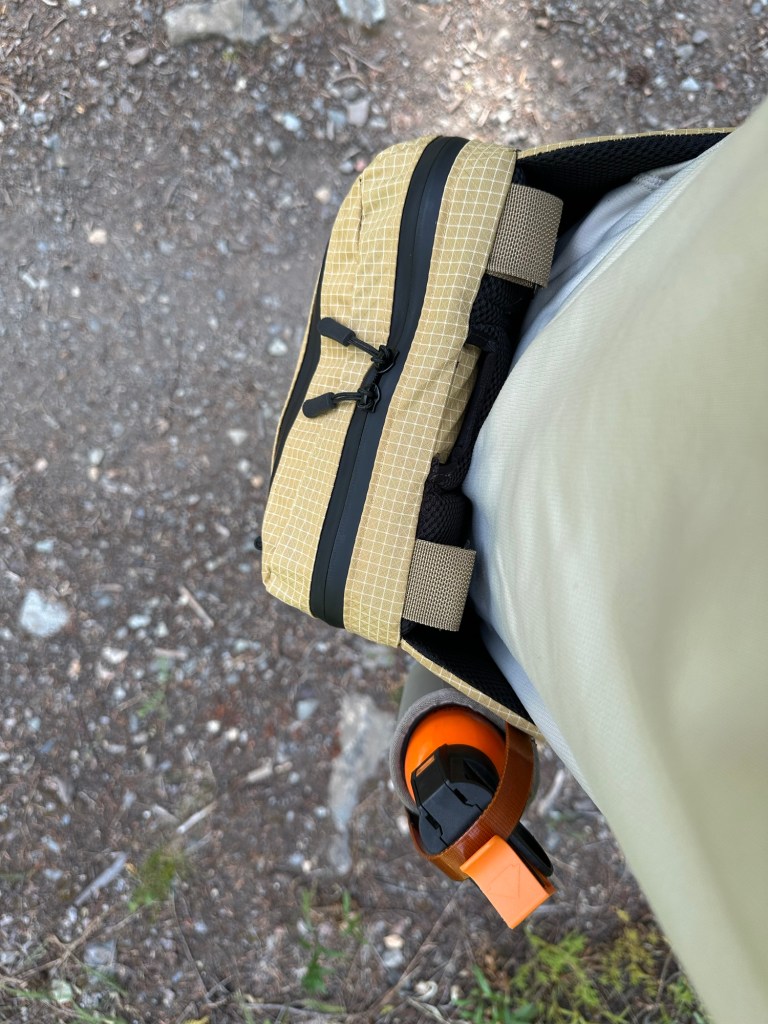
The trailhead used to access the first stream is less than a mile away from the campsite. I clip my recently completed hip pack around my waist and load my bear spray onto the side panel (more details on this project in the future). It’s too hot for waders, so I slip on some thin neoprene socks and my wet wading boots. I tuck my food bag and an extra Gatorade in the backpack and am ready to go.
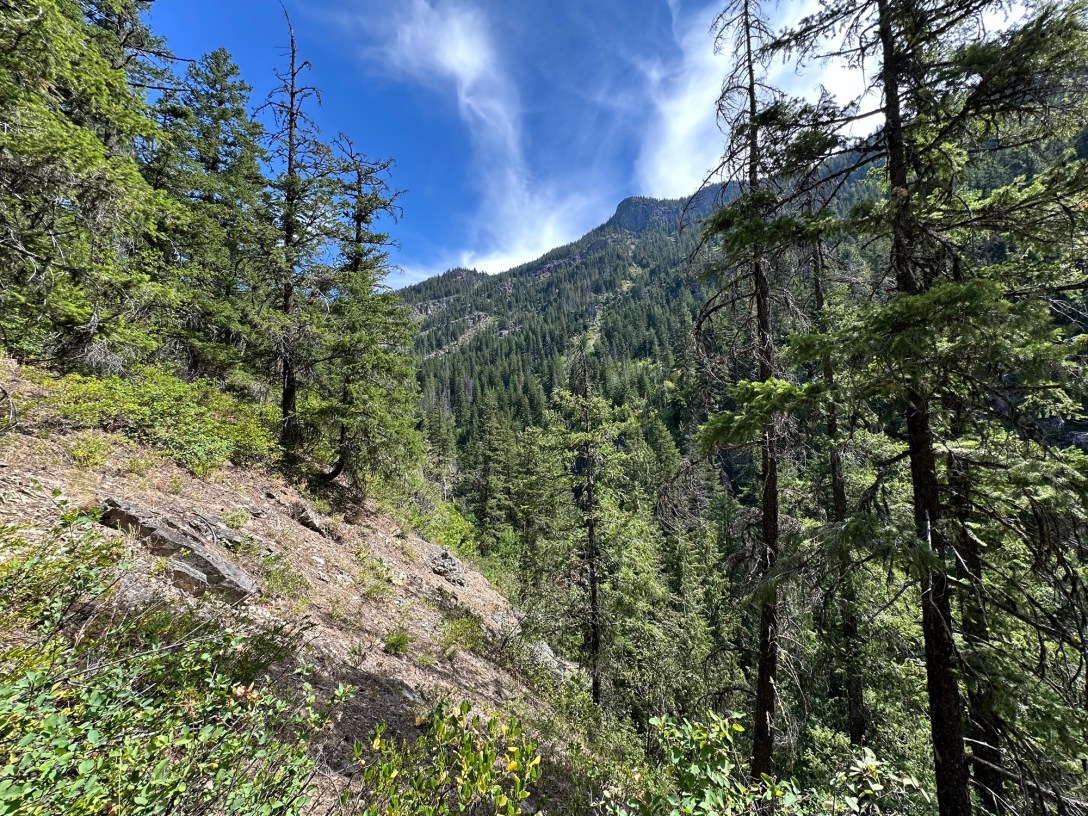
The incline starts out gradual but is unrelenting. I know that I’ll be climbing steadily for the next mile and a half or so. On the exposed trail and with temps soaring into the eighties, I take my time with it. Still, I am eager to lay eyes on the stream. High up on a ridge, I can hear, but not see, the river far below. All there is to do is keep moving forward and hope that you will meet it. Trust the map.
Rounding a corner, I hear the unmistakable sound of rustling in the huckleberry bushes to my left side. I freeze and let out a hearty, “HEYYYYYOOOOOO”. I pause, my hand clutching the bear spray on my hip. The jostling stops. Slowly, I creep around the corner. Two ladies, as startled as I was, are picking berries into small pails. Our body language acknowledges the shared confusion and relief without words. We exchange a quick greeting while my adrenaline calms.
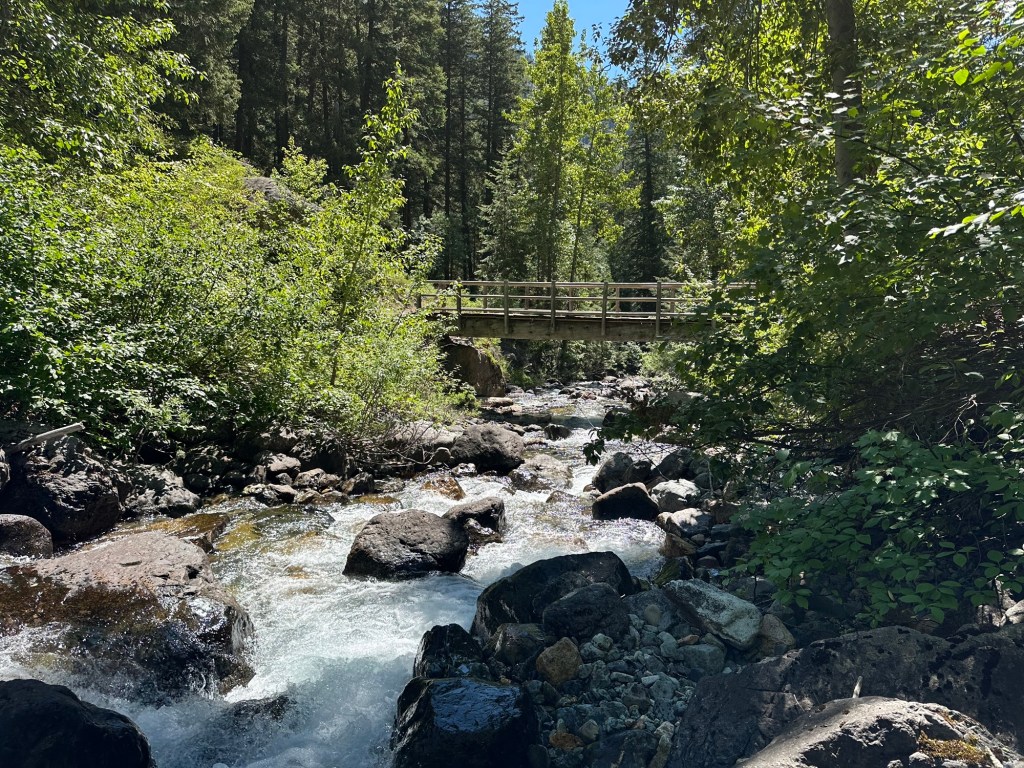
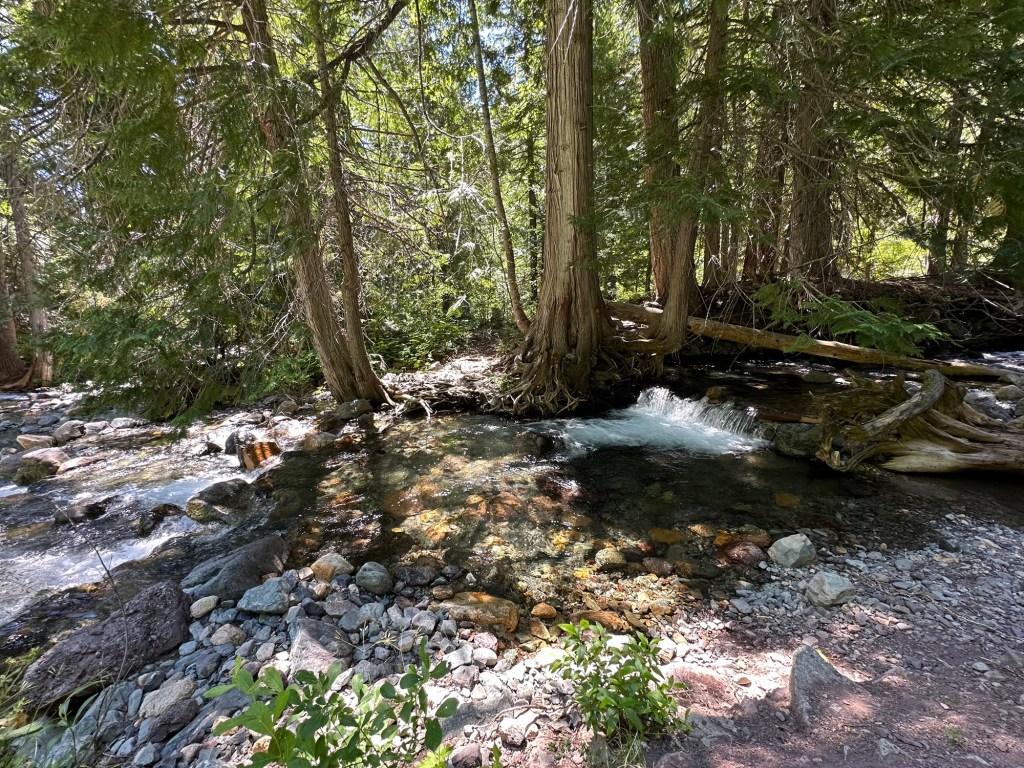
It’s not much longer until I round a bend that puts the wooden bridge within view. This is the moment of truth, my first glimpse at the river. Is it running too high? Too low? In a canyon far below the bridge? All of the questions that fill your head on the hike in. I peer over the side of the bridge and those fears are squashed; perfect conditions. Ecstatic, I climb down to the water’s edge and start gearing up.
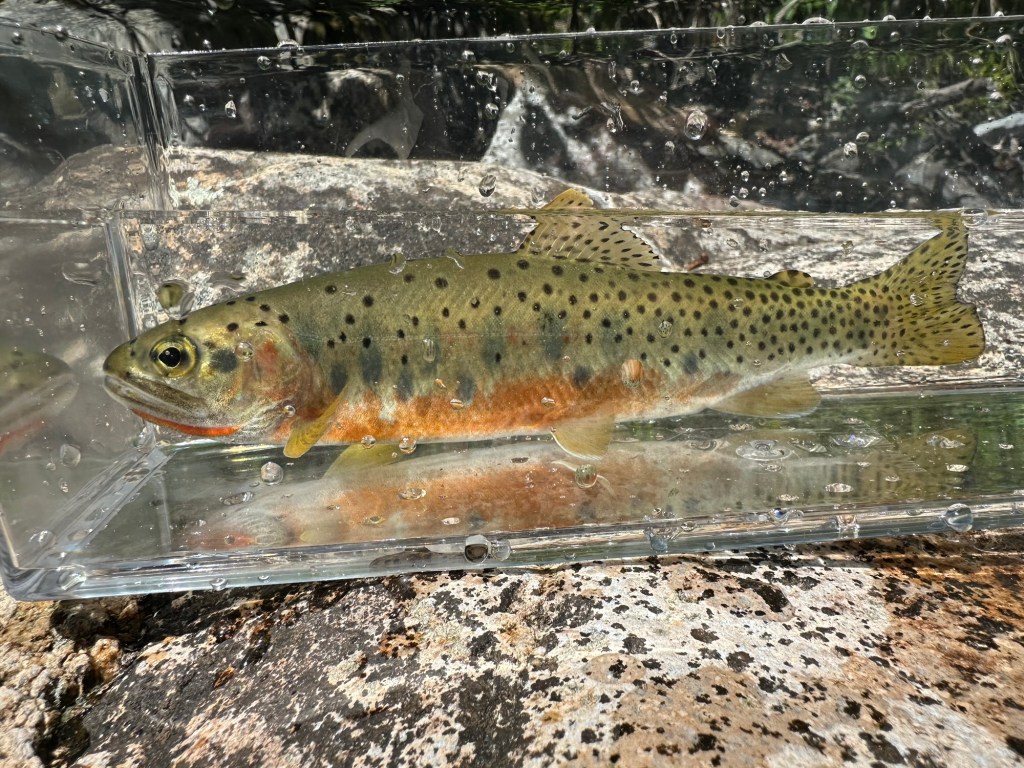
One of my goals this summer and moving forward is to minimize the amount of time that a fish spends out of the water after landing it. To achieve this, I brought along a new tool with me on this trip; a clear acrylic planter tray that will act as a viewing tank. The planter tray serves a two fold purpose: keeping the trout completely submerged in cold water, and allowing for more vibrant and complete photos of them. I fill it with the rushing oxygenated snow melt and find a flat boulder to stage it on.
Stringing the line through my seven foot fiberglass three weight, I start to think about which fly to start with. On small streams like this in the summer, the choice shouldn’t be overthought; something bushy and dry. I pluck a parachute style Royal Madam X from my box. The previous week I had put in some late nights at the vise refilling the empty rows of my stream box, making sure that it wouldn’t go empty on me out here. (I wouldn’t lose a single fly on the entire trip)
Flicking a short cast into the pool just downstream of the bridge produces an immediate response, but I miss the connection. Two passes. Three passes. Wham! This time I connect as I watch an apricot tinted flame streak across the pool.
Gently scooping the cutthroat from my net to the tank, I’m struck with an exhilarating feeling of childlike wonder that rarely subsides over the next two days. Nine years of chasing native trout and the thrill has only grown. As long as I’m able, I plan to continue making these trips to the quiet corners of the world that they call home. Trust that you will.
Discover more from The Path Less Fly Fished
Subscribe to get the latest posts sent to your email.

 The Path Less Fly Fished