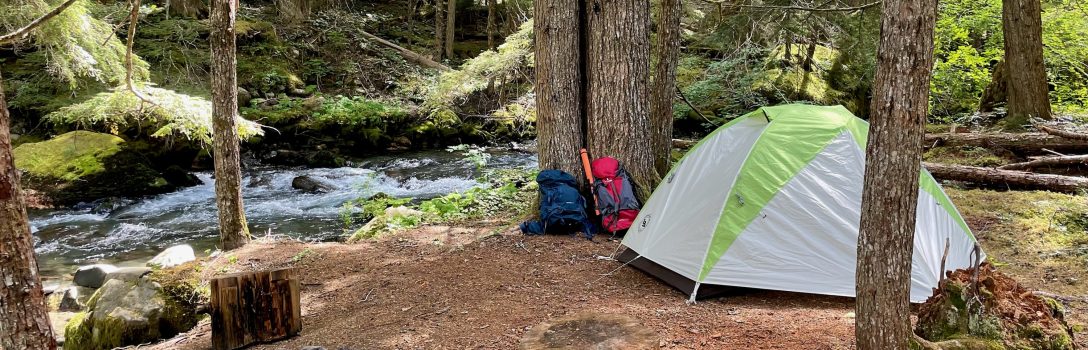
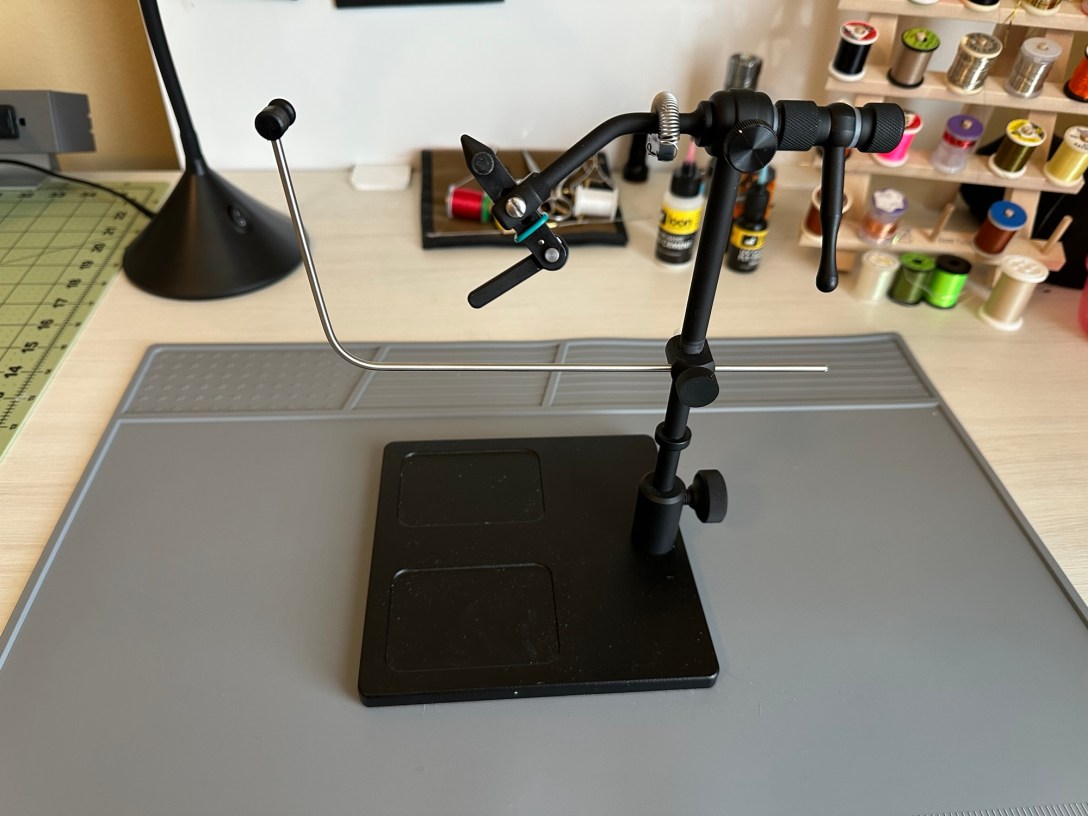
I want to start something new and a bit different. I’ve written about fly tying on here before, but more in the meta sense and less in a kind of show-and-tell platform. The recent acquisition of my dream vise has had me spending ample time breaking it in at the tying desk. Most nights I unwind by putting on some good music and tying a couple of flies before bed.
Any longtime readers will know that I’m notoriously not great at posting on any sort of consistent basis. I intend, however, to make this at least a semi regular feature as I’m tying flies throughout the year.
Tomorrow, Jill and I will be heading to the Oregon coast for the weekend. All of the patterns from this post were tied in preparation of this and with some other upcoming Pacific coast excursions in mind. Stay tuned.
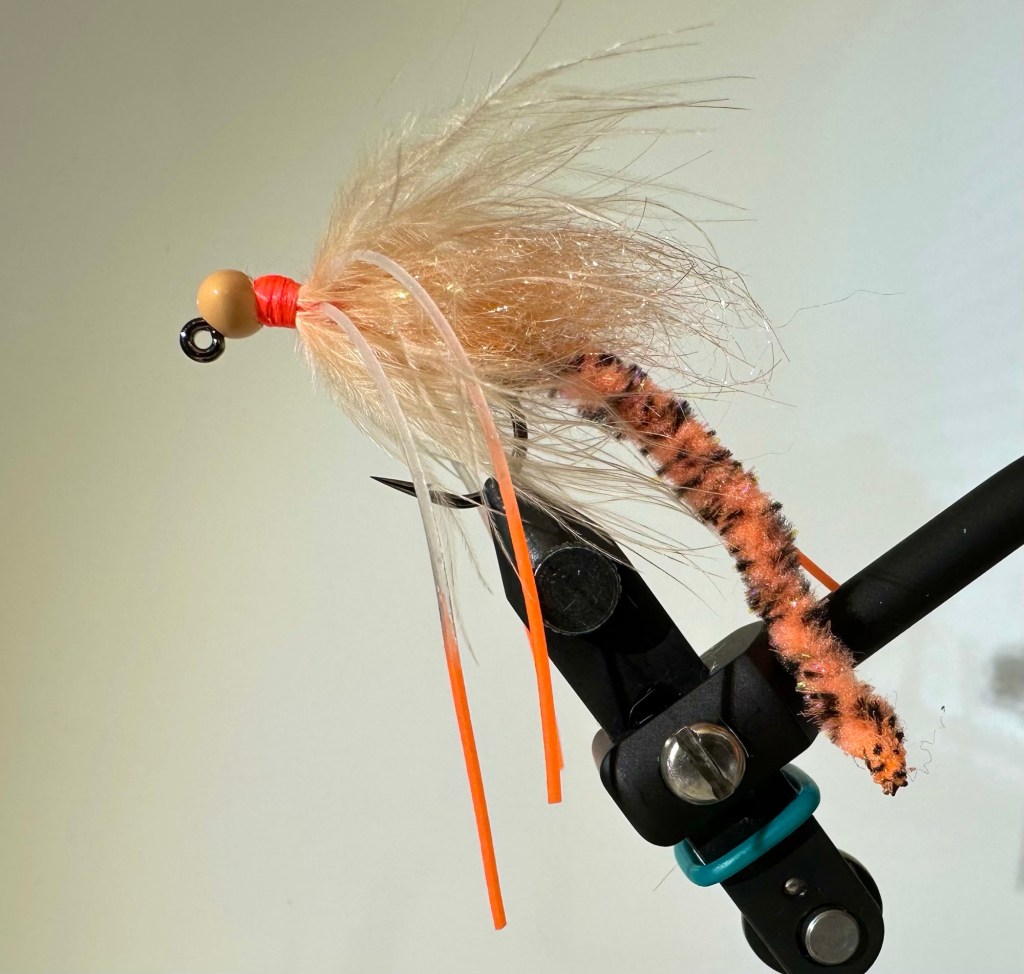
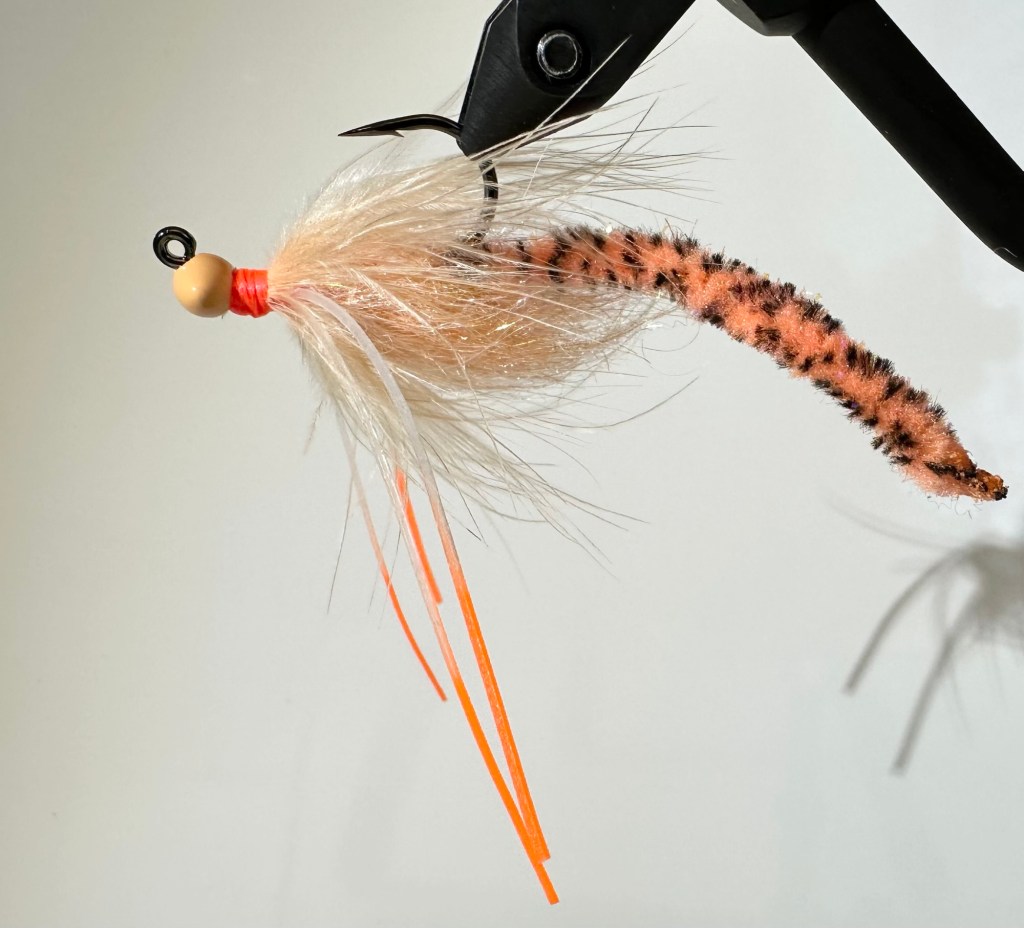
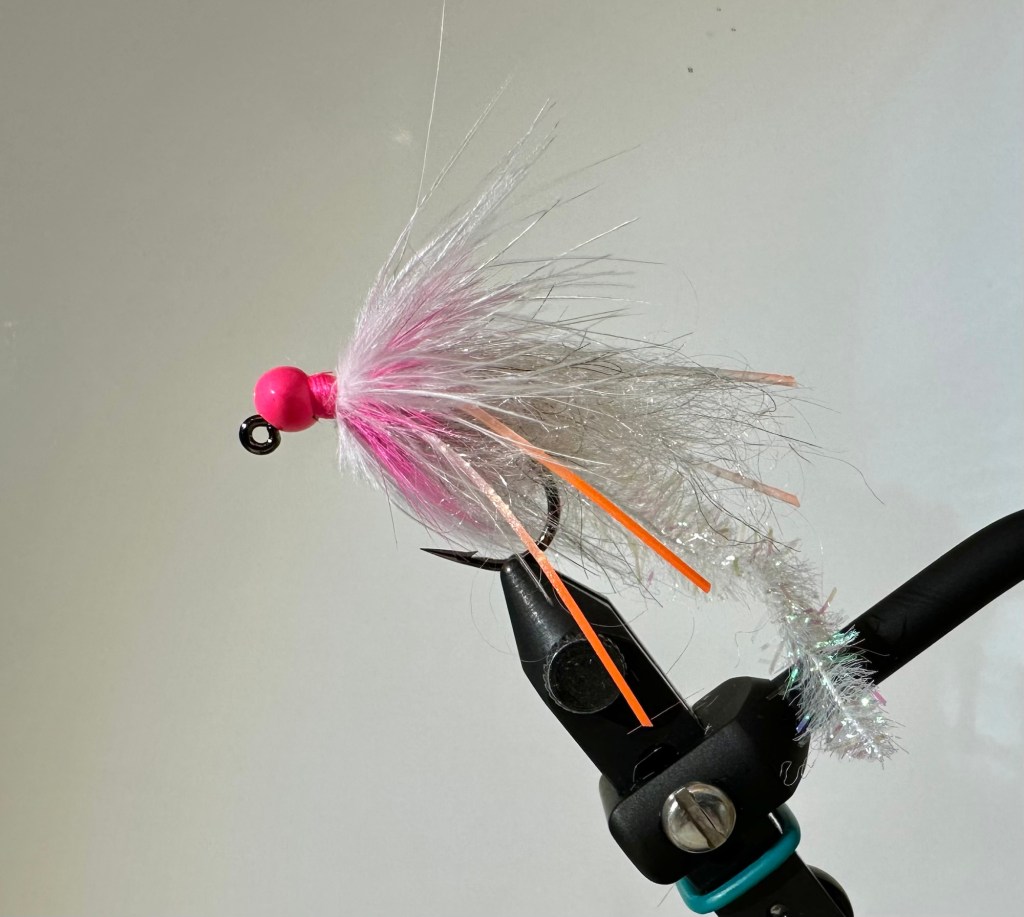
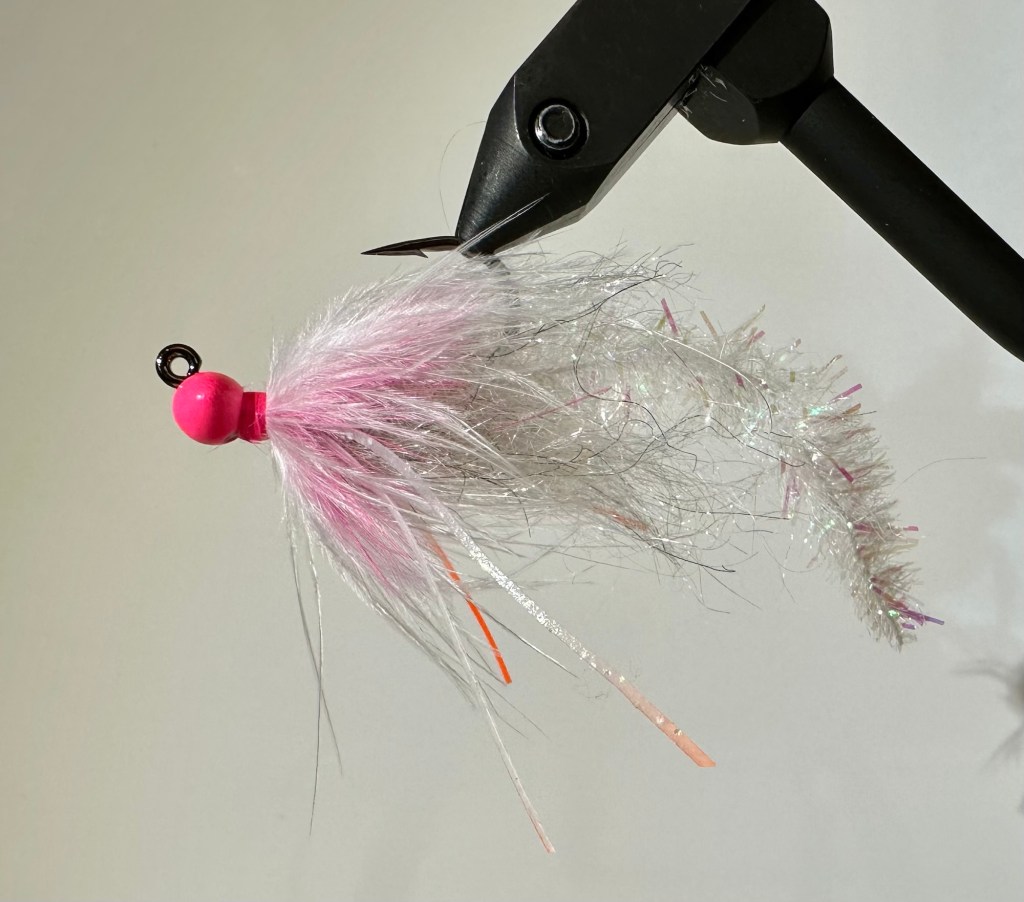
Pattern: Jetty Worm
Inspiration: Jetty Worm by Spawn Fly Fish
The Why: In my opinion, nobody is doing more for the PNW fly tying culture right now than Spawn Fly Fish. They are a fly shop based out of Ilwaco, WA founded by former professional soccer player, Josh Phillips. I’m lucky enough to be able to visit the shop on occasion and pick Josh’s brain on a variety of topics. He’s extremely generous and forthcoming with the knowledge that he’s accumulated from fly fishing the region his entire life. He has single handedly put me onto some incredible places resulting in memorable fish. I try to pay this back by purchasing as much of my fly tying materials through them as I can. They run a YouTube channel that releases weekly fly tying videos, many of the patterns being specifically developed for this region.
One of the fisheries that they highlight most frequently are the coastal jetties. Jetties are man-made rock formations often created at the mouth of major coastal rivers to maintain a clear navigational path for ships and to control the outflow of sediment. Because of their length and regular dredging, one of the unintentional benefit of jetties is that they provide fisherman access to deep water fish species that would otherwise only be reachable by boat. A variety of different rockfish species, cabezon, and lingcod are the primary quarry of PNW jetties, as they situate themselves deep in the rocks to ambush passing prey.
Historically, jetties have been a conventional tackle fishery, but people like Josh are developing and popularizing methods to find success with a fly rod. The jetty worm is the pattern that he has had the most success with.
I was able to fly fish the north jetty at Cape Disappointment last summer for the first time, only a stones throw from Spawn HQ. I had no success but learned a lot. I’m much better equipped this year and hope to spend some time at the Newport south jetty (conditions permitting) while we’re in Oregon.

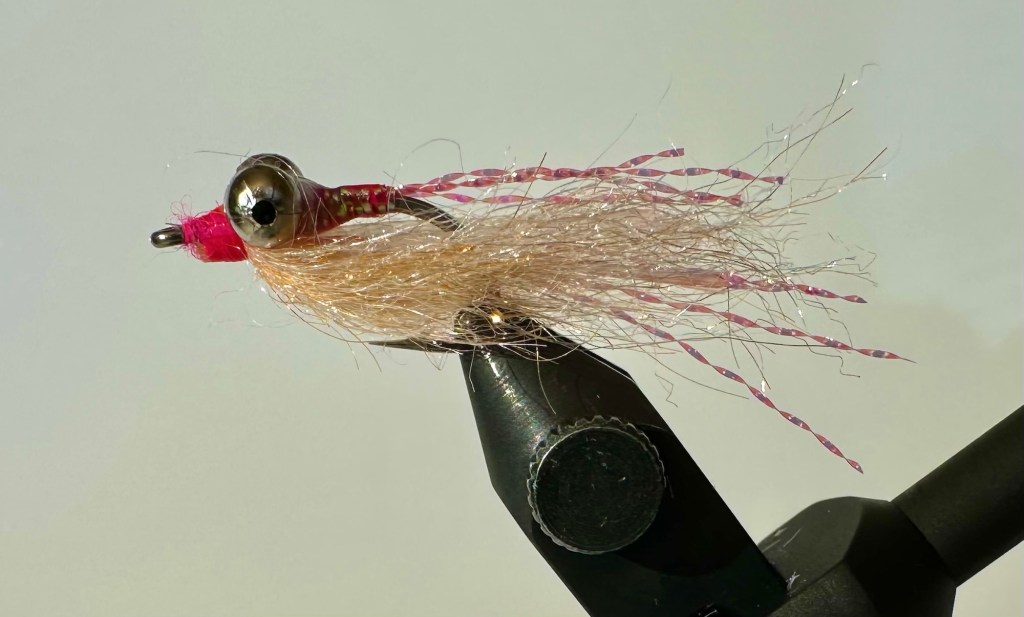
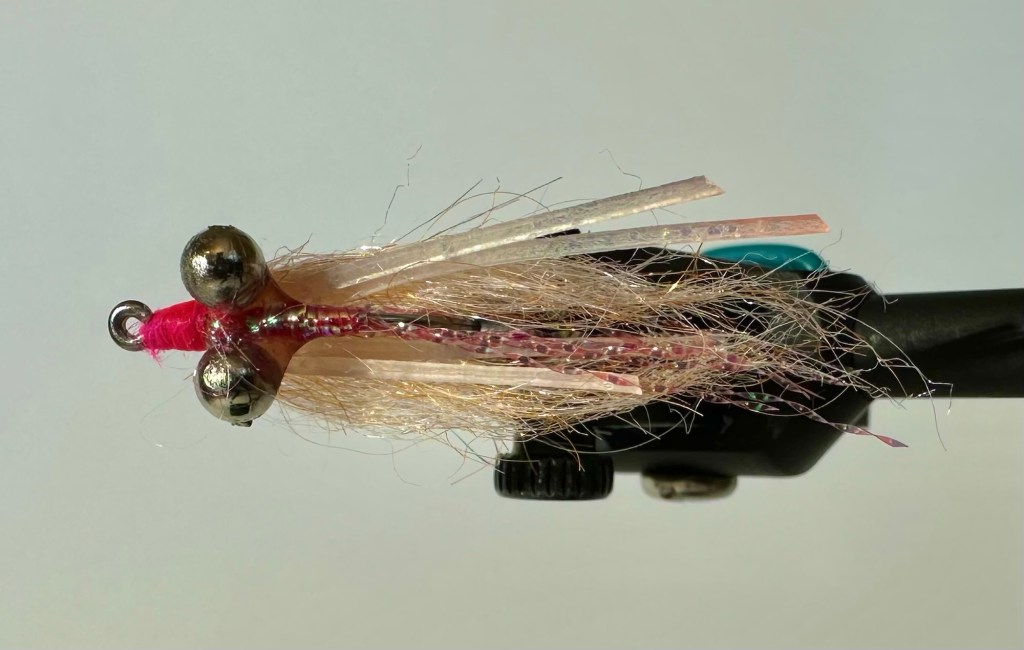
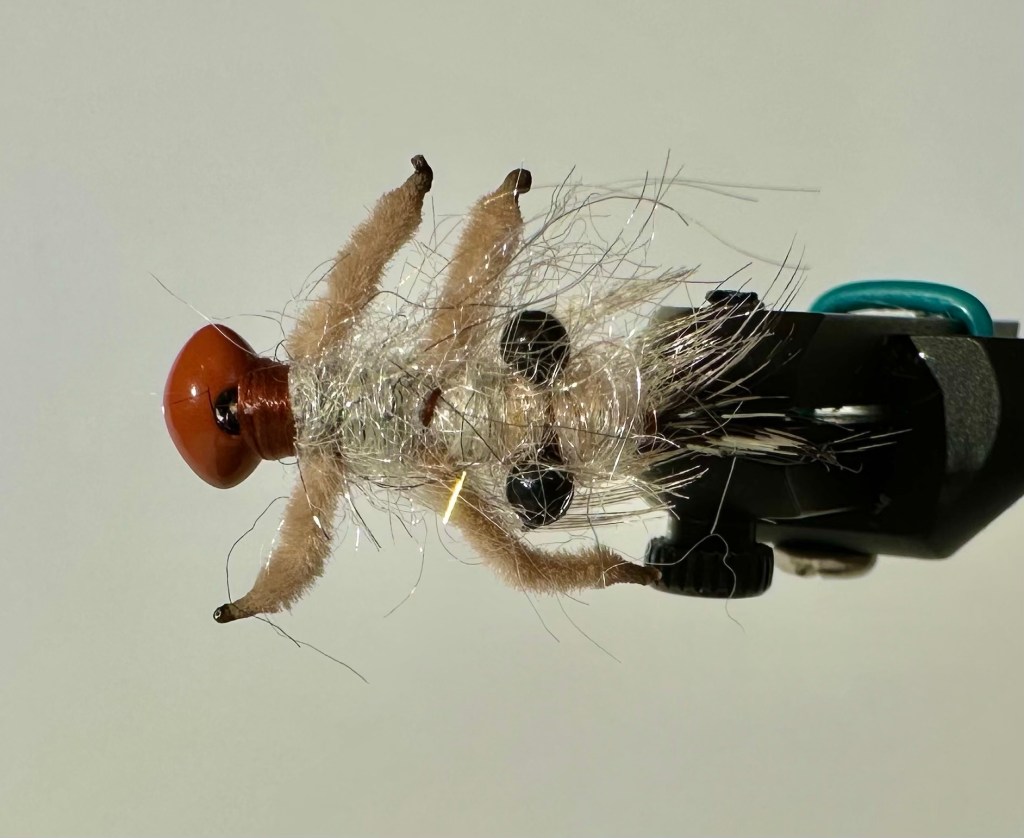
Pattern: Surf Perch Gotcha
Inspiration: Gotcha (popular bonefish pattern)
The Why: I have a budding fascination with surf perch; the redtail surf perch (Amphistichus rhodoterus) to be specific. They are found in the coastal Pacific waters spanning from Vancouver Island to southern California. They have an interesting life history and are one of the few viviparous (livebearing) species that fly anglers pursue.
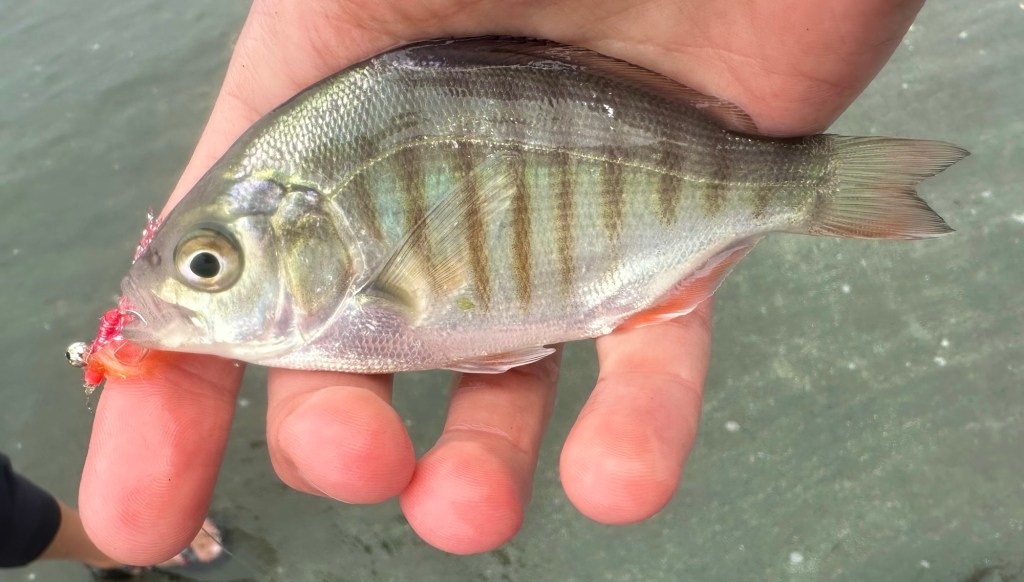
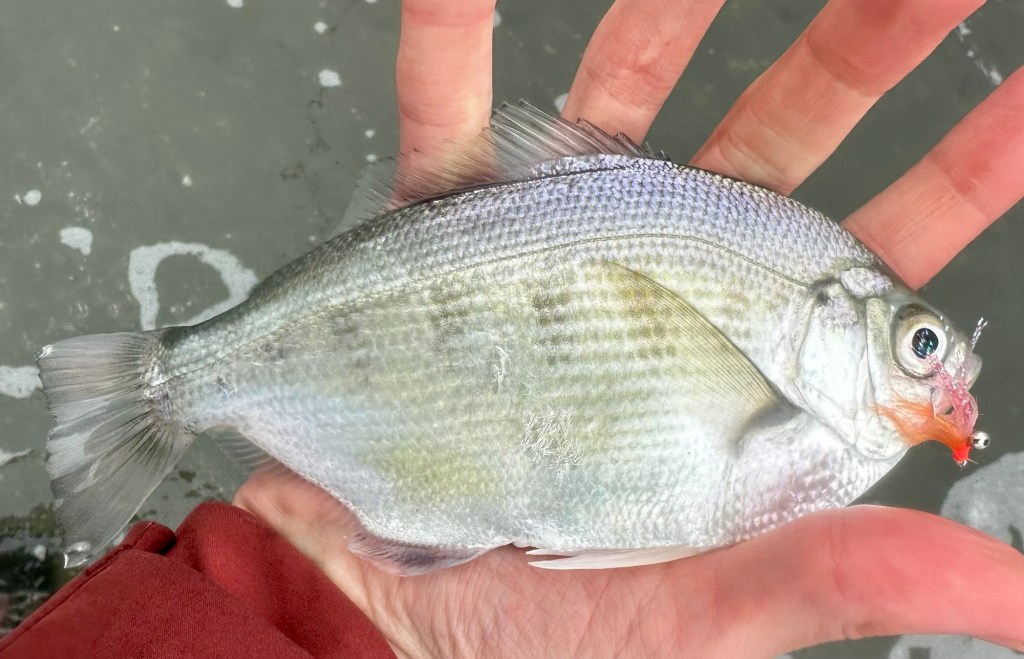
I caught a couple of small specimens last summer on this pattern while on a coastal camping trip (pictured below). They grow much larger (up to 16“) and are incredibly scrappy fighters. Ever since that trip, I’ve been itching to have another opportunity at them. I hope to tell some more surf perch tales down the road.
This pattern is modeled after the classic Gotcha style, popularized by the Bahamian bonefish fishery. I typically fish it as the “dropper” fly behind a heavier pattern in a double fly rig. From the few surf perch I’ve brought to hand, each of them has taken the Gotcha.
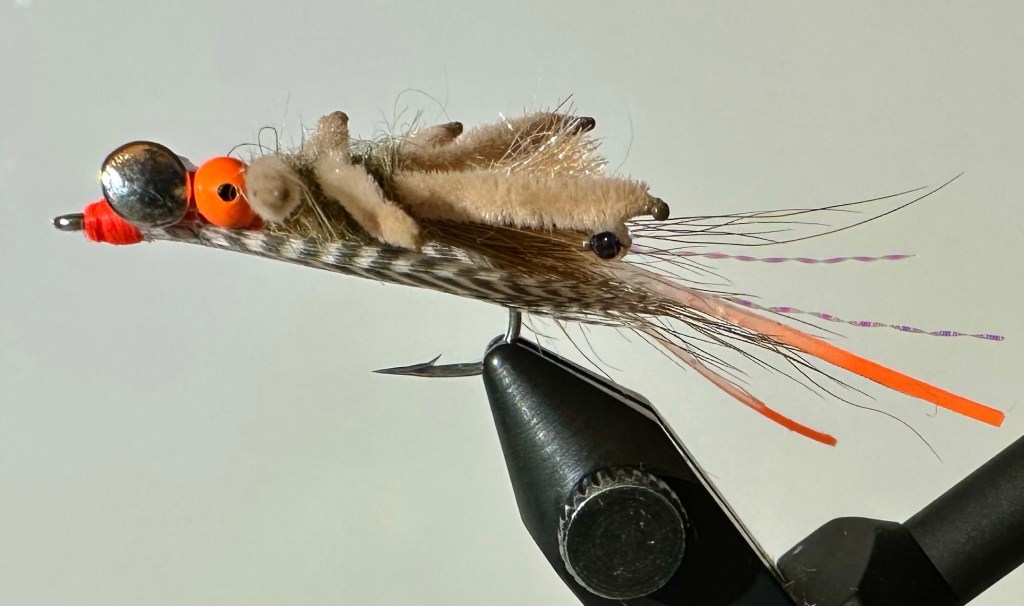
Pattern: Mole Crab
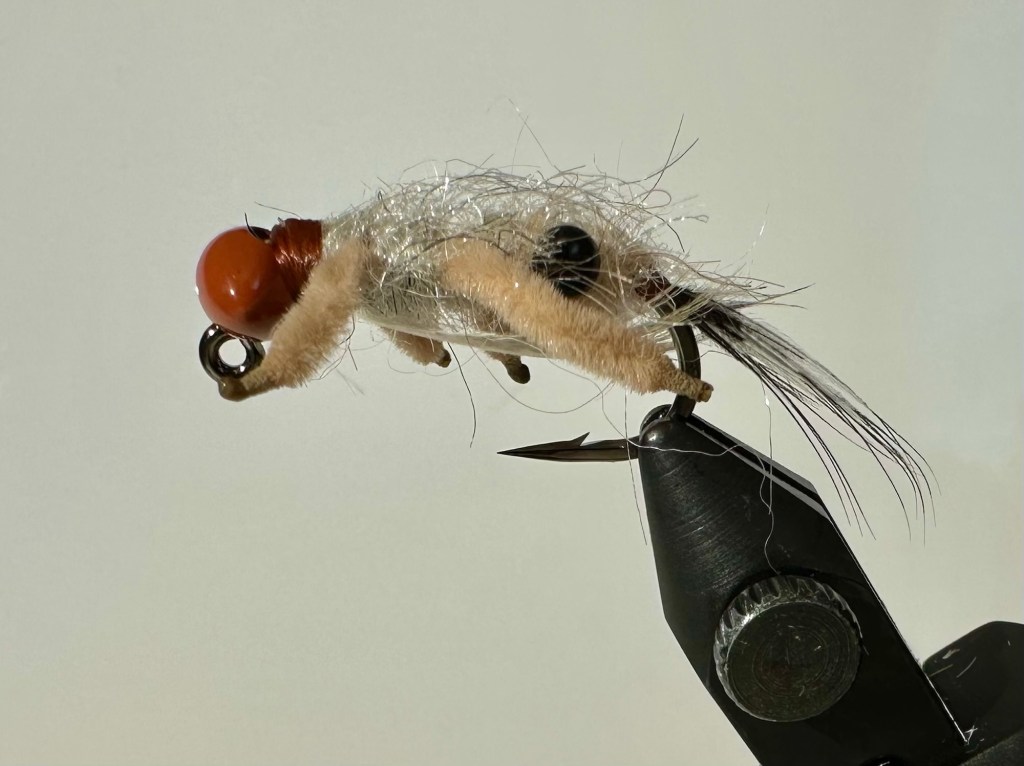
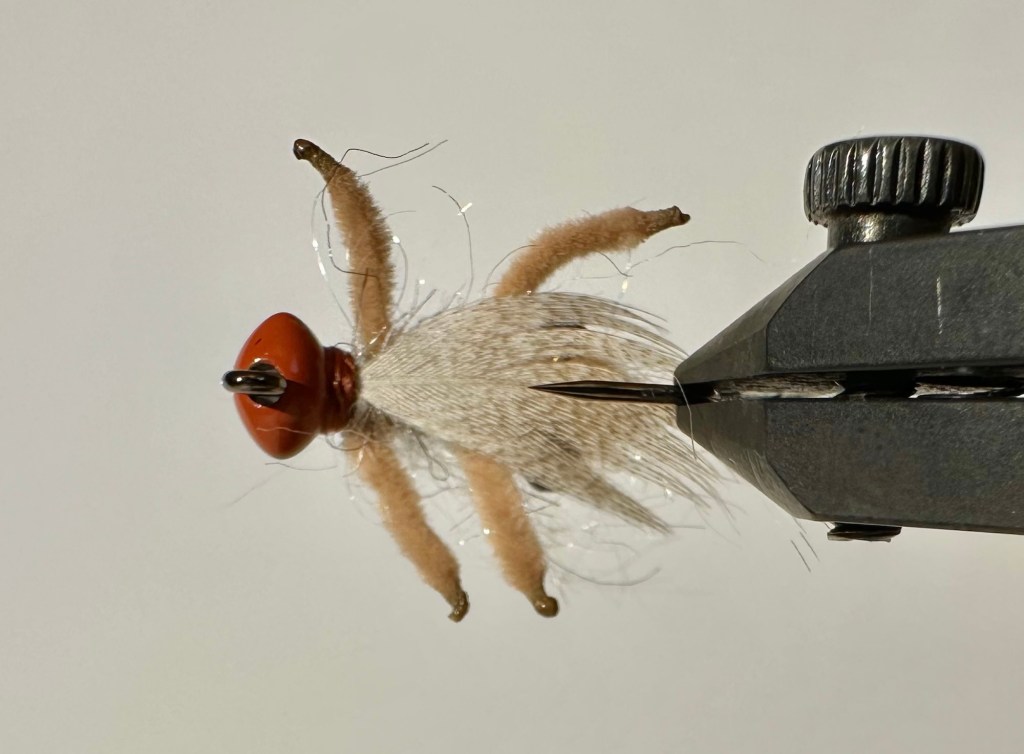
Inspiration: Beach Bug by Spawn Fly Fish
The Why: Another surf perch pattern. This one imitates a mole crab, their preferred forage species. Essentially, surf perch will follow incoming waves up the shore in search of exposed mole crabs before quickly retreating as the wave washes back out.
This pattern in particular is a favorite of mine to tie as it utilizes some fun materials and imitative steps. A football bead head helps to sink the fly as fast as possible. Small black mono eyes located near the hook bend represents the crabs backwards facing eyes, and I modified the original pattern to include thin tan legs out of chenille. The mouth/antenna fibers are from guinea fowl feathers that my mom gathered for me from a friend’s farm in central Wisconsin.
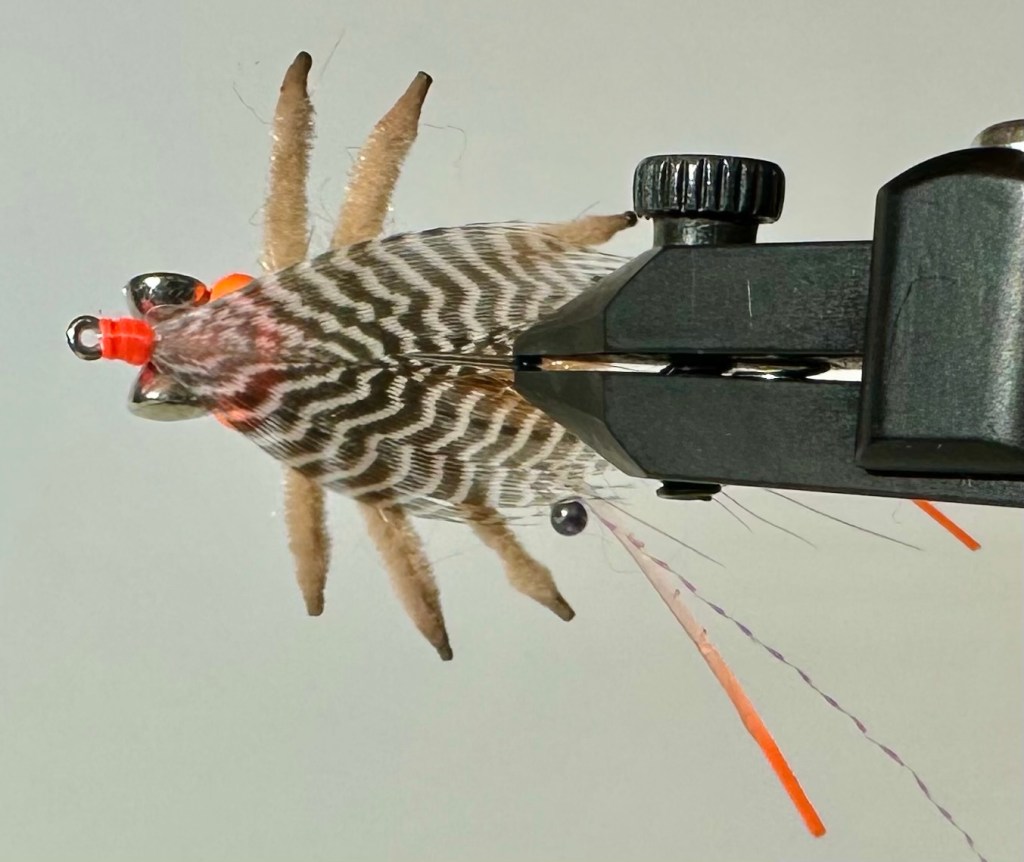
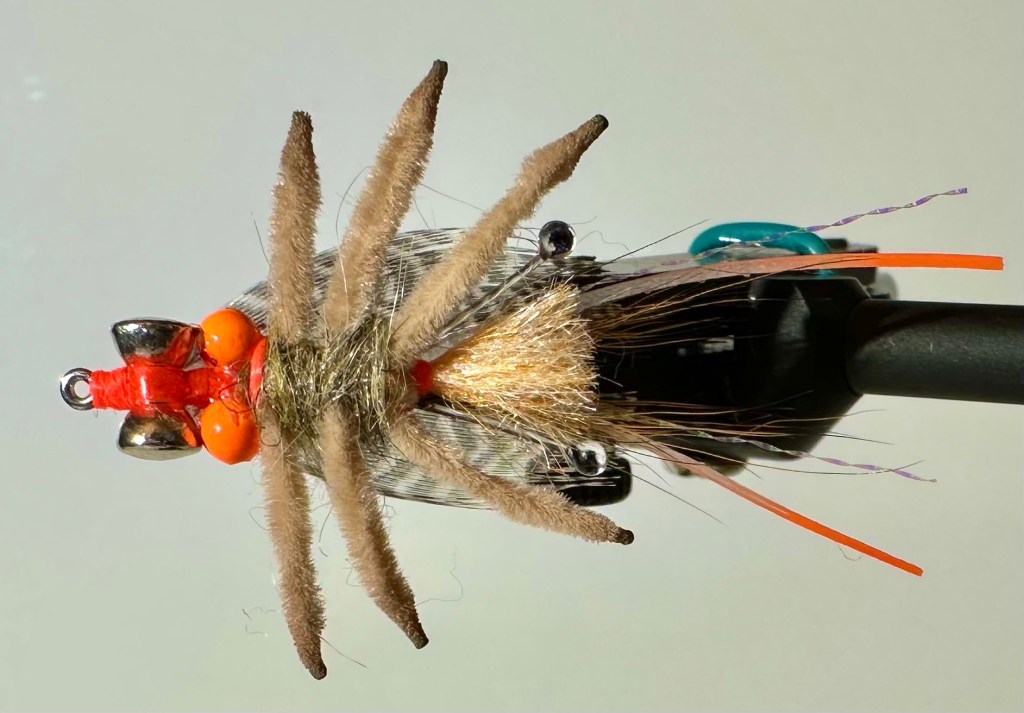
Pattern: Mole Crab Deluxe
Inspiration: Mallard Mole Crab by Caddis Fly Shop
The Why: One last surf perch pattern, this is another mole crab pattern that I discovered only recently. I’m calling it the Mole Crab Deluxe because it’s much more involved than the first in both technique and materials used. However, I like the look of it and part of me finds some humor in tying up intricate flies to target surf perch. By most accounts, they are not picky eaters. The trick comes in presenting the fly in a way that maximizes its time in the short feeding window between waves. However, I expect this one to excel in that aspect with the dumbbell and bead chain eye combo. I like the larger profile and features to impart movement on it as well. The “shell” is a northern pintail feather from a bird shot last fall by my brother-in-law, TJ. I’m excited to find out how it performs in the surf.
One of my favorite parts about building out a fly box for a particular species or region is customizing it in some way, usually with a sticker. It’s not only an organizational help but it serves to stoke the anticipation for a trip. Hands down my favorite artist for these purposes is Casey Underwood. His surf perch art is featured here. I also have his sea run cutthroat trout adorning the Outback.

Tunes I’m Tying To:
Van Morrison – His Band and the Street Choir
Trampled by Turtles – Always Here / Always Now
Noam Pikelny – Universal Favorite
Discover more from The Path Less Fly Fished
Subscribe to get the latest posts sent to your email.

 The Path Less Fly Fished