Like clockwork, the arrival of March sunshine awakens something within me and I become invigorated to get after the projects and trips in my mind with a restored drive.
It’s around this time of year that I start to catch the Sea Run Bug in full effect. Chum salmon fry are mere weeks away from hatching in their natal streams and making their maiden voyage into the Puget Sound. Sea run cutthroat are completing their winter spawn in freshwater streams and returning back to the Sound as well, starved for some easy protein. Just last week we passed the 6pm sunset mark, meaning post work trips are officially back in play. My boots and waders have barely had a chance to dry before I’m placing them back into their tote and shuttling off to the water. Spring is loading.
This year more than ever, it feels like the Puget Sound fishery is starting to click for me. I feel as though I may have finally graduated out of the Cutting Teeth phase of the past three seasons and into developing a deeper understanding of sea run cutthroat trout behavior. There are still trips that leave me feeling humbled, but those frustrations that plagued the early days are beginning to fade. My double haul casts are becoming smoother, my box is teeming with confidence patterns, and I’m starting to realize that each beach is every bit as nuanced and dynamic as my beloved streams.
My past three trips, to three separate beaches, have all resulted in salty Salmonids to hand. In isolation, I didn’t feel as though any were worthy of a story. But perhaps these three short vignettes viewed in context tells the story of a fishery that is awakening from its winter slumber. I remain grateful to call such a challenging and rewarding fishery my home waters.
Tuesday, February 25th:
Overnight wind storms clocked in at 54 mph. High winds + tall trees = bad news if you like electricity. The outage map for the peninsula was lit up like a Christmas tree when I awoke; luckily the power at our house remained stable. Shortly after a text rolled in from work, closed for the day. With the network outage rendering work from home useless, I stayed in tying flies, reading, and waiting out the wind.
Around 3pm I started to grow restless. The wind was still ripping but showing signs of slowing. I threw all of my gear into the car and told myself that I’d just go on an exploratory trip without expectations of fishing. There’s a beach just down the road from my work that I hadn’t been to in some time. If the water was still churning whitecaps, I’d stretch my legs for a bit, walk the beach, and head home.
I arrived to a slight chop in the water, all systems go. Casting was difficult but not impossible, a good practice opportunity for double hauling into wind. I worked my way methodically along the beach, fanning casts in an 180 degree array before wading half the distance of a cast and starting again.
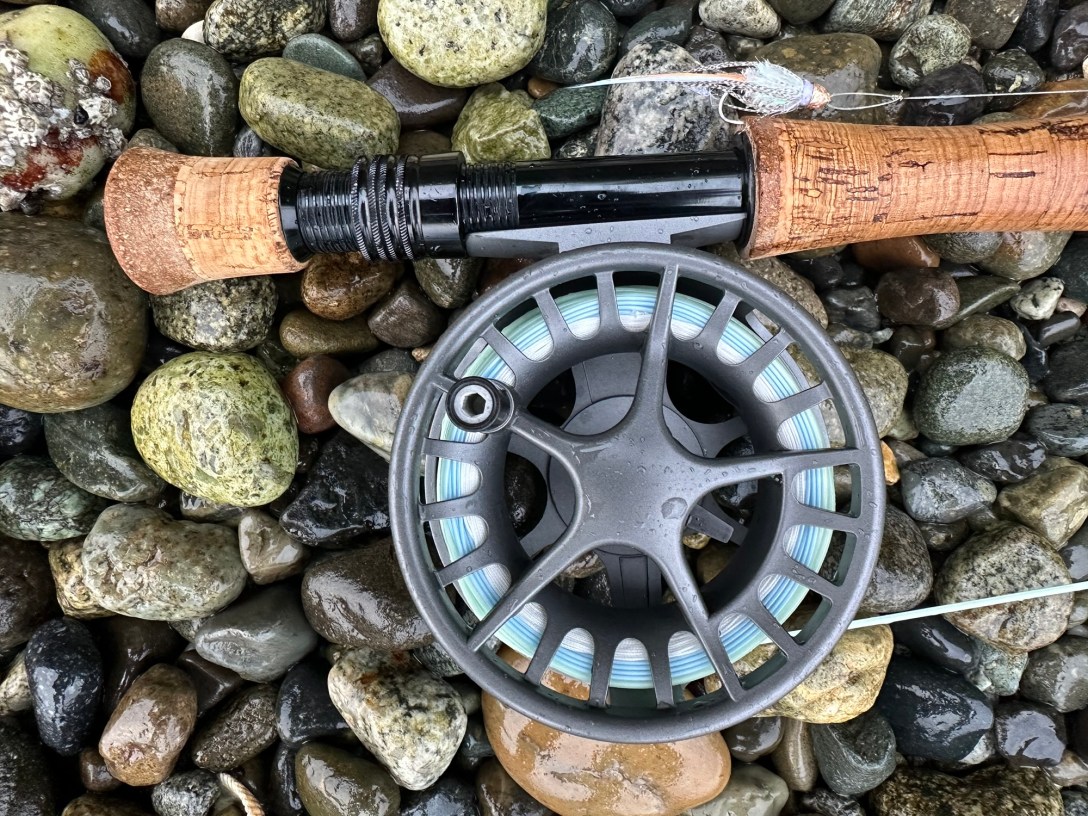
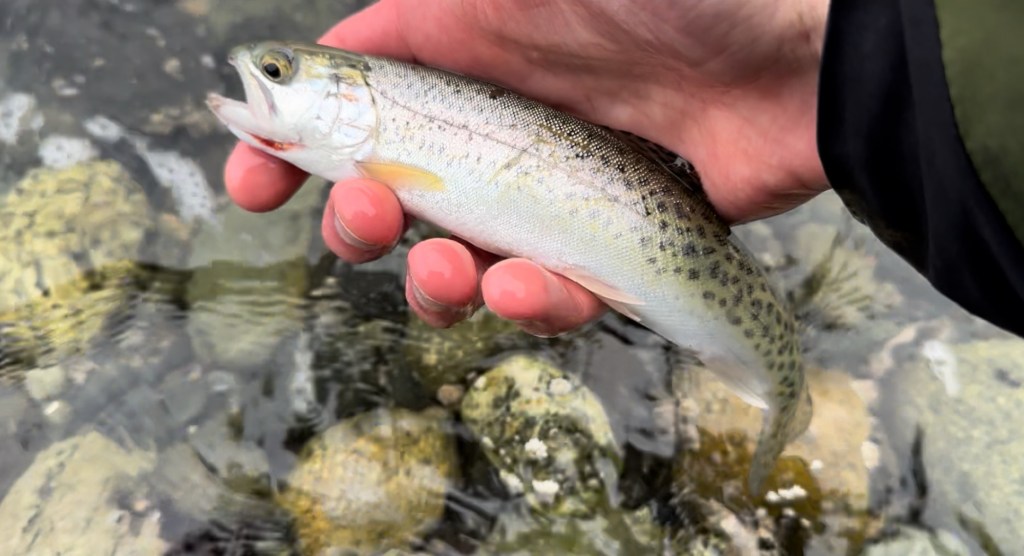
Just as I was nearing the end of the state park boundaries, a tug! I brought the small sea run to hand and admired its ruby red cutthroat markings before returning it to the salt.
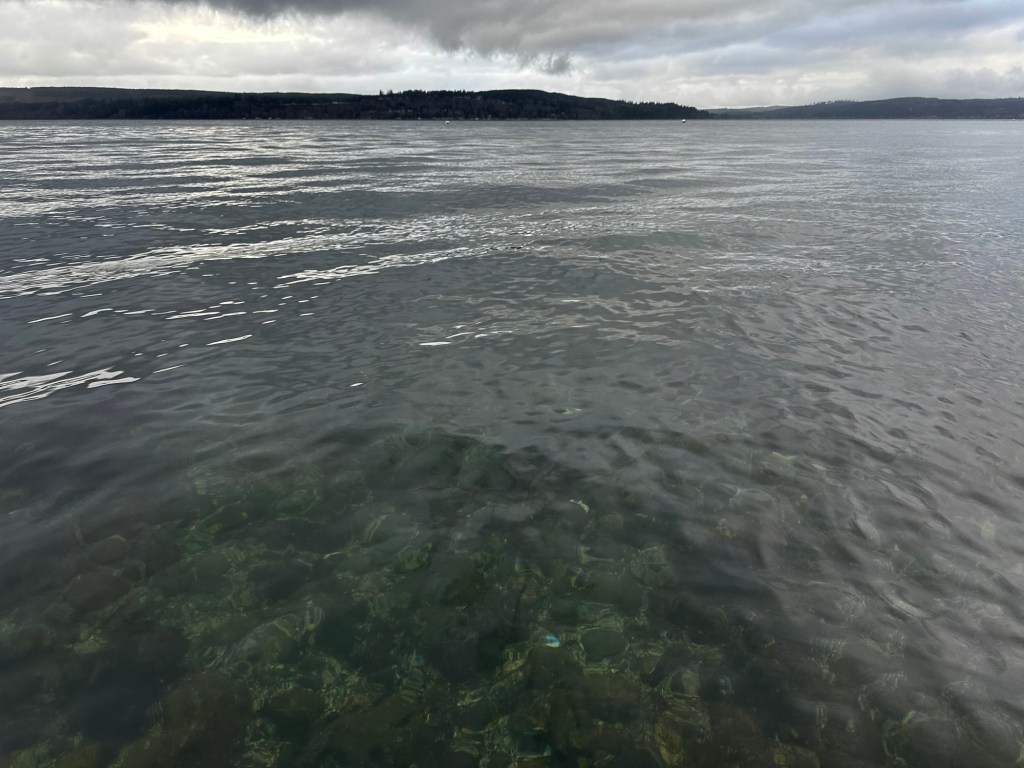
The wind had died now, only the faintest ripples could be seen in the fading light as I departed.
Saturday, March 1st:
Sometimes it’s about being at the right place at the right time.
I reached my favorite beach early as a heavy fog shrouded my view, visibility limited.
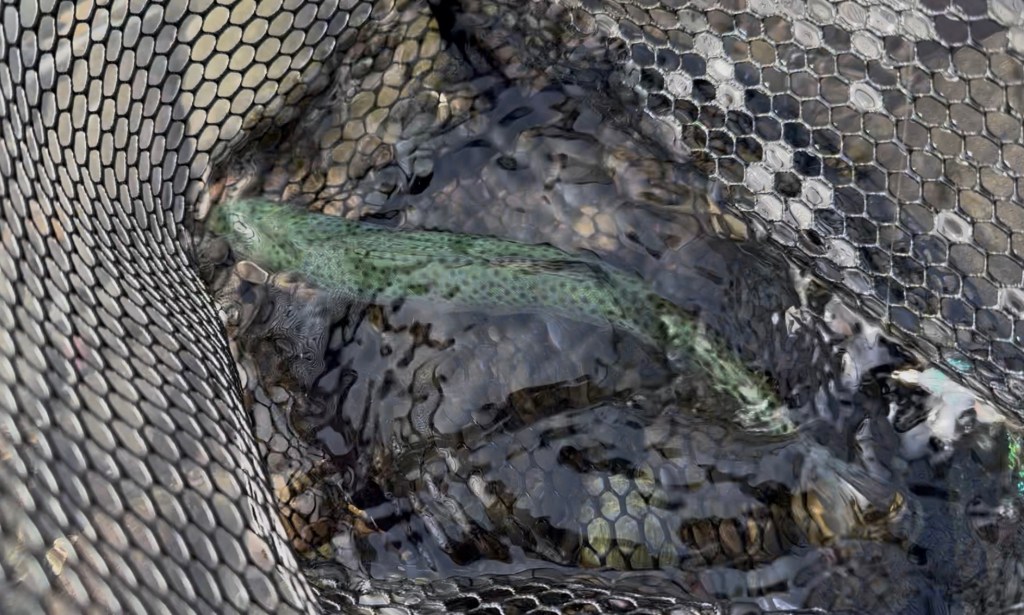
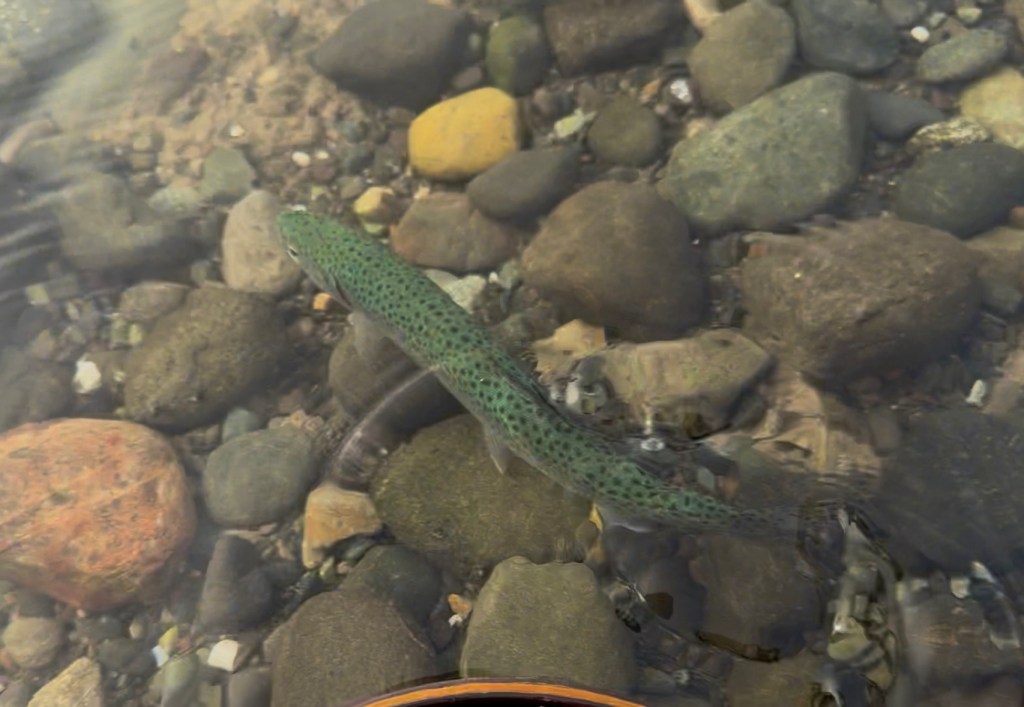
As soon as my wading boots met the smooth cobble substrate, a cutthroat cleared the water ten yards ahead of me. Setting my extra fly rod and bag down on a rock, I stripped a handful of line and cast to it. Thirty seconds later I watched a lively sea run fin at the bottom of my net. The top of its back gleamed the most brilliant emerald coloring of any trout that I have observed. I slipped it back just as quickly as it came to hand.
The trip continued to get better from there.
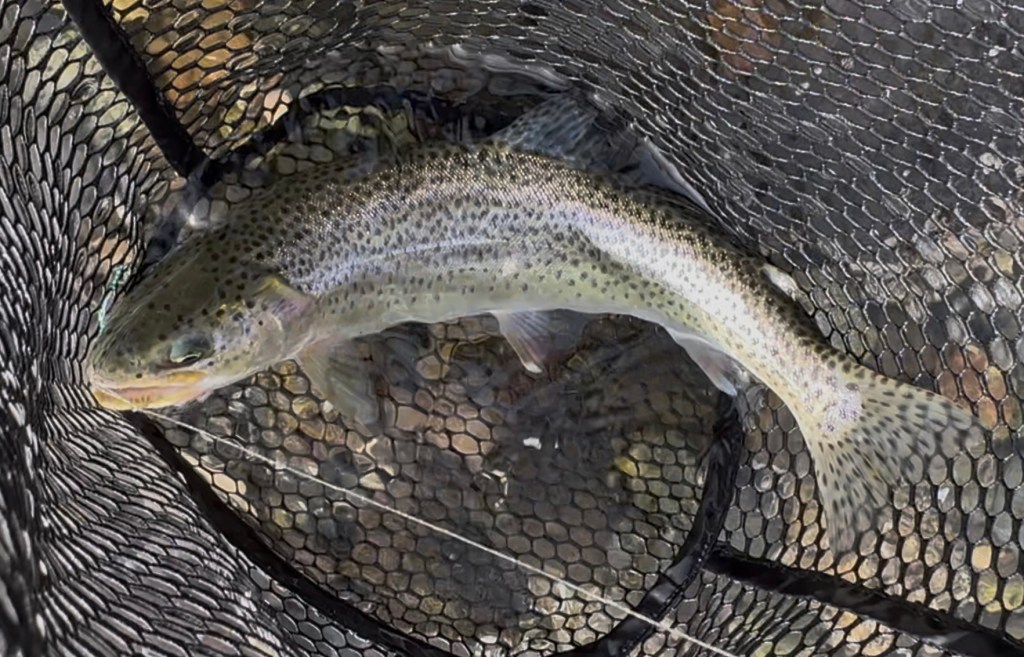
I only had to work my way about twenty yards up the beach before my conehead squid pattern was devoured again. Instantly, I could tell that this was a much nicer fish; wide head shakes and three series of water clearing acrobatics before it was within my net’s reach.
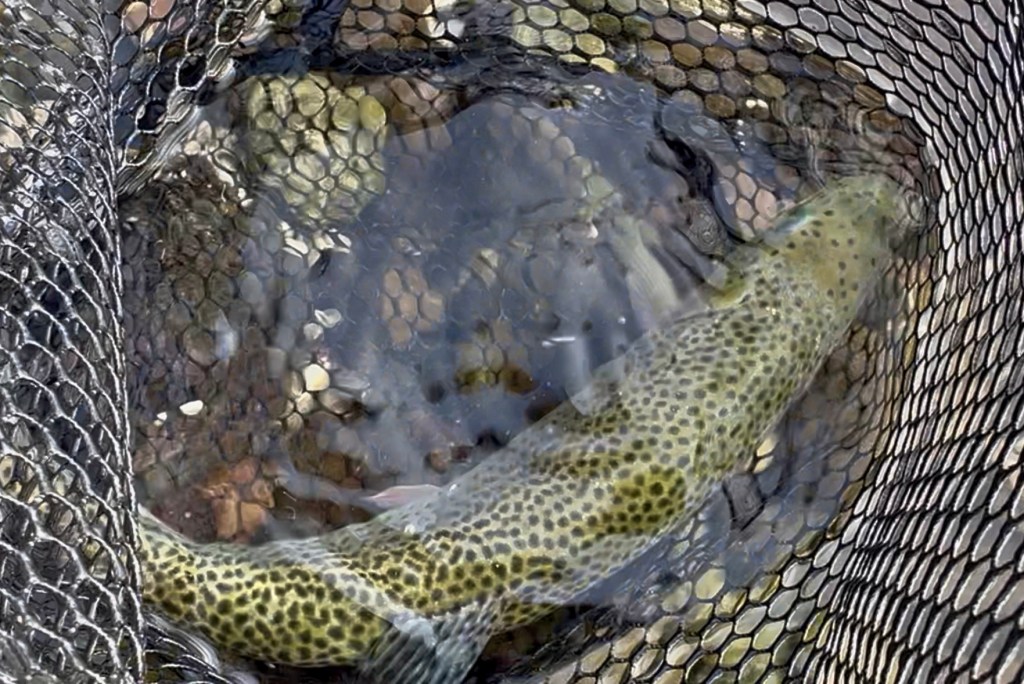
I crouched in the shallows marveling at what was a near perfect specimen of a sea run cutthroat trout. A heavy patterning of circular spots ran from the base of its head to the tip of its tail. Hues of faint rose marked its gill plate, anal, and pelvic fins. A golden yellow bordered its mouth and continued along the flank of its lower half. This was a healthy fish, potentially one that had just returned to the salt from spawning in one of the nearby freshwater streams.
Eventually a patch of sharp oysters snapped my go-to squid off and I switched patterns to one that I had tied up on that windy day home from work. I have recently become inspired by a number of Scandinavian fly tyers who develop saltwater patterns for their sea run brown trout fishery. The parallels between our two fisheries and the overlap of forage species are plentiful leading to a treasure trove of patterns to try out. This one in particular was a baitfish pattern developed by a Danish tyer named Christian Krog, that I thought would make a great imitation of the threespine stickleback.

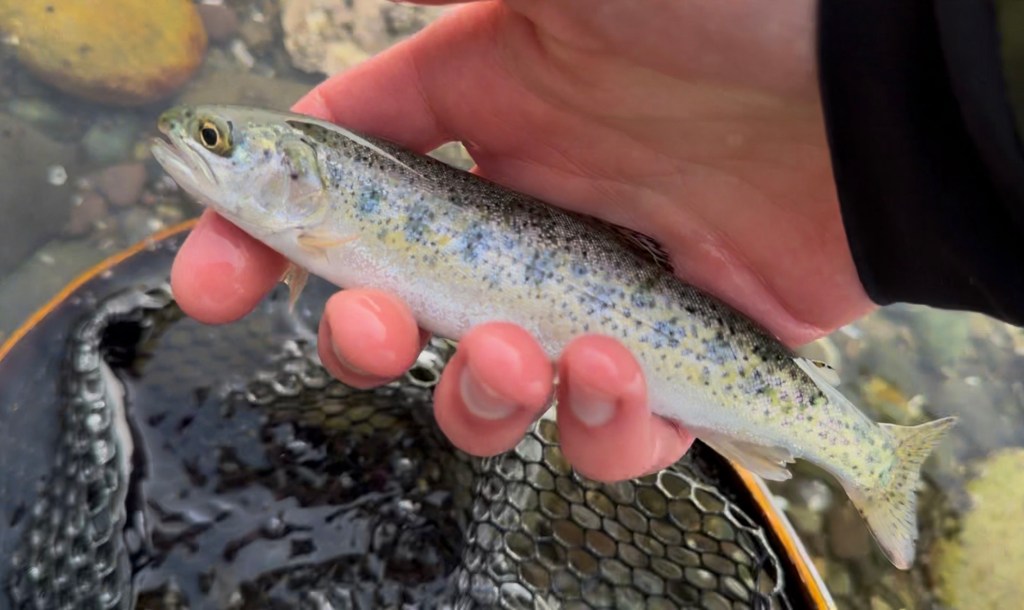
It didn’t take long before this baitfish imitation was chowed down by a small sea run still flanked by its faded blue parr markings. I’ll never tire of the phenotypic variation displayed by cutthroat trout. Each one is truly as unique as a finger print.
I departed from my favorite beach at low tide feeling content and excited for my next return trip.
Sunday, March 2nd:
Sometimes it’s about knowing when to pack it in.
I had only been at the first beach for a half hour or so before it became apparent that nothing was happening. No waterfowl milling around or diving for baitfish. Nothing breaching the surface. The only movement in my field of vision came from that of my own casts.
I decided to make the move to a beach that’s close to my home. I have made dozens of trips here over the past few years and have yet to learn the secrets of its sea run cutthroat trout. The beach itself is exceptional. The terrain is rich in oysters and barnacle covered stones. Crabs, sculpins, and other intertidal life wriggle at the water line in small pools revealed by a falling tide. The views of the Olympic mountains on the far shoreline look so grand and crisp on a clear day that you feel as if you could almost reach them with a long enough cast.
It’s also a rather popular beach, and most trips I’m dodging a couple of dog walkers or well intentioned yet slightly irksome folks wondering if “ya catchin’ anything?” But today, I had the entirety of the beach to myself.
I covered lots of ground without the slightest signs of fish. My fingers were numbing, but a stubbornness wouldn’t allow myself to stop casting, to abandon the solitude that I had been afforded.
Sometimes the best fly fishing occurs when your mind has drifted to another place and autopilot has taken over. You’re not thinking hard about your cast, your retrieve, or your position. Your intuition is guiding you and leading you onward. Call it a flow state or some form of a moving meditation. Only a strike can both elevate and pull you from this state of mind.
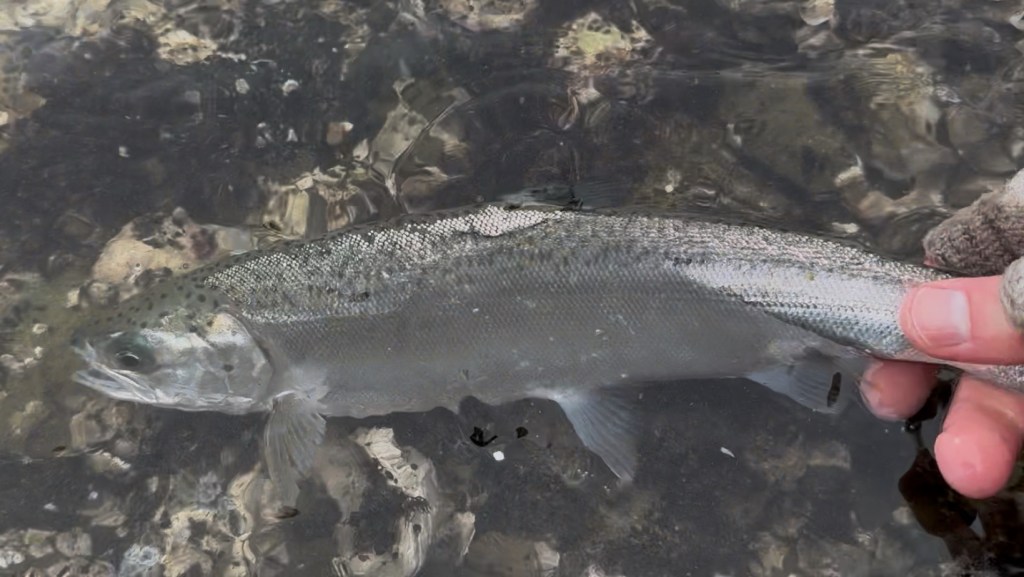
And that is exactly what happened. My line went tight and I snapped back into the moment. Something felt different about this one. It was faster than a sea run, coming directly at me before turning on a dime and racing horizontally back outwards. A full body of chrome sheen sparkled as it left the water. “A rezzie!” This would be my first resident coho salmon, or rezzie, as they’re known locally. A fish that is part of a population of coho salmon that spend their life within the confines of the Puget Sound instead of migrating out to the Pacific ocean and returning in late summer.
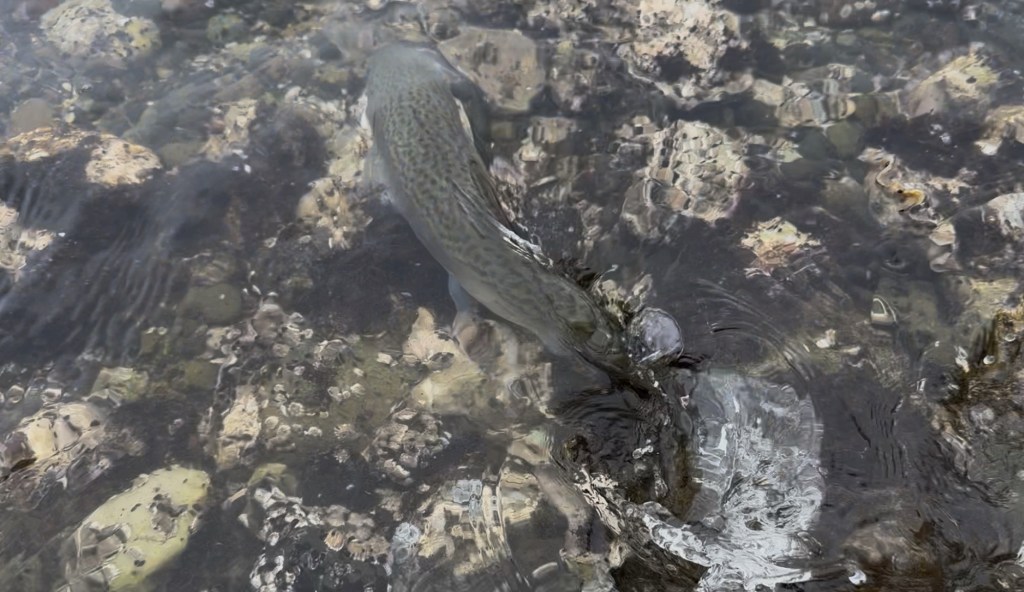
After releasing my first rezzie, I walked up the beach, sat down on some driftwood, and took a deep breath.
Discover more from The Path Less Fly Fished
Subscribe to get the latest posts sent to your email.

 The Path Less Fly Fished
Gorgeous post, Sam! Words, photos and mental images. My fingers are numbing, too.
LikeLiked by 1 person
What fantastic stories! Each of the fish you caught are just beautiful! The emerald green was surprising to me! Didn’t know about that coloring! And the silver of the coho… looks like a piece of sterling silver!
LikeLiked by 1 person
What amazing stories, Sam! And those fish are all so beautiful!!!
LikeLiked by 1 person