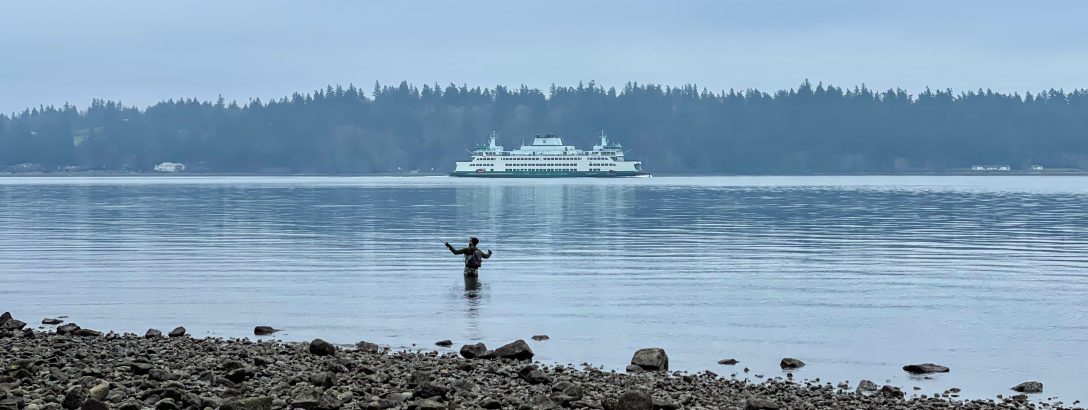
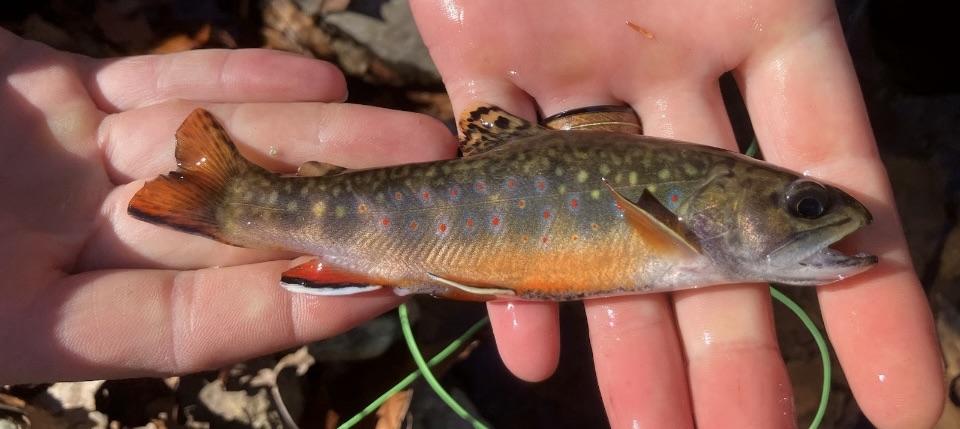
Editor’s Note: My good friend and longtime TPLFF contributor, Dean Kuettel, is back! This time with a thoughtful reflection from his new home waters of Virginia. I will eagerly await more of his updates from the East until I’m able to join him on the banks of a small brook trout stream again someday. -Sam
———————————————-
“They glistened like the fairest flowers, the product of primitive rivers; and he could hardly trust his senses, as he stood over them, that these jewels should have swam away in that Aboljacknagesic water for so long… These bright fluviatile flowers, seen of Indians only, made beautiful, the Lord knows why, to swim there.” -Henry David Thoreau, speaking of the brook trout.
I am often asked why I fly fish. For me, it has always come back to the same themes of beauty, rhythm, and stillness. With a recent marriage and a move across the country, it is needless to say that I have not had an abundance of time recently to be alone and quiet in beautiful places. The absence of this has had a noticeable effect on me and I began to crave immersion.
This need is not unique to me, but has been felt by many before me. Some of those who have allowed their hearts to rest in the beauty of the created world without distraction have said and done a great deal of notable things as a result. President Hoover, for example, is well known for his love of nature and his creation of thousands of acres of national forest. In fact, Hoover himself was an avid fly fisherman, establishing a presidential getaway deep in Shenandoah National Park where he would escape to fish for brook trout in the Rapidan River.
I had found myself walking slowly towards this very same river. I had been growing steadily weary leading up to my day trip to Shenandoah National Park, and was finally able to walk slowly through an autumn wood, soaking up the sound of nothing save nature’s running water and my own footsteps. For the first time in a while, I was lost in thought and repose under brilliant fall colors. I walked on for two miles, often near the Rapidan. It was a classic mountain stream, with many waterfalls and pools but never very deep. As I walked, I wasn’t able to convince myself that there were really any trout in such small water, but the water was beautiful enough to warrant its own trip to the forest.
I came upon a pool with a rather large boulder at its tail. I climbed upon it, lit my pipe, and pulled out a poem that I had the intention of musing on that day. There is a wonderful scene in the movie A River Runs Through It in which Norman Maclean and his father recite a poem together. This poem is called Ode by William Wordsworth. In it, Wordsworth reflects on the wonder that he experienced as a child, when all things were new to him. He notes that, while the created world is still beautiful, it has lost a shimmer. He concludes, after a few stanzas, that even without the shimmer, the beauty in the world is more than enough to make a heart leap.
With my smoke rings rose thoughts of my own childhood; of beauty, of stillness, of Herbert Hoover, and of these “fluviatile flowers” that we call brook trout. I continued to walk through the quiet woods in reverie until I could delay fishing no longer, lest I ran out of time and did not get to make a first attempt at a trout in my new locale. I chose a particularly deep pool, or so I thought from the sound of the water falling into it. I did not want to risk getting too close in such shallow waters, so I gave the river a sufficient berth. The riverbed was rocky, the October weather had turned cold, and the water was quick. Despite any reluctance I may have had, I knew that a nymph or small streamer was likely the only thing that a trout in such small water would feed on, if there were any trout at all. I, however, tied on a dry fly.
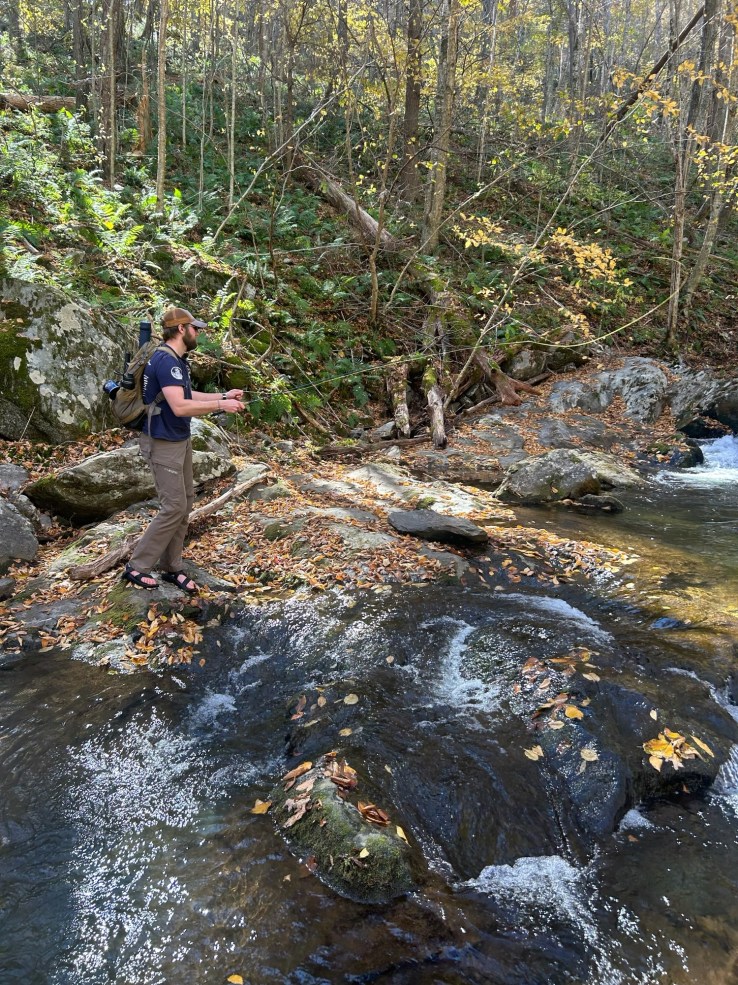
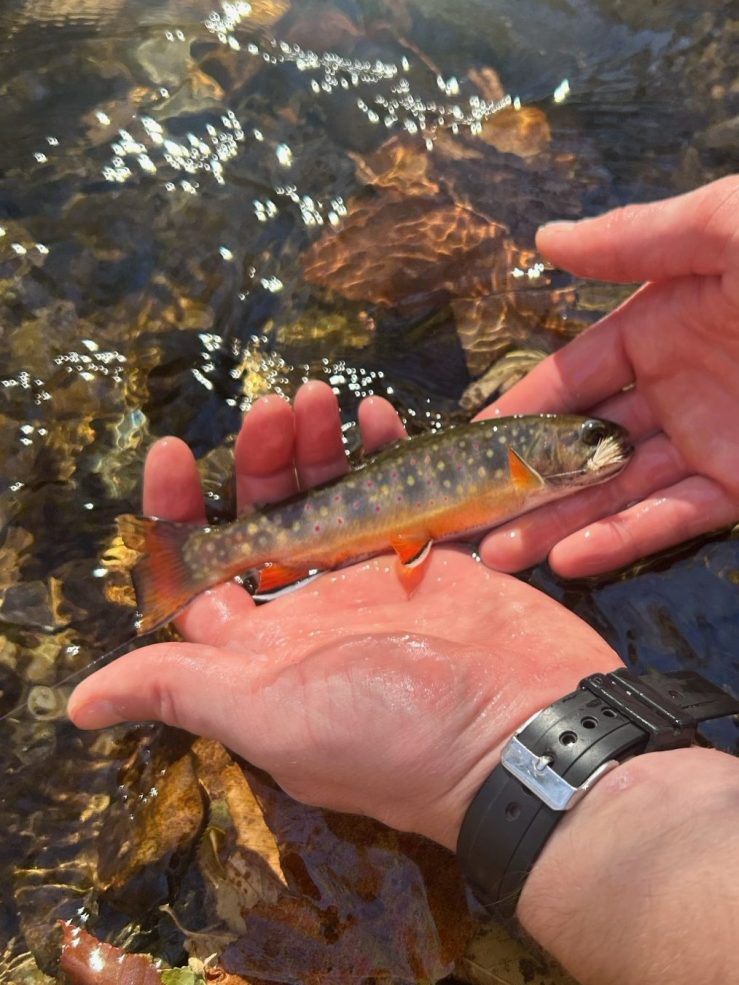
The casting conditions were very tight, and required both stealth and technique. To my surprise, these efforts paid off immediately. From that first pool in the Rapidan River, I found my first four brook trout in Shenandoah, dressed up in fall colors to meet me. I caught a few more trout that day, finding myself surprised by every hidden gem in every unlikely pool. At length, I worked my way back to the trail, and began the slow walk back to the trailhead, where my thoughts once again received more attention than my hands.
As for Hoover, I am grateful to reap what he has sown, to walk where he walked, and to advocate for wilderness alongside him. As for Thoreau, he struck a profound note; brook trout are beautiful for their own sake, and are almost more beautiful beyond our reach than within it. Beauty is always surprising in this way, and often wild, beyond possession. For this reason, I cannot quite relate to Wordsworth’s poem, though it is wonderful. Perhaps I never saw the same shimmer around me that Wordsworth saw in his youth, and perhaps I am not old enough to have lost it. What I do know is that there is a great song being sung in the world, and I seek solitude so that I can hear it better. Though the lyrics are not in my first language, I am picking up new words all the time. The words I will not try to repeat to others, but I will encourage them to listen with me.
And O, ye Fountains, Meadows, Hills, and Groves,
Forebode not any severing of our love!
Yet in my heart of hearts I feel your might;
I only have relinquished one delight
To live beneath your more habitual sway.
I love the Brooks which down their channels fret,
Even more than when I tripped lightly as they;
The innocent brightness of a new-born Day is lovely yet;
The Clouds that gather round the setting sun
Do take a sober colouring from an eye
That hath kept watch o’er man’s mortality;
Another race hath been, and other psalms are won.
Thanks to the human heart by which we live,
Thanks to its tenderness, its joys, and fears,
To me the meanest flower that blows can give
Thoughts that do often lie too deep for tears.
-an excerpt from Ode by William Wordsworth
Discover more from The Path Less Fly Fished
Subscribe to get the latest posts sent to your email.

 The Path Less Fly Fished