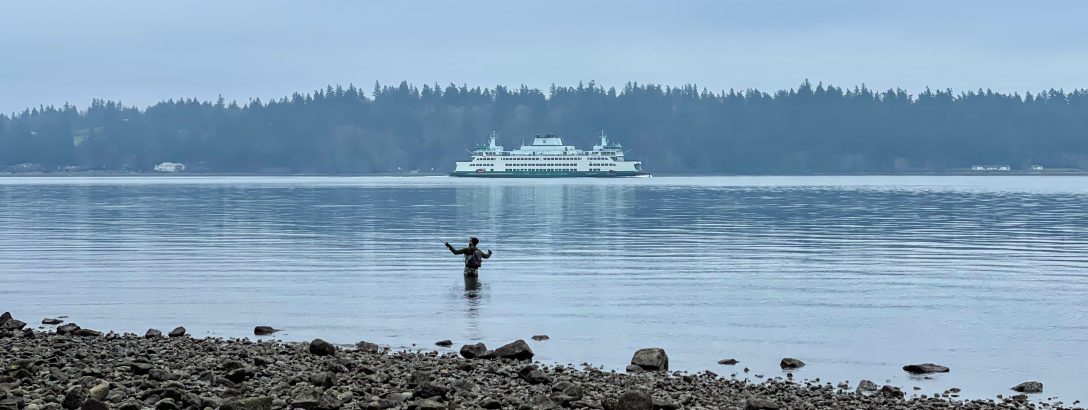
Conventional fishing wisdom says to rise early, beat the crowds, and maximize your time on the water. That advice holds true for streams and lakes, racing both the sun and fellow anglers to mornings of solitude and shadowless casts. Tidal influenced fisheries turn this age old maxim on its head; here the tide is king. In the most simplified terms, moving tidal water is good, stagnant tidal water is bad. On this particular day, the tides wouldn’t start “moving” in earnest until around 11 AM. So on Sunday I slept in, enjoyed a cup of coffee, read some John Gierach, and packed my car with an unhurried pace.
For the past two years (mainly in the shoulder seasons between prime stream fishing) I have been frothing my local beaches of the Puget Sound in hopes of connecting with a sea run cutthroat trout (Oncorhynchus clarki clarki). Many hard earned lessons have been learned as I cut my teeth on this new fishery, but I have caught nothing to show for them. So many fishless trips, in fact, that I started to develop theories: my setup was cursed, the beaches that I chose were cursed, I was even starting to think that I myself might be cursed. I needed but one sea run cutty to break the spell. Luckily for me, I was heading out on St. Patrick’s day.
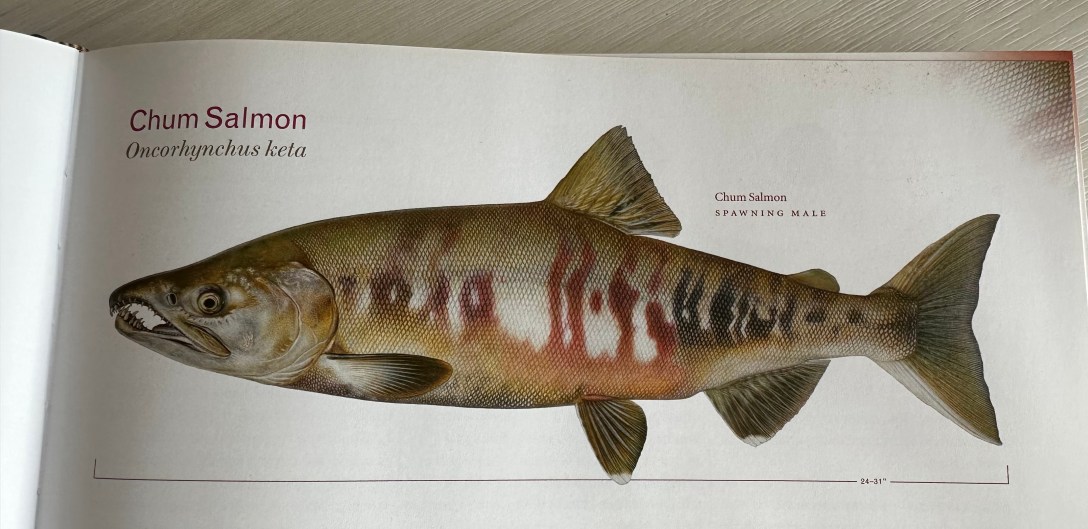
One of the few overlaps between streams and the Puget Sound is the concept of the hatch chart, a table of seasonally available forage species, with the insects traded for baitfish (as well as shrimp, squids, krill, and some other things). The first baitfish of interest, the first “hatch” of the year per se, is the annual migration of chum salmon fry (Oncorhynchus keta) from their natal streams out into the abyss of the Puget Sound.
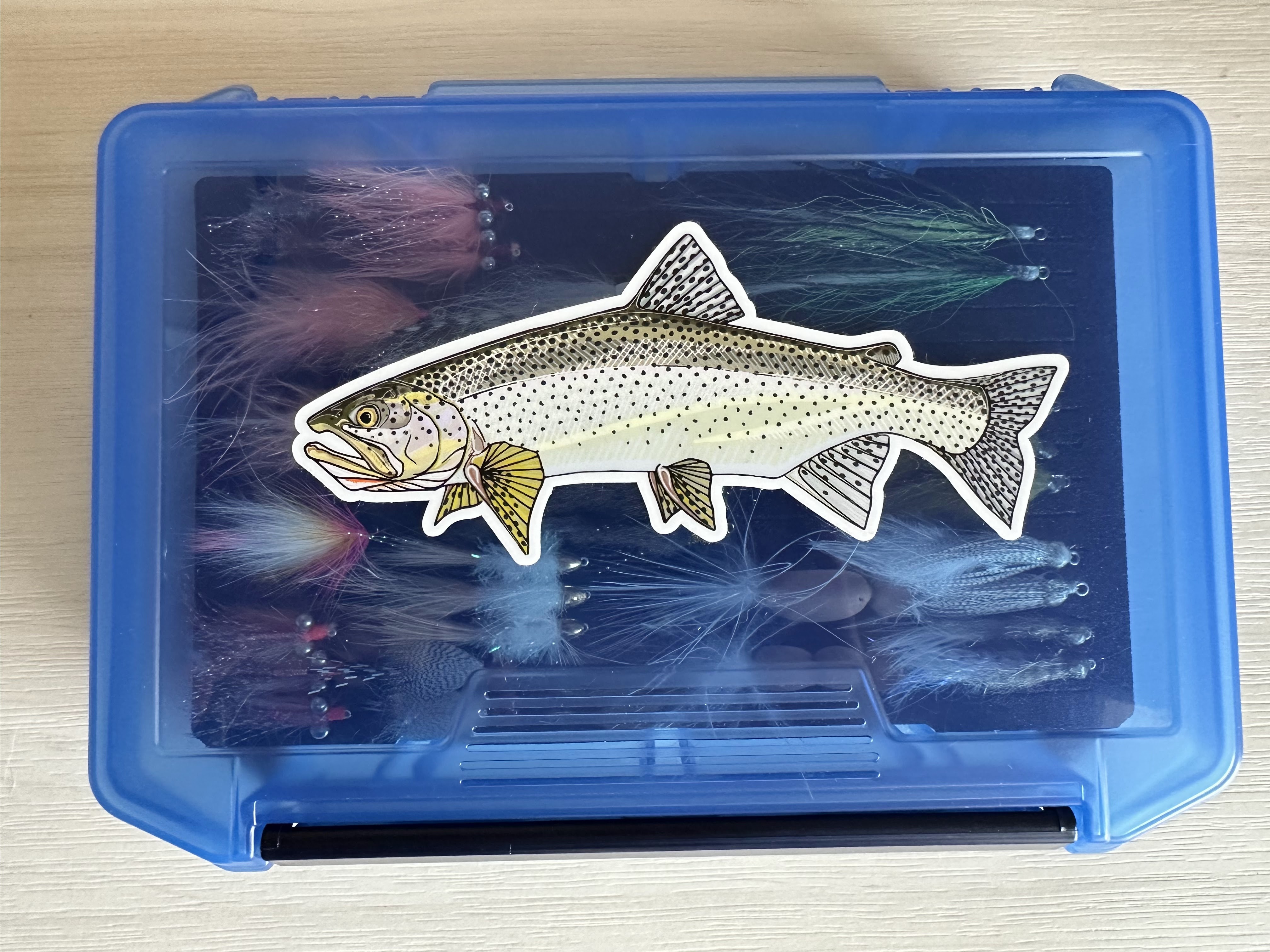
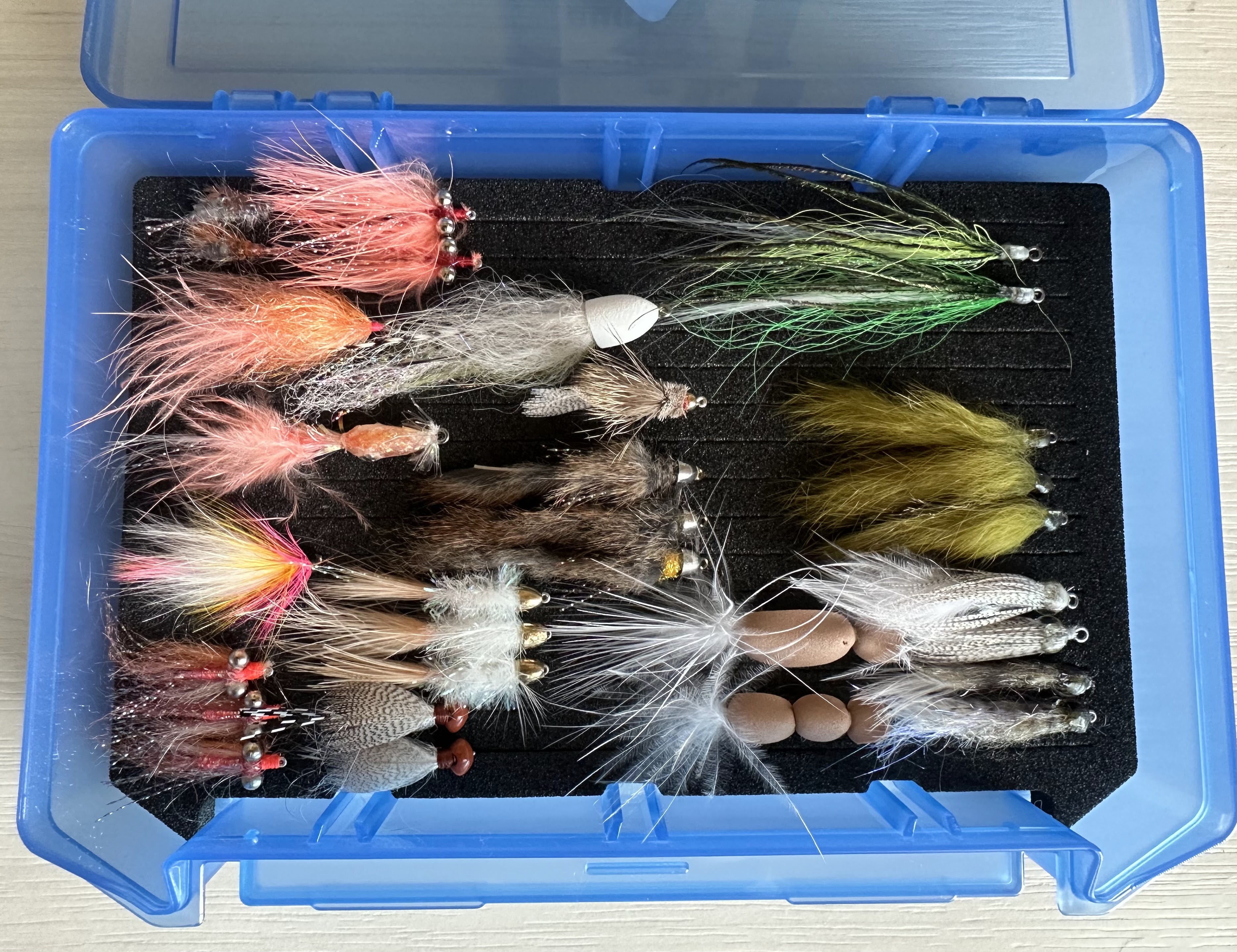
This kicks off in early March when the fry are no larger than a matchstick and continues until June when the fry have matured into smolt, capable of venturing out into deeper waters on their own. From there they will spend the next 30 to 66 months in marine waters before returning back to their natal streams to spawn. Salmon that can beats the odds and survive into adulthood are capable of reaching an average size of 24-31″ and weigh in between 6.5 and 12.5 pounds. The males will attain jaws filled with oversized teeth and wicked molted spawning coloration. The discerning sea run angler will have spent the dark days of winter tying up chum fry flies in a myriad of sizes, weights, and colors. My box was bursting at the seams with patterns ready for their maiden swim.
The weather this weekend in western Washington was glorious; temperatures in the 70s and unfiltered sunshine. The first bona fide spring weather of the year. The type of weather that mobilizes a majority of the greater Seattle area who are ready to trade months of popping vitamin D pills for the real thing. Crowds were expected. My saving grace was that the highest tide of the day was scheduled to occur approximately six hours before the lowest tide. This is important for the wading angler, as it provides at least a couple hours worth of prime tidal shift fishing without walkable beachfront or exposed oyster beds (aka crowd magnets). Not that I have anything against folks that partake in either of these, but it means that the odds of foul hooking a beachcomber on a back cast drops tremendously. The solitude is also great, of course.
I chose a beach on the Olympic side of the Hood Canal that had been on my mind for some time. It is saved by a lack of formal designation or roadside signage that would be given to a state park; it is only a small turnout to park at off of an otherwise busy road and a set of stairs that leads down to the beach. It’s hiding in plain sight.
I arrived at 11 AM as planned, just as the high tide was about to begin its slow descent. There was only one other car parked at the turnout, a man sitting inside next to his dog. They were staring off at the water but their intentions remained a mystery. I filed them as Potentially Trouty and began rigging up.
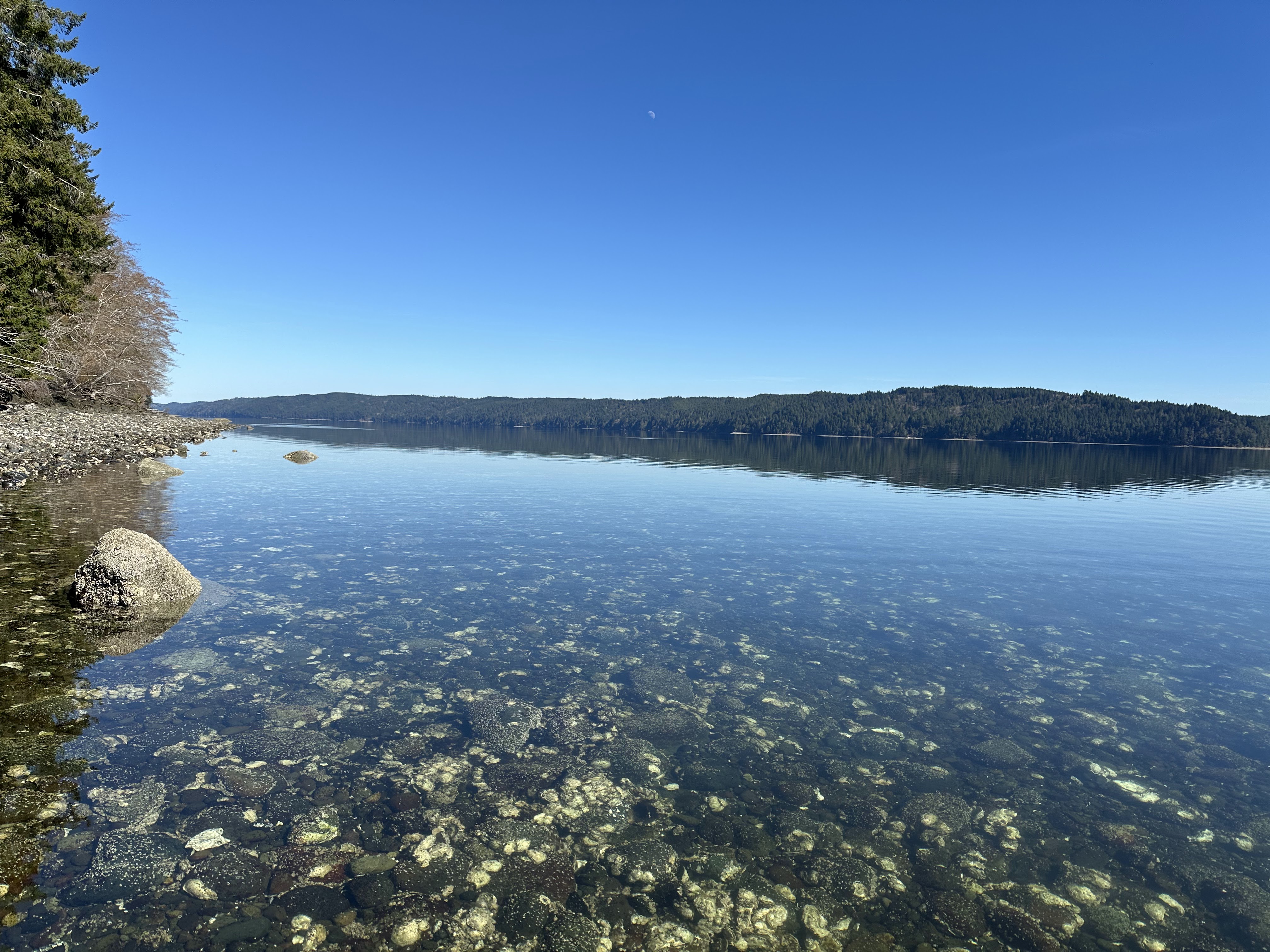
The trip started off like any other; I sprayed casts as far as I could double haul in a counter clockwise rotation. Then I walked up the beach half the distance of a cast and repeated. Despite the high tide, I never had to wade in much further than my knees. The water was chilly but the exposed sun made for quite comfortable conditions.
Eventually the man from the parking lot walked behind me with his dog. We made small talk about how nice of a day it was to be out and how long we’d been waiting for a day like this. The chat was refreshingly void of discussions regarding my luck, or lack thereof. He sat down on a rock up the beach and looked out over the view.
This is when things really started to get interesting. I had been scanning the shallows all trip looking for signs of chum fry to no avail. Doubt started to creep in. Was it still too early? Am I not close enough to a salmon rearing stream? All at once my fears were put to rest. Schools of dozens of chum fry started appearing mere feet from the shoreline. They weren’t quite matchstick thin, about 2-3 inches in length, with visible black parr markings running down their flank. They were here! And I had just the fly to match them with. As if on cue to seeing the schools of fry, the water directly in front of where the man was sitting exploded in a fury of jumping baitfish and trout. The cutties had arrived!

I spent the next couple of hours in a whirlwind of pursuit. I would wait for the sight of baitfish boiling or a trout leaping clean out of the water. Then I would sprint to that spot, stripping line mid stride and launching a cast into the whirlpool before the commotion dissipated. All of this was happening in the shallows, maybe 1-3 feet in depth, with some trout nearly touching dry land as they chased the fry up the beach.
But on all of these occasions, the action went dry just as soon as it had started. Even in spots where I was a mere fly rod’s length away from the frenzy when it started up, the water would settle and there would be no sign of trout nor fry anywhere in the vicinity. I took a break to eat lunch on a rock, making it only halfway through the grocery store sandwich and bag of Doritos before the draw of the feeding frenzy pulled me back into casting position.
I carried on this way until the predetermined hour that I planned to head back at arrived. My streak of sea run free trips continued, but at least I had the visceral excitement of their presence to hold me over until the next trip. Or so I thought…
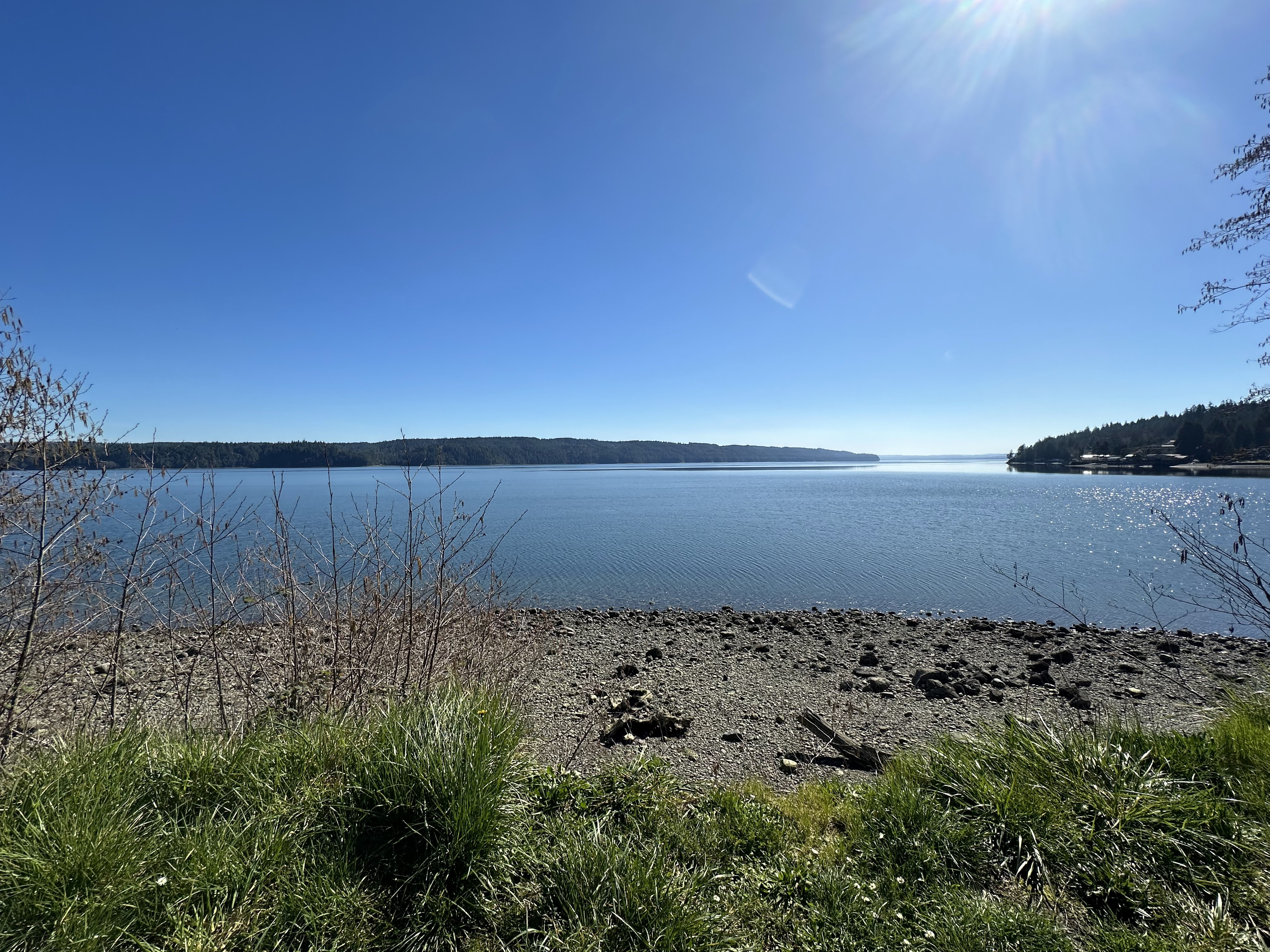
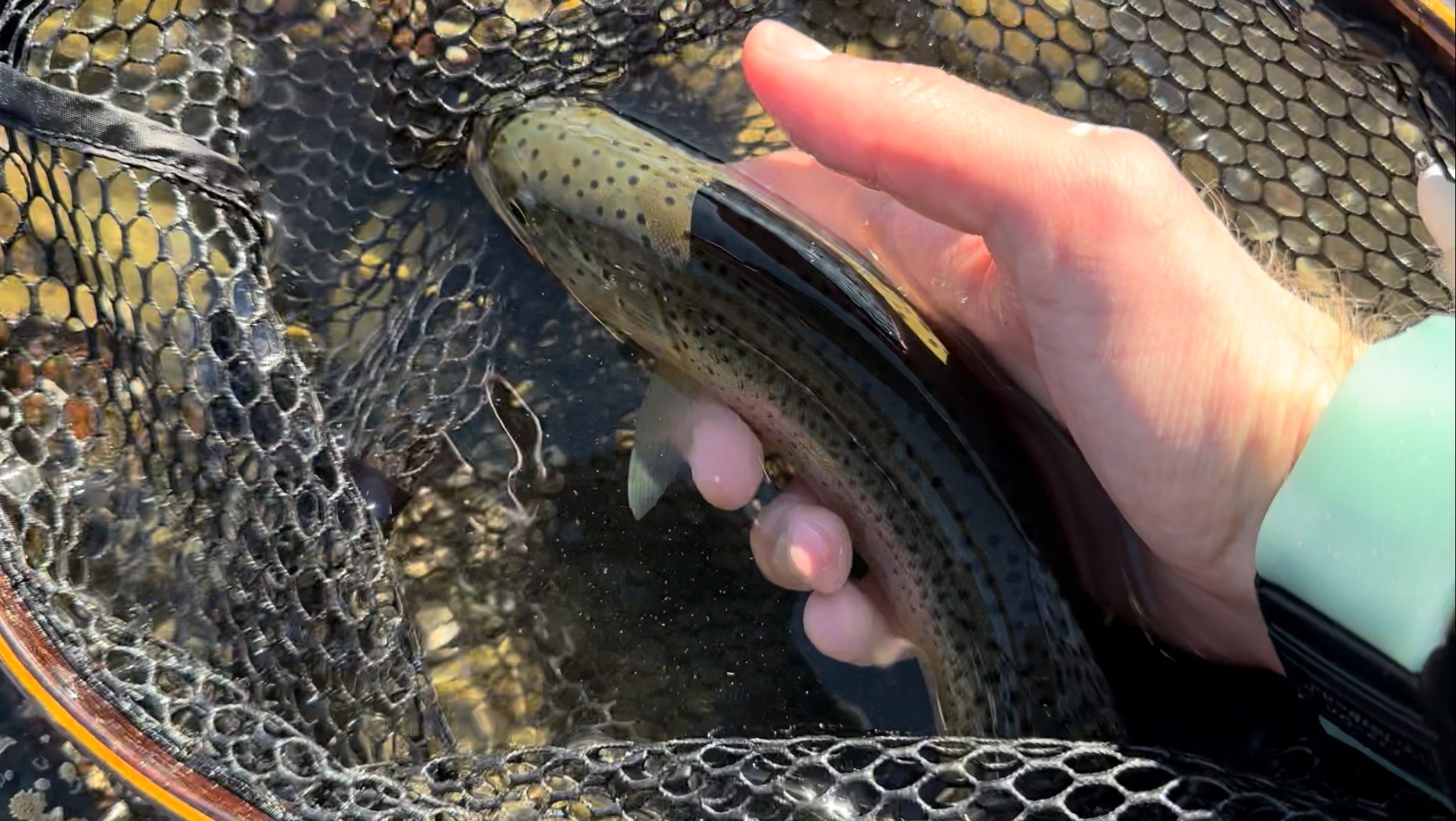
I’m walking back down the beach towards my car with my fly stuck in the cork handle. I see an explosion of trout about 50 feet ahead of me but I do not rush towards it. It dissipates. Now I’ve reached the spot and it starts up again. I strip some line out as the commotion fades and cast well past the frothed water, stripping it back through. Bump. Bump. It feels like I’ve hooked an oyster bed, not an uncommon occurrence. I give it a reflexive pull and a lively cutthroat launches from the water. Realizing what had just happened, I give it one more strip set for good measure. Sea run on!
He gives me two more acrobatic leaps in an attempt to throw the hook before I’m able to slide the net beneath him and cradle him in the shallow waters. I am shaking with adrenaline. The fish is a beautiful specimen; an olive back transitions to subtle hues of purple, yellow, and pink along its flank. I keep it in the water long enough to snap a couple of photos before returning it to the salt.
I sit down on the beach to collect my thoughts, making sense of what had just transpired before firing off a text to Jill that read, “I DID IT!!! I FINALLY DID IT!!!”
The curse had been broken. All on St. Patty’s day nonetheless.

Discover more from The Path Less Fly Fished
Subscribe to get the latest posts sent to your email.

 The Path Less Fly Fished