The October days that herald in the end of the trout season are upon us once again. I recently headed back to the Midwest for one last wedding of the year. My job was generous with allowing me to work remotely the week following the wedding, extending my time spent with family and friends. Unfortunately, after two and a half years of successfully dodging the pandemic, I fell sick and spent much of that week recuperating. Cancelling plans I had made with Dean to revisit our favorite stream together was a tough pill to swallow. But the quarantine period meant pushing back my original return date, carving out one last solo trip in Wisconsin on the season.
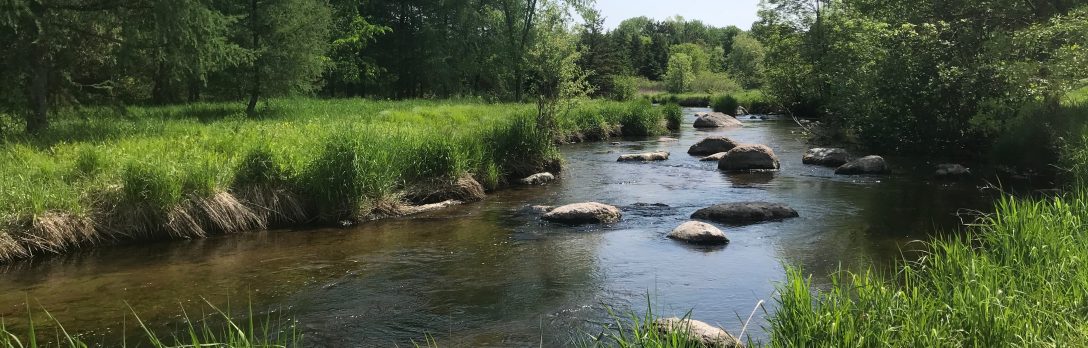
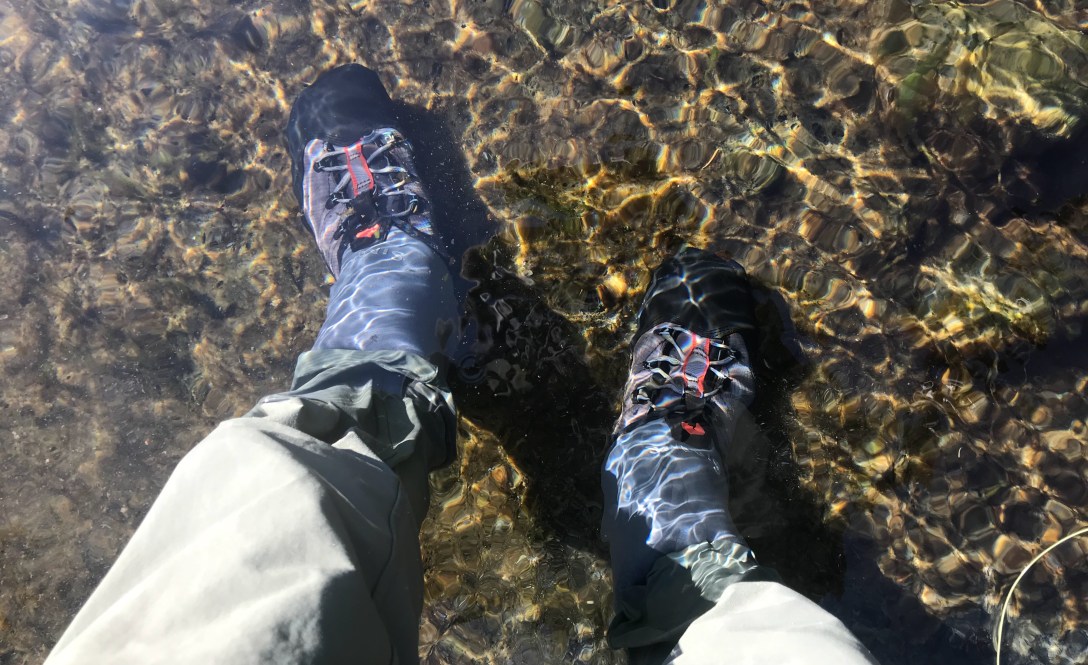
I departed for my favorite stream on a Sunday afternoon with the changing fall colors providing some incredible roadside scenery. When I arrived, I found that my favorite access point was already occupied. I’m quite grateful for this as it forced me to visit a section of the stream that I usually pass up, but one that I have had success on in trips past. I rigged up and worked my way through some tall grasses, navigating the land mine style footing of the wetlands. After the first unsuspected soaker up to your hips (a bit colder in a wet wading set up than in waders), you stop being so careful and simply carve out your own path. Eventually I reached the stream’s edge and found the conditions to be delectable. No wind, an active mayfly hatch that appeared to be ramping up, trout breaking the surface both up and downstream of my vantage point, and challenging but not impossible casting lanes that would require a delicate presentation in order to pull off. This is about as good as it gets in my book.
On the topic of casting, I’ve made the transition from a graphite to fiberglass fly rod as my small stream rod of choice this year (I chose the Redington Butterstick 3wt). Aside from the extra long (blaze orange!) rod tube that it requires being a TSA magnet when traveling, it is an absolute dream to fish with. The fiberglass blank provides a slow casting action and in turn I find my own internal dialogue to follow its unhurried rhythm. The material properties also allow it to transmit the vibrations supplied by even a small trout incredibly well. You can feel every headshake, much more than you can on a similarly weighted graphite fly rod. It has turned me from a skeptic into a fiberglass believer in only my first season of using it. Anyways, that’s enough of the geekin’.
Exploring the concept of slowness further, there’s something that I’ve been working on lately and that is properly resting water after a missed strike. The adrenaline rush produced by a surface strike all but begs us to immediately recast to that same position, expecting a similar result. This is often for naught, as a trout that has felt the hook is catapulted to a heightened state of awareness. Throwing further stimuli into their periphery often sends them darting to the next pool. But a trout’s memory is short, and in these moments I will pull my journal from my bag or stand and watch the air for insect and bird activity. A few minutes pass and soon that trout has resumed breaking the surface once again.
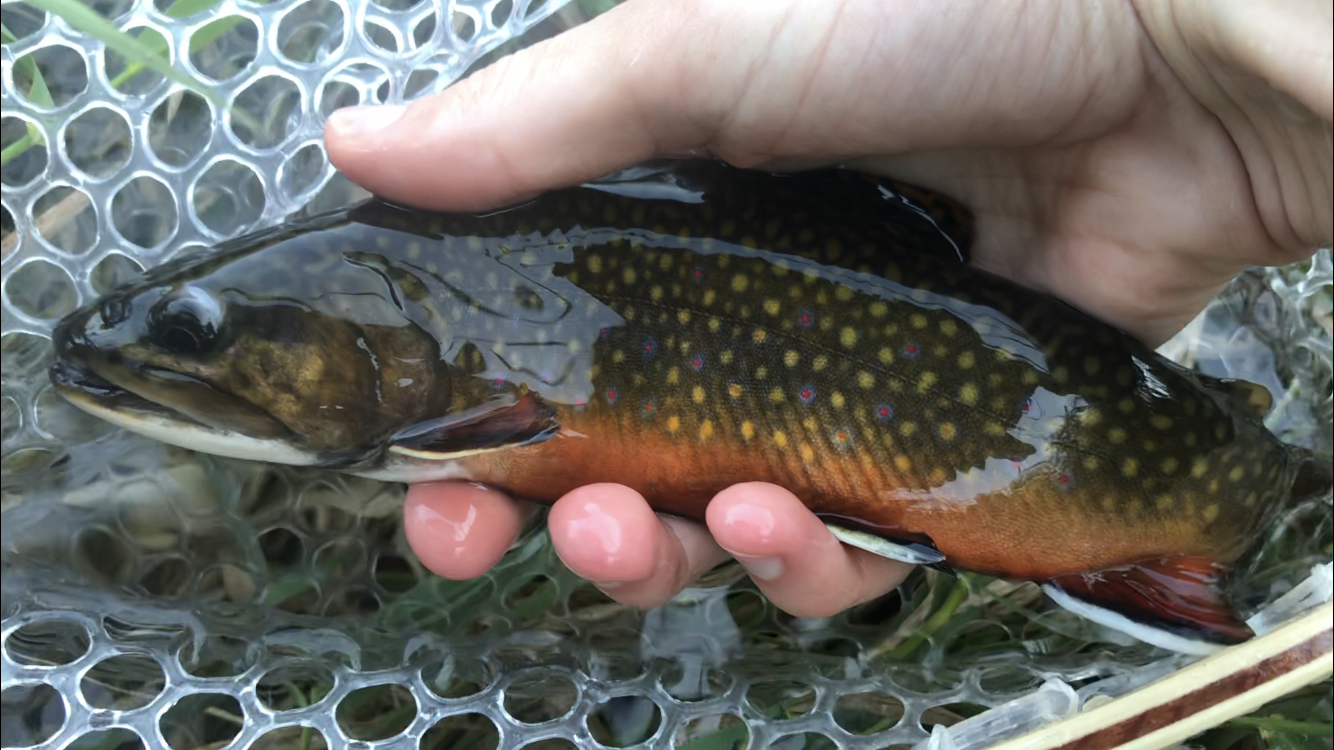
This is the exact sequence of events that occurred on this trip. My cast towards the head of the pool was immediately struck at. On the initial missed strike, I could see the brilliant pumpkin orange stomach and dark sided flanks on a hefty brook trout as it arched out of the water. I bided my time and was rewarded in spades for my patience. A similarly placed cast of my Parachute Adams resulted in another aggressive take. I redirected the brookie from a maze of roots protruding from the far bank and fell forward into waist high water as I slid the net beneath it.
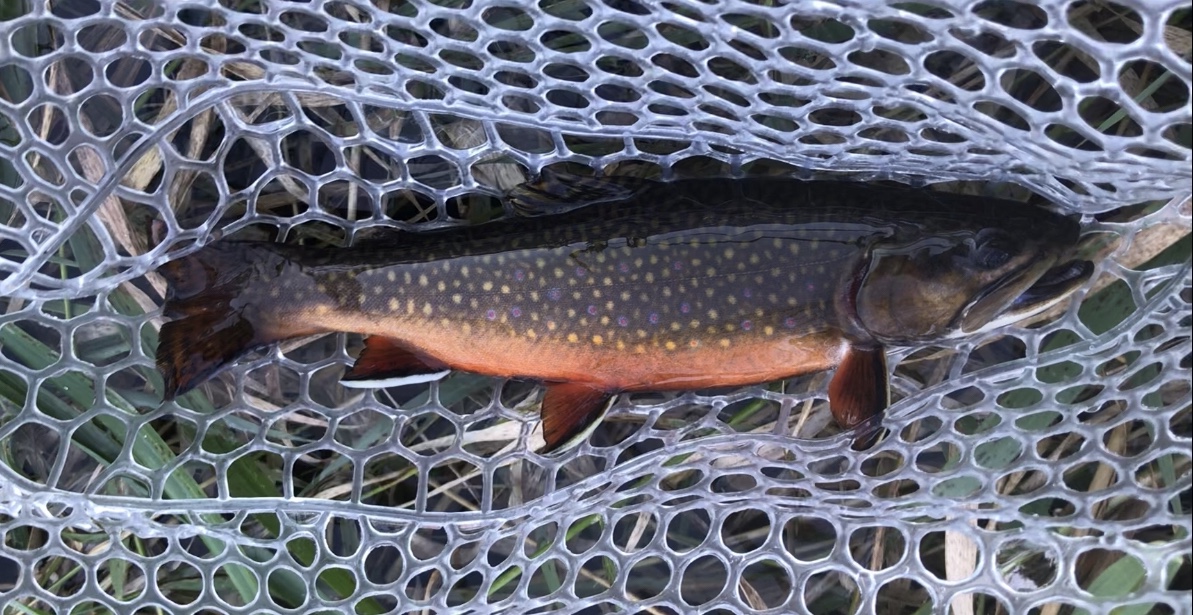
I held this native beauty in my hand only long enough to capture a short video before it found its way back to the stream with a lively thrash. As fly fishermen, these are the moments that will stoke our day dreams over the long winter. I plan to revisit this memory often.
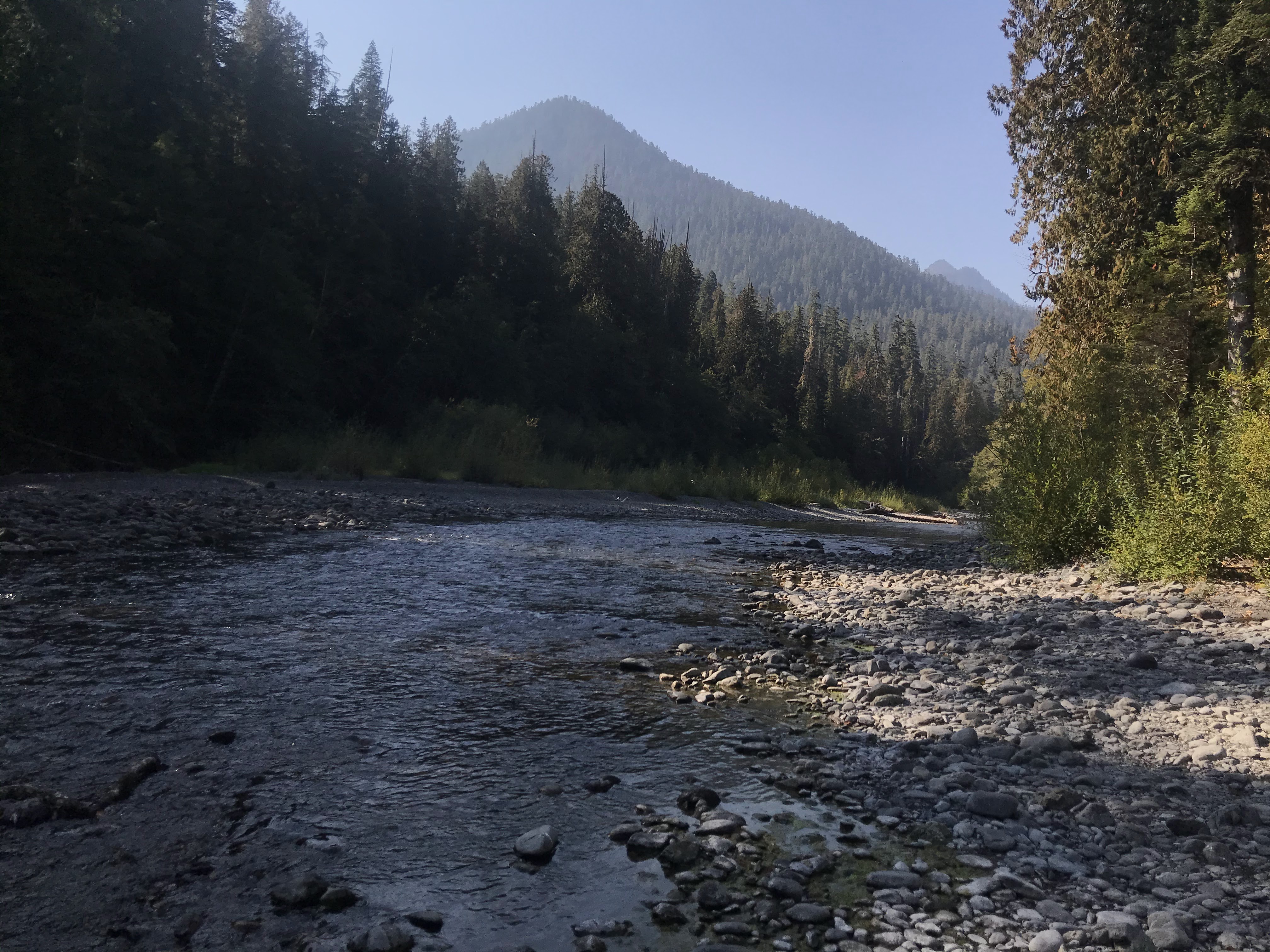
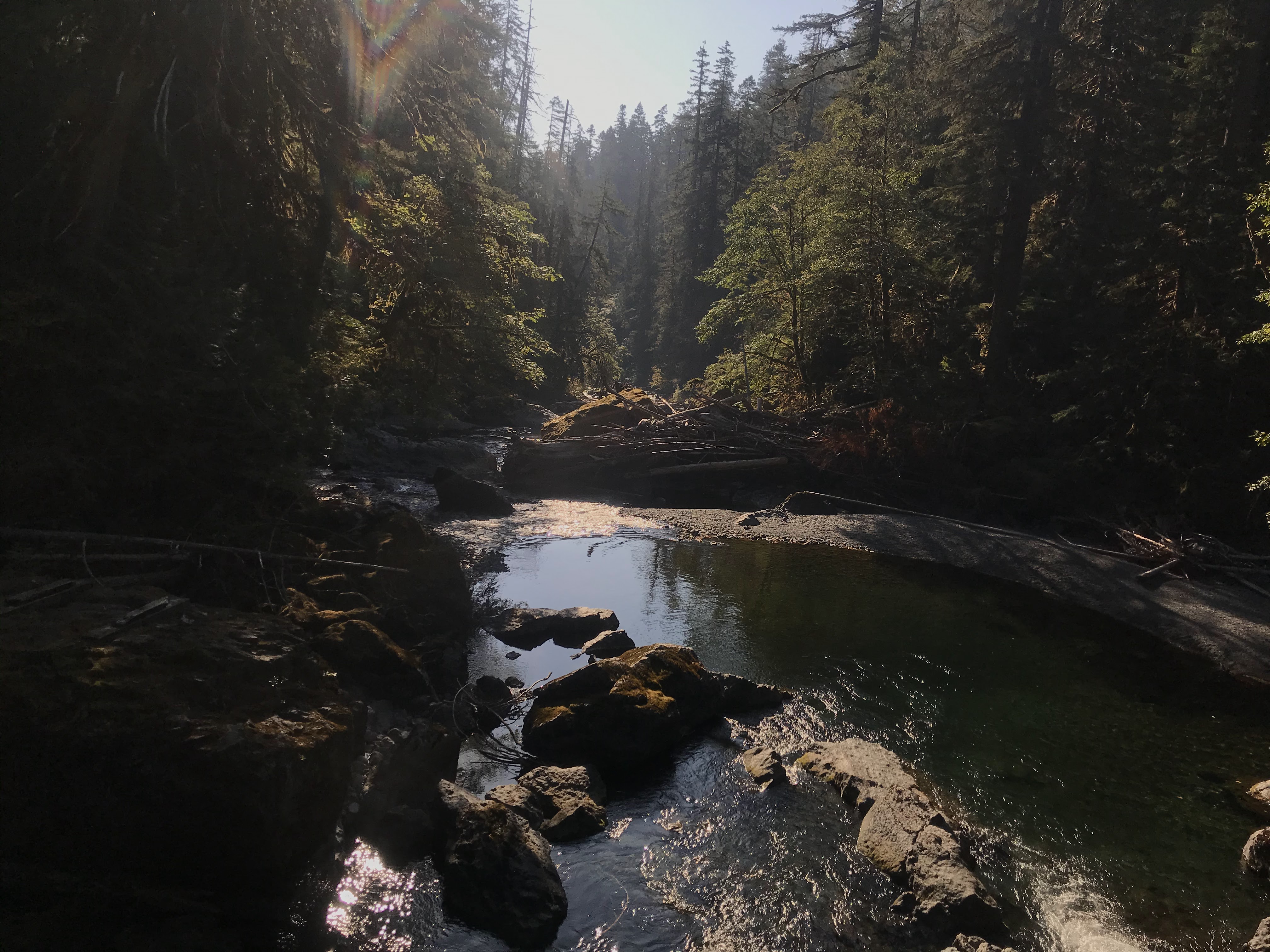
Back in Washington, I felt the pressure of the October season closure as well on my favorite mountain streams. A packed schedule later in the month meant that my lone free Saturday might be my last chance to get out. I headed west towards one of my favorite regions within Olympic National Park to fish a stream that has been high on my list for some time. I had caught glimpses of its turquoise pools once on a backpacking trip that bordered its banks and had been waiting for my chance to explore it thoroughly.
A dry late summer meant that the water levels were extremely low and the water was quite stagnant in some stretches; not conducive to trout activity. Despite this, there was stretch after stretch of some of the most beautiful pools and runs that I had seen all season. I worked my way slowly through each run, stopping every now and then to eat a snack from my pack or to journal and observe. Eventually I reached a logical stopping point in the river, navigated my way back to the trail, and hiked the two miles back to the trailhead. It was an enjoyable trip in all aspects despite the no fish outcome.
So what will this offseason bring for me? First and foremost, I have a couple more stories from the previous season that I’m working on and hope to publish over the next few months. Sometimes I feel compelled to write immediately after taking a trip. Other times I need to sit and reflect on it for awhile before the story comes together. I want to continue to challenge myself to share stories only if they provide some new angle or perspective that I have not already wrote about. This keeps things fresh for both myself and the readers. Sometimes that angle isn’t always readily apparent, but in my experience there is usually one there if you stay patient and continue revisiting the memories in your mind. So keep an eye out for more content this winter.
One of the perks of living in Washington is that the closure of the trout season on the mountain and coastal streams does not mean that I will be hanging up my waders until the start of the next. In fact, it will allow me to focus my attention on a unique year-round fishery that I neglect when my beloved streams are open. This is the sea-run cutthroat trout fishery of the Puget Sound. I consider last winter and spring to be my first season pursuing this species and I definitely would say that I cut my teeth during it. Many fishless trips to the local beaches resulted in hard fought lessons learned that I would not otherwise experience on a stream. In my lack of success, I neglected to find a compelling story to tell. But I hope to change that this year and open the lens to a unique and exciting saltwater fishery.
Lastly, I plan to foray into a new hobby that is fly fishing adjacent and that is designing and sewing my own gear. I spent the summer researching the ins and outs of the MYOG (make your own gear) community and have ideas for a whole host of sling packs, wader tote bags, backpacks and other fly fishing specific gear that I’d like to bring to life. I’m fortunate to have a mother with both a great knowledge of sewing and all of the necessary equipment to practice it. While I was home on this trip, I had purchased the components to sew my first project, a waterproof wading belt pouch. It was an enjoyable project to complete and it gave me the confidence that I needed to take the plunge into this new hobby. After I procure my own equipment, I plan to begin creating and testing some bespoke fly fishing gear. This is a journey that I plan to share on The Path as well and I’m excited to get started.

That about wraps it up on the 2022 trout season. It was an incredible one, dare I say the best yet. I’m beyond grateful for the variety of locations, trout, and good people to share them with that I was afforded this year. As always, thanks for coming along for the ride.
Discover more from The Path Less Fly Fished
Subscribe to get the latest posts sent to your email.

 The Path Less Fly Fished