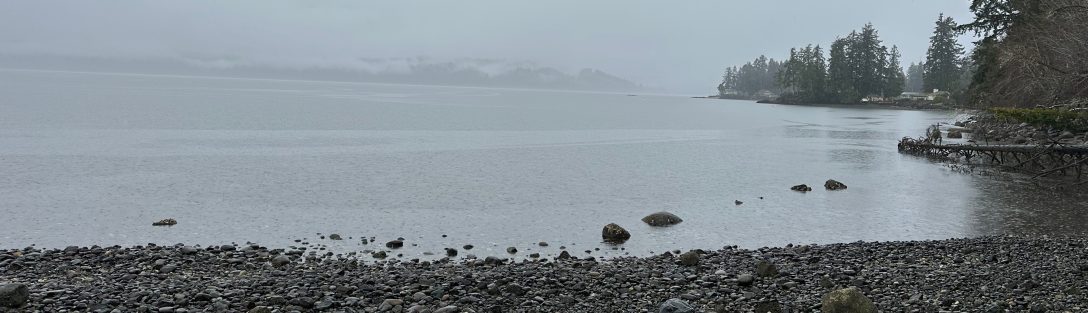

Situated above a neighborhood of Salt Lake City’s jet-set millionaires lies a small headwater stream teeming with wild Bonneville cutthroat trout. This is a paradox of locale; a beautifully scenic part of the Wasatch mountain range, yet well within the bubble of a major American city. Frequented by mountain bikers, hikers, and picnickers and outfitted with well maintained trails, access roads and the periodic toilet hut, this place did not fit the definition of the “wild” Utah I would come to know by the end of the summer. But it was mid-June and I had an unquenched thirst for my first cutthroat trout. A record snowpack from the previous winter had left a number of blown out streams churning out deadly flows of white water upon my arrival; the small headwater streams originating on mountainsides were the only source of refuge.
Bonneville cutthroat have an interesting natural history and play an important role in the widespread diversity among the oncorhynchus genus in Utah today. Via Wiki:
Bonneville cutthroats are descended from cutthroat trout that once inhabited the late Pleistocene-aged Lake Bonneville of Utah, eastern Nevada, and Southern Idaho. Since the desiccation of Lake Bonneville into the Great Salt Lake, which is too salty for any kind of fish life, Bonneville cutthroats have been isolated in smaller populations in the headwaters of mountain streams and in lakes of the Bonneville drainage basin. The isolation has resulted in much phenotypic variation among populations.
The Bonneville cutthroat officially replaced the rainbow trout as the Utah state fish in 1997. Once considered a nuisance and subject to intense commercial fishing pressure from the 1850’s through the 1920’s, today they are members of the Utah Sensitive Species List. This has been attributed to predation/competition with non-native fish, hybridization with rainbow trout (resulting in cuttbows), and loss of habitat.
Reaching Salt Lake City from my apartment in Ogden is a 45 minute drive according to Google maps. This may be so, but requires an alignment of multiple planets to occur. Most of my fishing took place after work and I’m convinced that navigating this highway 15 route into the city is only for the previously uninitiated or naive. It’s a horribly engineered highway system (in my opinion) and because of this I would always opt to take the scenic, 1.5 hour drive through the small country towns of Coalville and Wanship, looping around the major highway. (Plus this route borders the Weber River/Transcontinental railroad for much of its length) All told, this left me with only a few hours of a fishing window on any given post-work trip.
Three separate trips were made to this small creek over the span of a week during mid to late June. Because I’ve waited so long after the fact to write up this article (my bad), the minutiae details of these trips aren’t crystal clear. Luckily, I keep a daily journal and have been able to go back and cross reference them. Here are those journal entries, either interpolated or in their entirety, along with pictures from the respective trips.
June 15: Had another adventure last night in search of my first cutthroat trout. This one took me to Salt Lake City. Driving to or from SLC in rush hour traffic is some of the worst I’ve had the pleasure of experiencing. Because of this, I took an alternate route that parallels the Weber River and runs through some beautiful Utah countryside. And on top of that, it only adds 45 minutes to the drive. I was quite fatigued as I started driving there, so I pulled over and took a 15 minute nap at a gas station in the town of Coalville. I got to the canyon shortly after and it found it absolutely packed with cars and mountain bikers. I assume this is one of the top places for those in the city to experience nature. The creek parallels the road and I decided to stop at an uncrowded section. I got out, suited up, and hit the first pool I found. This creek is an interesting one, and it’s very similar to how I imagine the small brook trout streams in the Smoky Mountains might look. There are shallow, fast flowing cascades that dump into a sort of plunge pool, and the pattern repeats as you hike further up the canyon. There are almost no long runs of slow, meandering water that I am most familiar with.
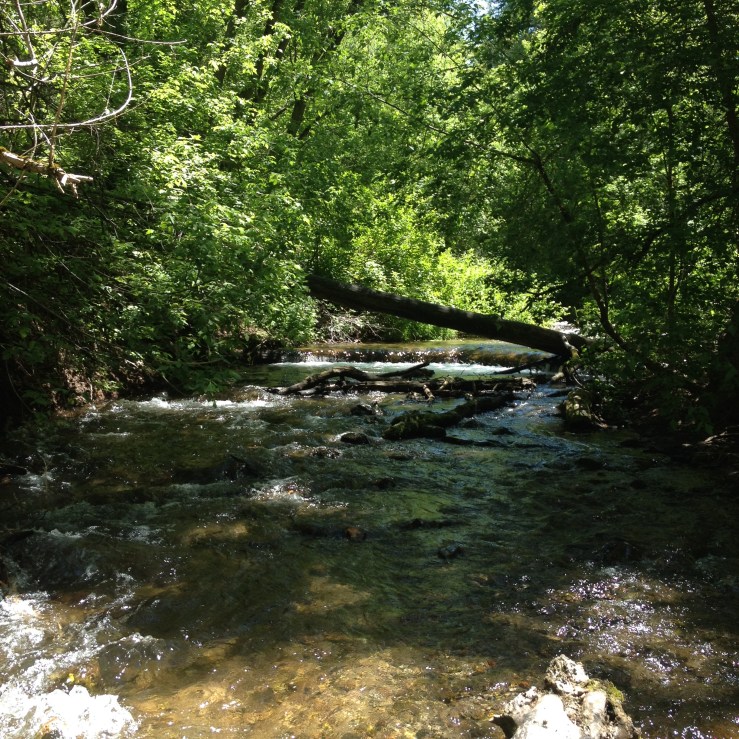
It’s also extremely hard to cast in among the overhead and shoreline brush. I did quite a bit of bow & arrow casting, but with no success. I hiked a ways upstream, skipping the fast flowing riffles and stopping at the pools in between. I stopped fishing around 9 with the final pool looking like the stuff dreams are made of, definitely home to some nice Bonneville cutts. I did see two hanging along the bottom in the 8-10 inch range. This is the pool I’ll start at next time I return. Upon leaving they charge you $3, I couldn’t believe they had a lady at the ticket booth still collecting fees at 9:30! I took the highway home and got back around 10:15.
June 17: Today I finally broke the elusive search for my first cutthroat trout! It wasn’t easy and I have learned many lessons from this trip. I was back at Mill Creek in Salt Lake and this time I began at the pool where I last left off at. I started by pushing for a top water strike, but by the second pool it became apparent that the trout were feeding subsurface. I absolutely love fishing this creek, though it’s crowded on a weekend, I didn’t see any other anglers the whole time today. It was the second pool where I connected with (and lost) a few cutthroat. Lesson learned…invest in a net! I will have one by the next trip. Words can’t describe the frustration of fighting a decent cuttroat to hand only for it to flip the hook as you try to grab a hold. Saw my first stonefly hatch today. They were black stoneflies, about a size 12. Was excited to see them hatch, but didn’t see any surfacing action on the water.
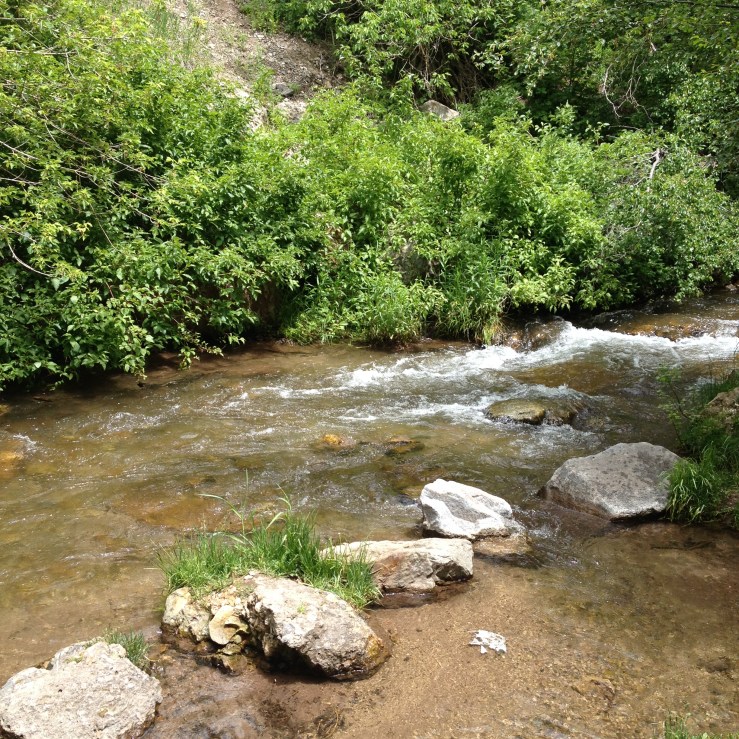
I “officially” caught my first Bonneville cutthroat as I approached the section of stream that parallels the final parking area. From the shoreline, I spotted a trout hanging close to the shore in a small seam and so I retreated to approach it from downstream. Standing on a log jam, I made 5 or 6 casts over the top of it before it decided to take my prince nymph. I got a hold of this one and took a few pics before releasing it back to the pool. It was a healthy, beautifully spotted Bonneville cutthroat.
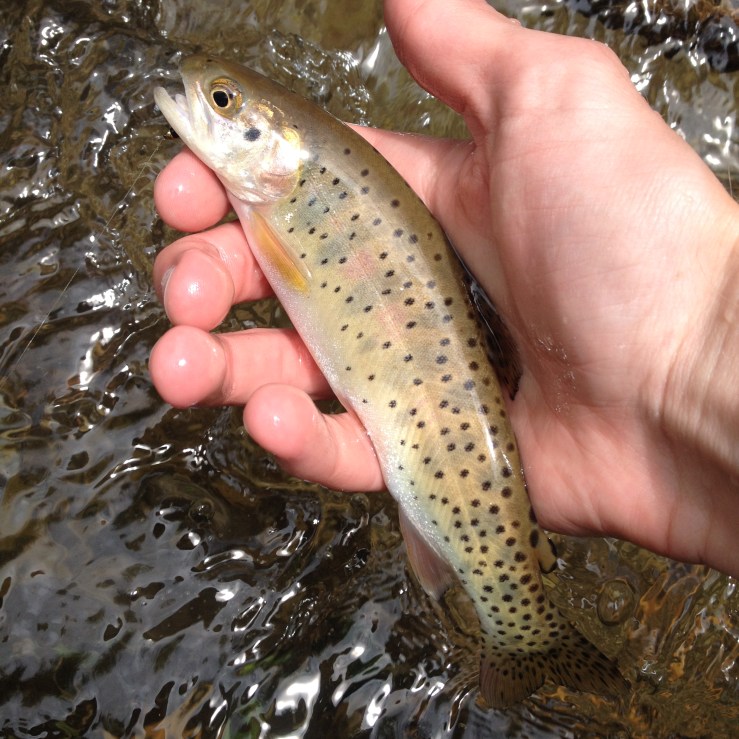
The cutthroat isn’t as colorful as the brook trout, but I’m attracted by their brown, golden and red hues. Some even have hints of blue and purple among their perfectly circular spotting. I continued upstream a ways until I got to a point where small kids were jumping around in a pool and decided to call it a day. I will be back soon for more Bonneville cuttys, next time with a net!
June 20: Had the day off today for a mill-wide power down, so I headed back to SLC at around 9:30 and arrived at 10:30. As before, I began fishing where I left off last. That being a section at the end of the parking lot, where I hooked into 3 or 4 trout last trip. Since last trip, I replenished my nymph selection and purchased a small wooden net. No luck at the first bend, so I hiked up to a spot where there are picnic tables on both sides, last time around these both were occupied. This hole brought me success, as I hooked and landed my biggest Bonneville cutthroat to date. Didn’t get a measurement on him, but from the pics he looks to be around 12″. He took a simple beadhead caddis pupa that I had tied up.
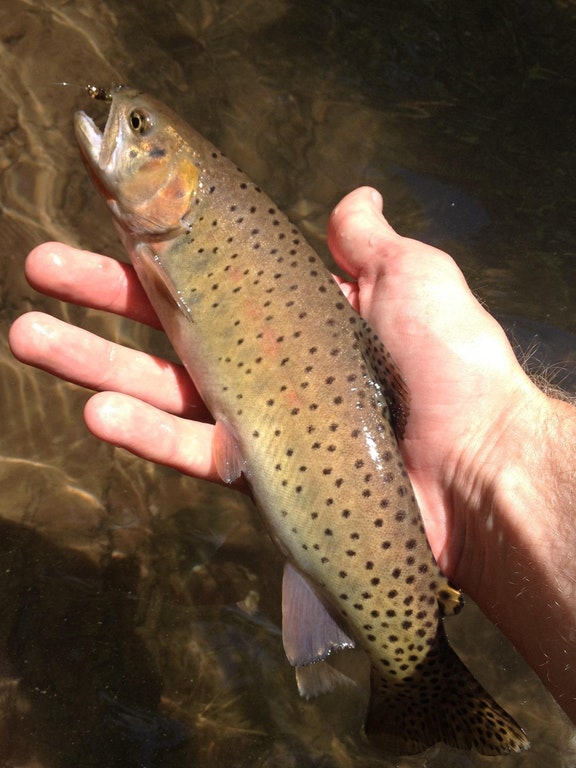
Shortly after that, I landed a smaller cutthroat, this one around 6 or 7 inches. I kept hiking further up the creek. One of my favorite things about fly fishing is exploring further than you’ve been before, especially if it’s a stream that you frequent. That’s the innate allure of ‘terra incognita’ I guess. I trekked through fast flowing pools and over a few small rapids until I reached a point where one of the shoreline trails abruptly ends. A few pools above this point is where I experienced my favorite Utah fly fishing memory thus far. I came up onto this pool that was full of cutthroats. Here’s a rough diagram of it:
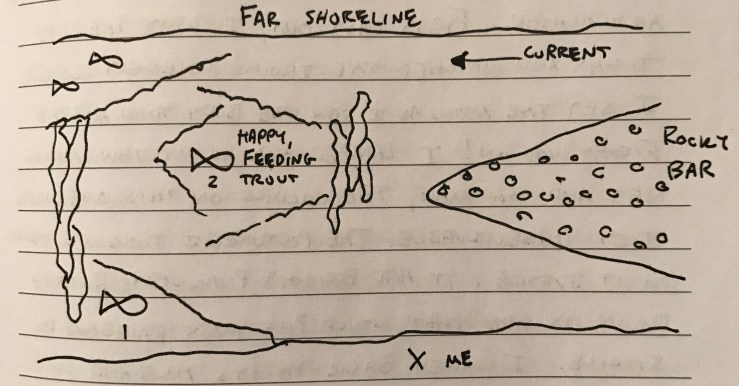
This pool reminded me of the essay titled ‘The Happy Trout of Acorn Creek’ from Jim Chapralis’s book, Le Shack. A 10″ cutthroat was sitting in a current break from an upstream log jam and was feeding voraciously; twisting and turning with a certain elegance as it ate nymphs near the bottom before swiftly accelerating to grab a bug off of the surface. This was a happy trout, just living life. I stood there, content, and observed it for a while before deciding to try and meet it up close and personal. It never seemed to pay my presence any mind, all focus on its own task at hand. I originally tried roll casting my beadhead caddis with a strike indicator, which it would mouth before instantly rejecting. After a few passes, it no longer paid the imitation any attention. This made me switch to two different dry caddis patterns. Each would receive a careful examination before the trout retreated again back to the bottom.
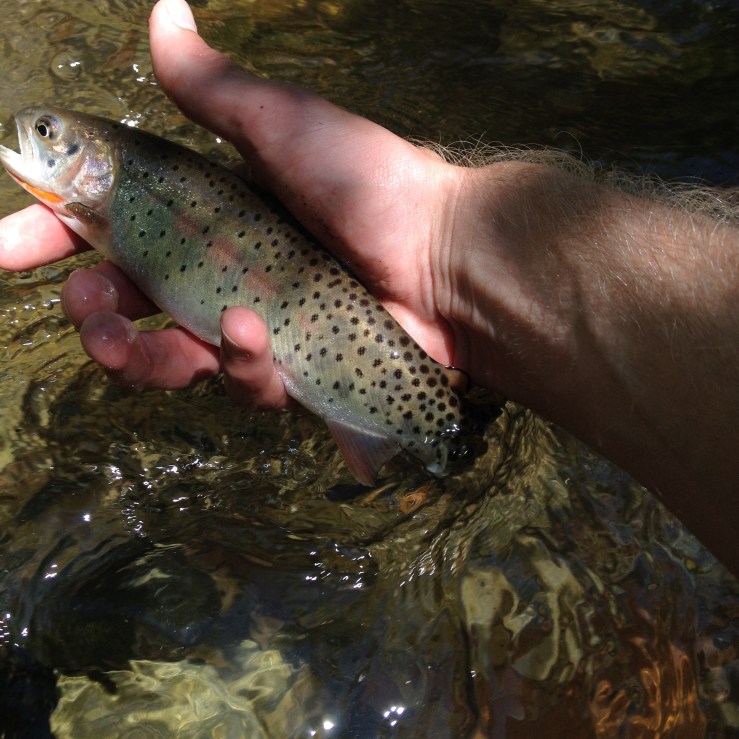
Finally, I tried a caddis pupa I had tied without beadhead or lead and no indicator. First cast out, I kept the line taught and watched the trout’s movement closely. I set the hook as I saw the body turn and the fight was on! I landed him in my new landing net and oh man, the colors on this one were just unbelievable. Unfortunately the only picture I took of it was rushed and off center, as I tried to return it back unharmed as quickly as possible, so they don’t do it any justice. It had bright pink spots running down its side that would put most rainbows to shame. I waded midstream to its hole and released it there; it soon regained composure back in its home. I’m blessed to have had such a close encounter with this happy trout.
Discover more from The Path Less Fly Fished
Subscribe to get the latest posts sent to your email.

 The Path Less Fly Fished