There’s a note that I keep in my phone and it’s titled, ‘Life Fly Fish Bucket List’. It contains the names of the top five fish I would wish to pursue at the moment; a hypothetical itinerary of travel if I were told today that my grains of sand were soon running out. It’s a list that gets continual updates, usually synchronous to the quarterly release of The Drake magazine. So, in the spirit of ‘wishlist season’, here’s my current fish list of 2017.
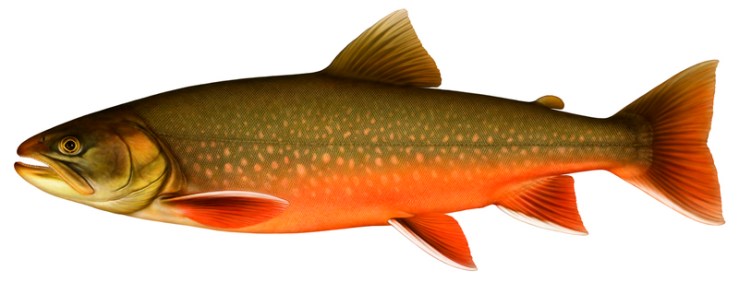
Arctic. Char. Where do I begin? That magnificent fiery belly situated below a constellation of red to pink spots. The brook trout’s faster, stronger and smarter cousin. The Arctic char steals the brook trout’s lunch money, then he steals its girl. A fish with both the audaciousness to hit a 6 inch streamer and the sophistication to sip pinhead-sized midges. An inhabitant of arctic to sub-arctic climates, tying into one of these requires an outgoing flight to Anchorage or Reykjavik; neither of which I would oppose.
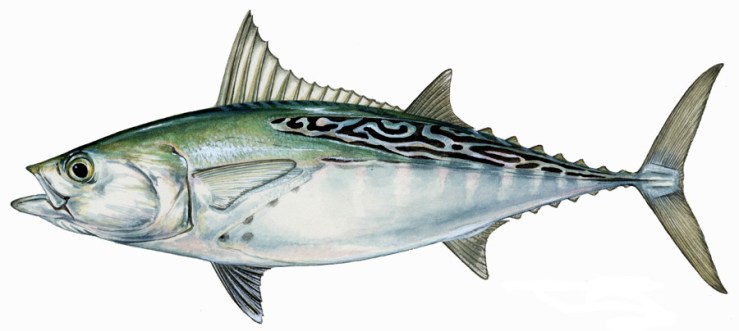
False albacore aka ‘little tunny’ are rockets of pure muscle. Unbeknownst to me, this species is quite popular among saltwater fly fisherman on the east coast. I first became aware of this species from Ben Carmichael’s essay titled ‘Autumn is for Albacore’ in the Fall 2017 issue of The Drake. “Beautiful and deceptive, they rip line off the deck at speeds of up to 40 mph, only to slack-line sprint back at you.” Nuff said.
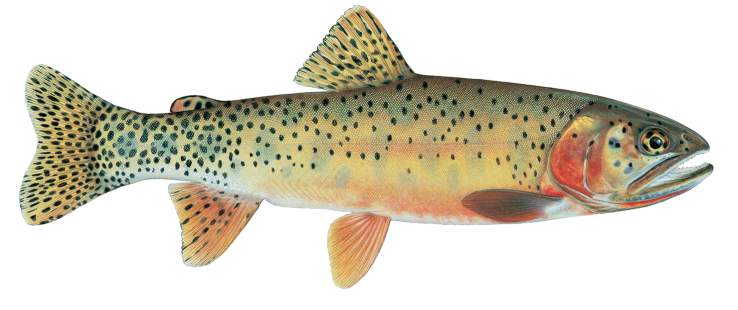
Longtime readers are well aware of my affection for the various subspecies of the cutthroat trout; the Rio Grande is no exception. Found only within the Rio Grande River drainage in southern Colorado and northern New Mexico, it is the southernmost native trout species in North America. Competition with nonnative trout species has seen the Rio Grande Cutthroat displaced from 90% of their native range. Listed under the Endangered Species Act from 2008 to 2014, this species has since been removed and efforts are being made to isolate and preserve genetically pure populations. A rare trout of brilliant color coupled with its unique desert habitat makes it one the most road trip worthy species in America.
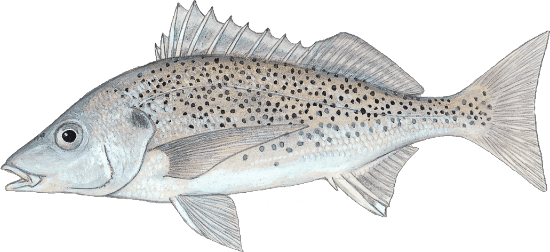
What’s this ugly looking fish with a name as repulsive as ‘grunter’ doing in any self-respecting top 5 list? Fair question. This saltwater species is often compared in difficulty to the elusive permit and I must admit that the “infuriating factor” that surrounds this fish is what earned it a spot on the list. I first came across this species while reading Jannie Visser’s article in issue #2 of The Mission. “To every person who, despite their best intentions and well-laid plans, has ever experienced romantic rejection, grunter provide a similar echo chamber of all your doubts and fears. Your presentation was perfect? No matter. Your advances are blocked. The fish are going crazy in a feeding frenzy? Who cares, you still won’t catch. Not even one.” Grunter are native to Africa and garner a small but dedicated following of fly anglers along the South African coast.
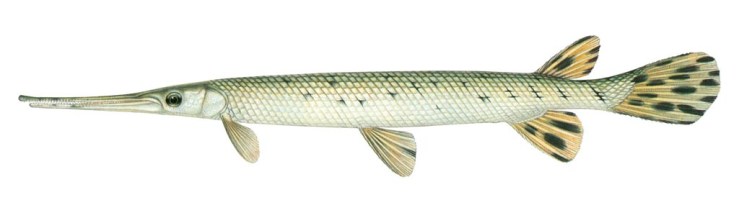
The longnose gar was my obsession of the mid-2000’s. A living dino, enameled in an impenetrable shield and a set of hundreds of clinically sharp pearly whites. An air breather, periodically revealing its location with the protrusion of its long snout. A subtle yet effective way of communicating “yeah, I see you” and “no, you’re not clever” as it dances around your boat. For years this species eluded me while taking residency in my young fisherman mind. We finally cracked the code in ’07; a creative rig utilizing small trebles in a tandem formation paired with a lively shiner minnow under a slip float held the key. Still, hook-to-net ratio was somewhere under 0.250 and only 1 or 2 were brought to hand in a given season. Pursuing and catching this fish, one with a long personal history, on a fly rod brings the obsession full circle.
Discover more from The Path Less Fly Fished
Subscribe to get the latest posts sent to your email.

 The Path Less Fly Fished