The idea of a long distance backpacking trip was first brought up about a month ago. The company I’m interning for has 5 other co-ops who are always looking for places to go on the weekends; the 25 mile hike to Red Castle was suggested by our engineering manager. Many people around the office had heard stories of or knew someone who had been here, but few had actually done it themselves. A group of 5 of us, 4 interns and 1 full timer had agreed that this was the weekend for the backpacking trip. Within a 24 hour span of starting the trip, 3 had bailed leaving my buddy Carson and I as the lone adventurers. It was pretty apparent from the get-go that we were the only ones up for such a challenge.
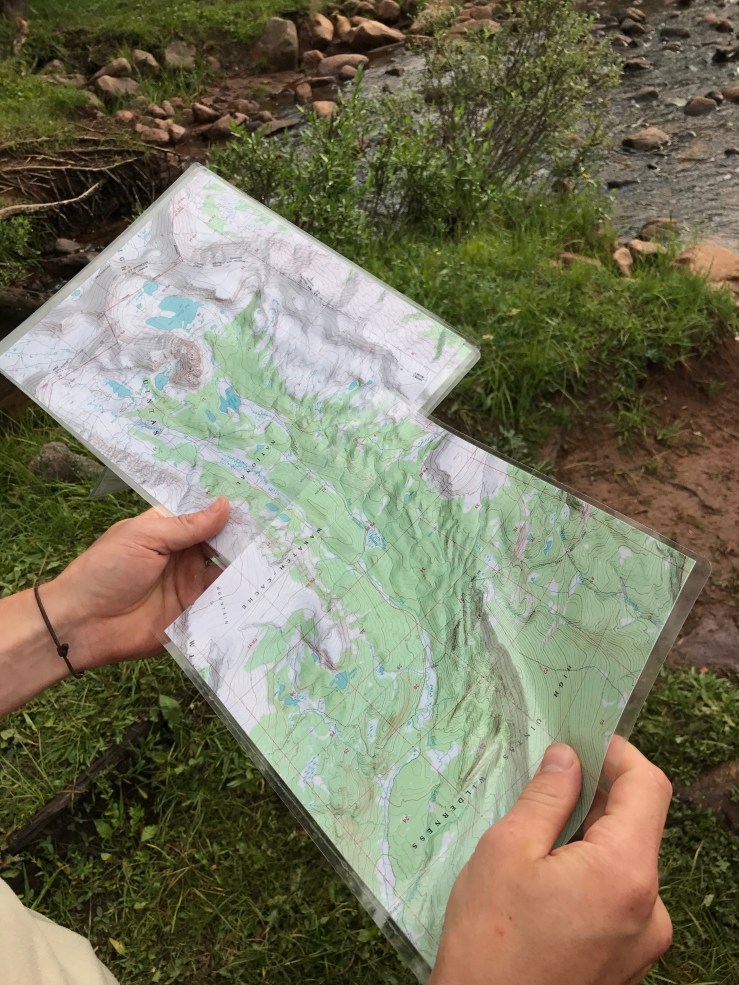
Pre-trip planning consisted of packing lists and printing out multiple chunks of topographical maps of the Uinta moutain range (laminated!) Located in northeast Utah and part of southern Wyoming, the Uinta range is the tallest in the state and the only in the contiguous U.S. with a east to west orientation. Elevations range from 8,000 ft in the lower canyons to 13,528 ft atop of King’s Peak; the highest point in Utah.
On a Friday afternoon, Carson and I made the 2 and half hour drive from Ogden to the China Meadows trail head. Our packs both weighed between 40 and 50 pounds and had pretty much everything needed to keep us alive for 3 days in the wilderness. This is my first time hiking with a full pack, I’m sure other backpackers would agree that on the first trip you’re waaaay too optimistic about how heavy it will feel. After a few last things, we parked, threw our packs on and made our way to the trail head. We passed 2 other hikers just before the trail, a dad and his son. The dad was taking a video of the son vaping behind their truck standing next to their packs; both packs looked to weigh about 100 lbs. I seriously wondered if we would ever cross paths with them again…we did on our return hike.
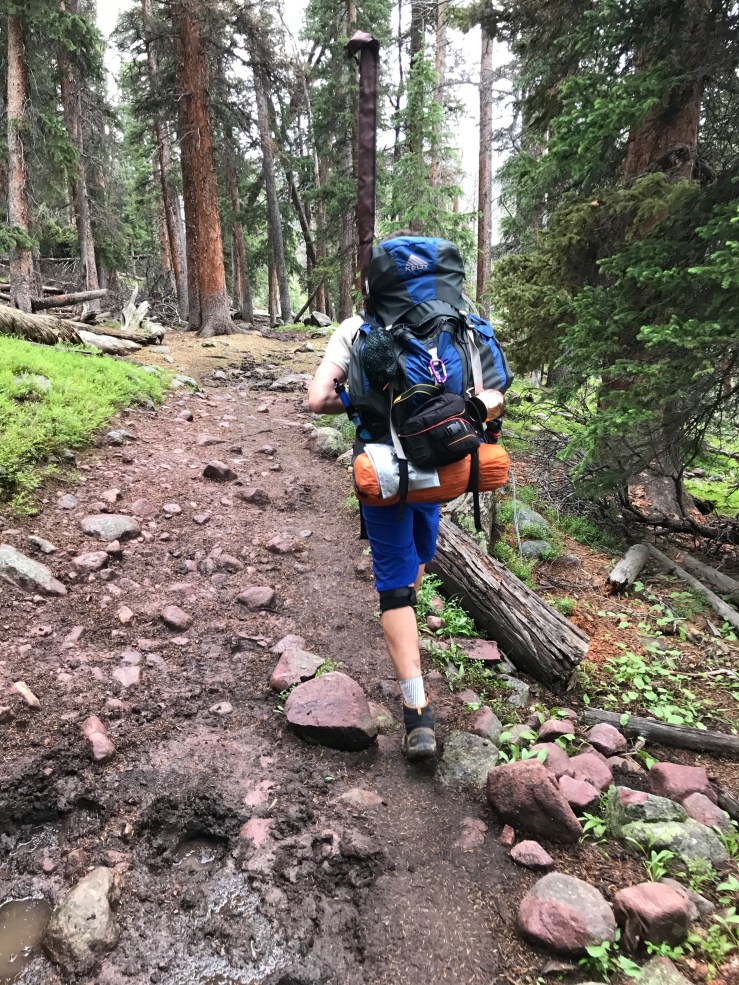
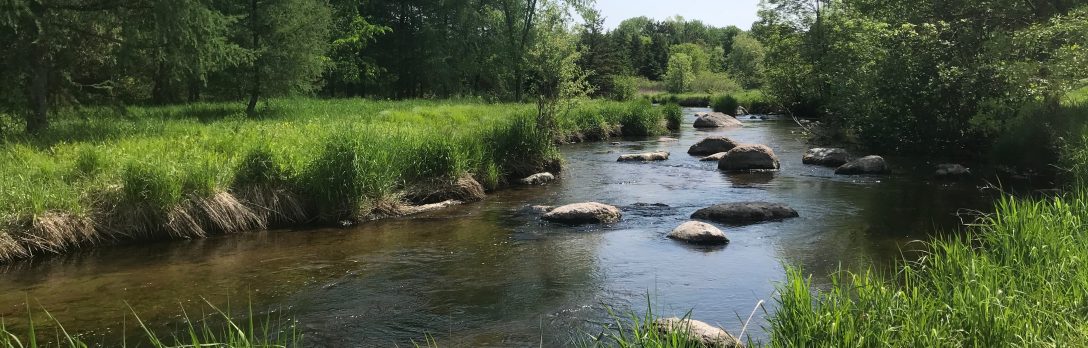
The trail started nice and easy, woods that gave way to a forest. Luckily, the trail bordered a stream for most of its distance. Tempting as it was to break out the fly rod, we had no time to waste if we wanted to reach our first destination by sundown. The stream was handy as it provided ample opportunity to refill our water bottles. This was done using the Sawyer Squeeze Water Filtration system. I seriously recommend picking one of these up if you spend any amount of time outdoors. For $20 you get a small nozzle filter that’s compatible with screw-on bottle tops, a roll-up transfer pouch, and straw in case you would rather drink straight from the source. The whole thing is super light and has a small packing footprint. Much lighter than packing in water bottles and easier than boiling your own water.
The maps we brought along also came in handy. Oddly, there were no mile markers on the trail to let you know how far you’ve come so at any recognizable landmarks, we would stop and use the maps to get an estimated “as the crow flies” distance traveled.
By about mile 5 or 6, the weight of the pack really starts to dig into your shoulders and it becomes a mental game to keep going through the pain. The last mile before reaching our day 1 destination was the toughest; a series of steep switchbacks up a ridge. We stiffened up and powered through those with force. Shortly after, we arrived at the day 1 destination; Lower Red Castle lake. Nine miles traveled in just under 4 hours. We set up camp, ate a dinner consisting of lentils and couscous heated over a small camping stove, hung the food bag up a tree, and went to bed just after darkness hit.
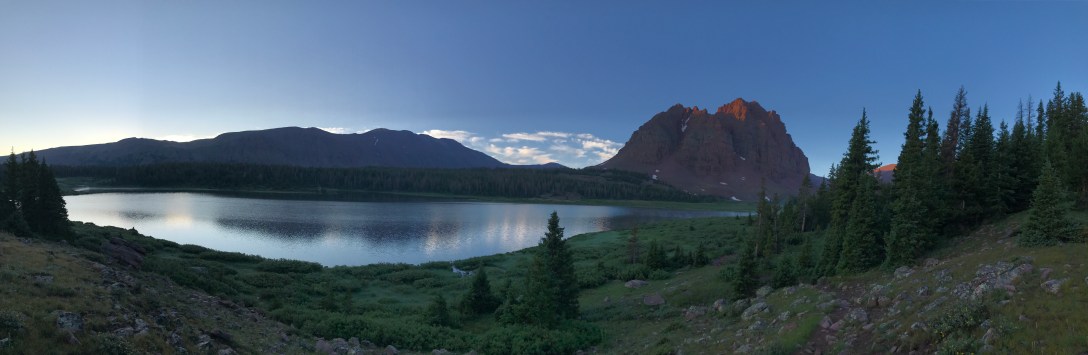
I woke up the next morning around 6AM and walked down to the lake to take in the views of the sun just starting to hit Red Castle. The light was just right and it produced beautiful hues of orange and red against a blue sky. I brought my fly rod to the lake with me and got a few casts in before heading back to break camp. Saw trout surfacing in the middle of the lake, but they were too far out of my reach.
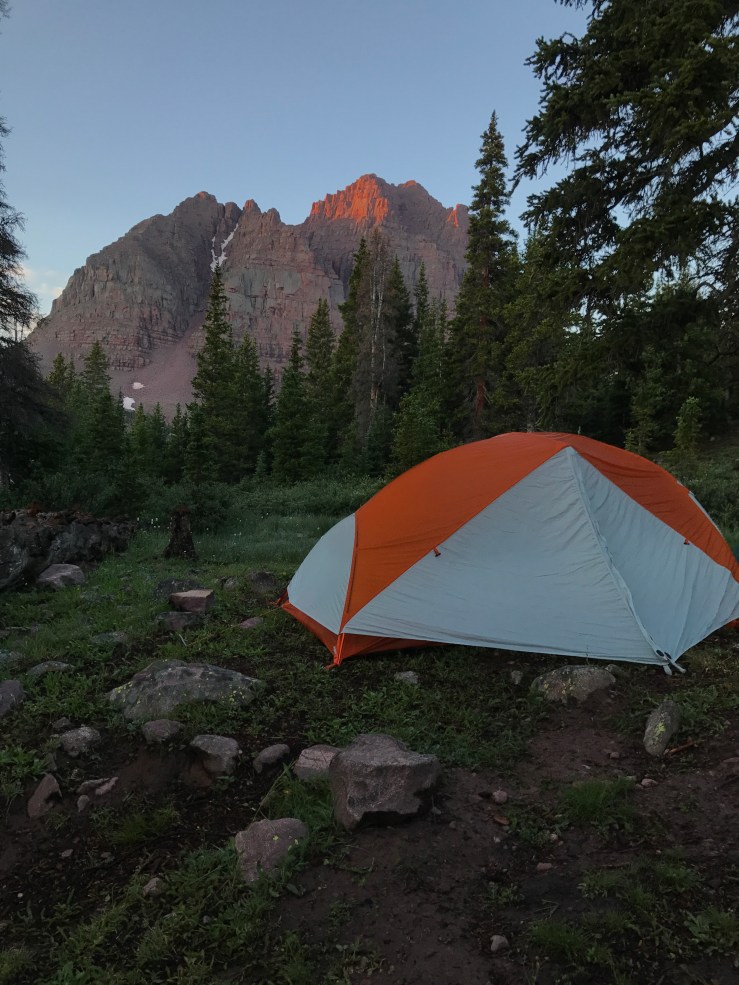
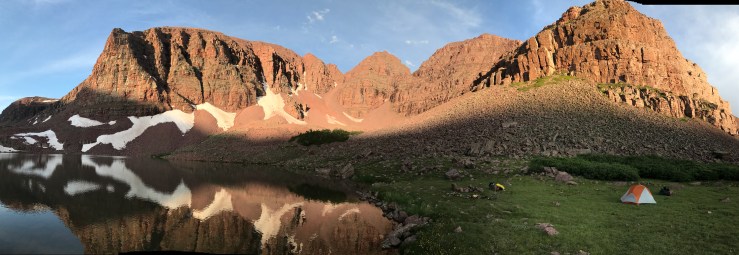
We broke camp at 8AM and headed towards our day 2 destination, a lake I’ll leave unnamed for its own sake. It was a 5 mile hike and as there are no trails that lead to the lake, we relied heavily on our maps. For the last mile and a half we had to forgo the trail and trust our directional instincts. Eventually, we climbed the last ridge and were able to catch our first views of the lake. It’s a gorgeous, round lake surrounded by towering red rock. We spotted a flat, grassy spot on the opposite side of the lake where we would set up camp.
While setting up camp, we heard a pack of voices approaching and soon a group of 7 carrying fishing poles, mostly teenagers, came walking down the hill. We talked with the eldest of the group and found out that they came in with 6 horses and have a large camp about a half mile away. He’d fished the lake many times and when I asked what species were found in the lake he simply replied, “Tiger trout, that’s it. You won’t catch many, but they’re all beasts. My brother pulled a 22 incher out of here last year, had a hook jaw and everything.” This got me pretty excited, as tiger trout are a relatively rare species; a hybrid between a male brook trout and a female brown trout. Tigers are sterile, which means this lake is invariably sustained through stocking; likely by airplane. This made me question how the lake almost only contained trophy tigers and what they were doing in a lake so deep into the Utah backcountry.
During the day, the trout hang in the deep, cooler parts of the lake and can almost only be taken with spoons and spinning gear; fly fisherman would have a real hard time catching one. We decided to take a 6 mile day hike up to Wilson Peak and waited until evening to fish when the trout would be returning to more shallow water to feed.
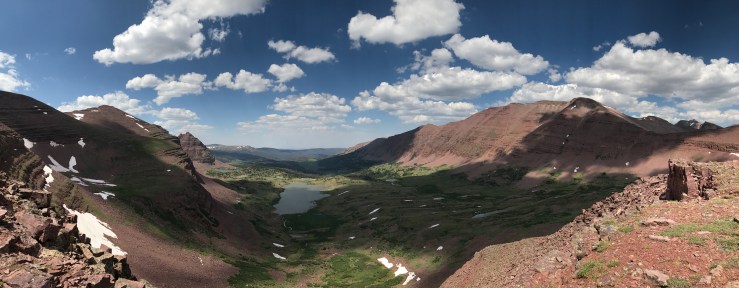
By the time we returned from the day hike, the other fishing group was just leaving the lake. A young boy was carrying a net sagging from the weight of two very nice tiger trout. These people were quite charitable and soon started offering us things. First, they insisted that we joined them for a dinner of trout, turkey legs, and Dutch oven taters (our first thought was, we eating good tonight boys!) Next they told me I wouldn’t have much luck fly fishing and left us all of their spinning tackle to use. That was pretty nice of them, but I was bent on catching a tiger on the fly.
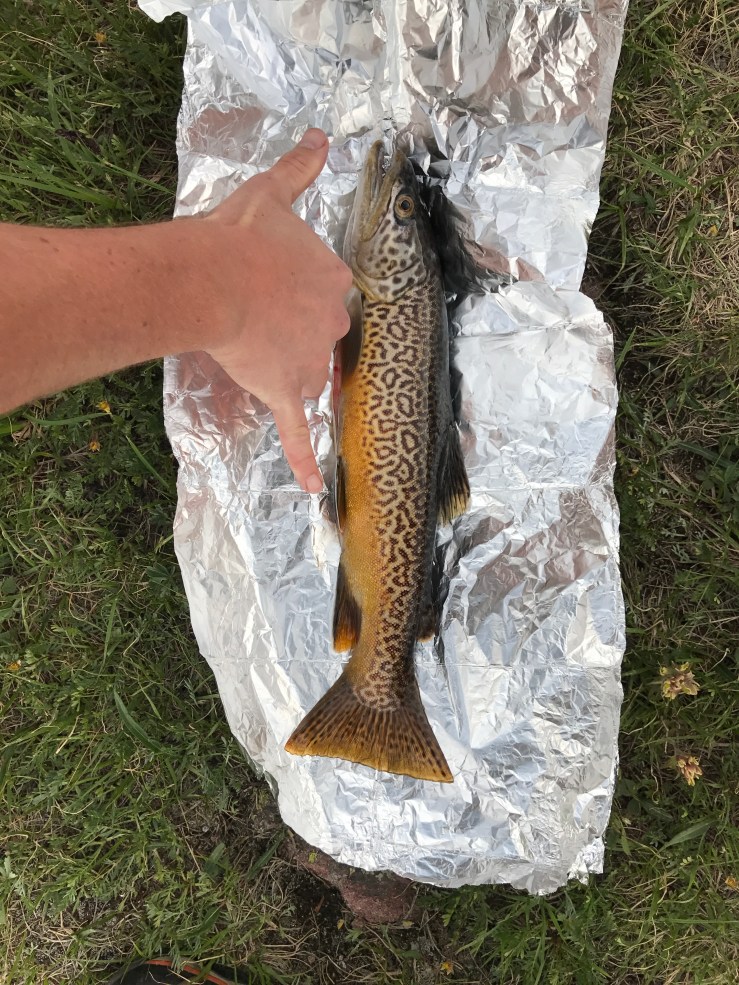
I set Carson up with my back-up fly rod, he’d only been fly fishing once before, a long time ago, but he was able to get the casting down real quick and soon was throwing some nice loops. It wasn’t long before I hear a fish splash from the other side of the lake and he shouts FISH ON! I ran over to assist and by the time I got there, he had landed a super nice tiger trout with fantastic coloration. I got my fillet knife out and cleaned it near shore. Even after removing the vitals, this fish still had life in it and thrashed out of my hands! It swam around the shore without its own heart for a bit as if it were possessed, I’ve never seen anything like that happen before. I regained control of the trout and wrapped it in tinfoil to be cooked at the dinner feast with the neighboring party.
Back to fishing and I was getting a bit frustrated from missing about 4 clean surface strikes. I thought it was my hook set timing, but no matter how much I experimented I could never connect with a fish. It took my buddy jokingly saying, “It’s almost like you’re not using a real hook!” for me to examine my fly and realize that indeed the hook and barb were sheared right off. Never in my life of fishing has this happened to me before, and to be honest I’m still quite perplexed.
By this time the sun was setting and it was time for us to make our way over to the feast. I wish I would’ve taken pictures of their camp, but it’s almost as if they had set up their own little village. They came in by horseback and had been camping for 5 days there by the time we arrived. We ate a nice meal and sat by the campfire sharing stories.
The topic of RV camping came up and an older man says, “Yeah, I never understood the point of camping in an RV. If you’re gonna go camping you’d better be roughing it!”
To which I jokingly replied, “Yeah man, you guys sure are roughing it out here.”
Exhausted from the day, we made our way back to camp by flashlight.
I woke up the next morning with the sole mission of catching a tiger trout before we broke camp and headed out. Once again the morning view of the sun just starting to hit the red rock were some of the prettiest I’d seen during my time in Utah. The lake was glass calm and the shoreline was full of surfacing trout dining on the last remaining caddis flies from the previous night’s hatch. It only took about 5 minutes before I was hooked into one; this time for real. It put up a real nice fight and I hollered for Carson who came out of the tent to net it for me. The trout was doubled over to fit in the net, and when laid flat, extended past the net’s width. I didn’t take a measurement, but this was without a doubt the biggest trout I have caught to date and my first ever tiger.
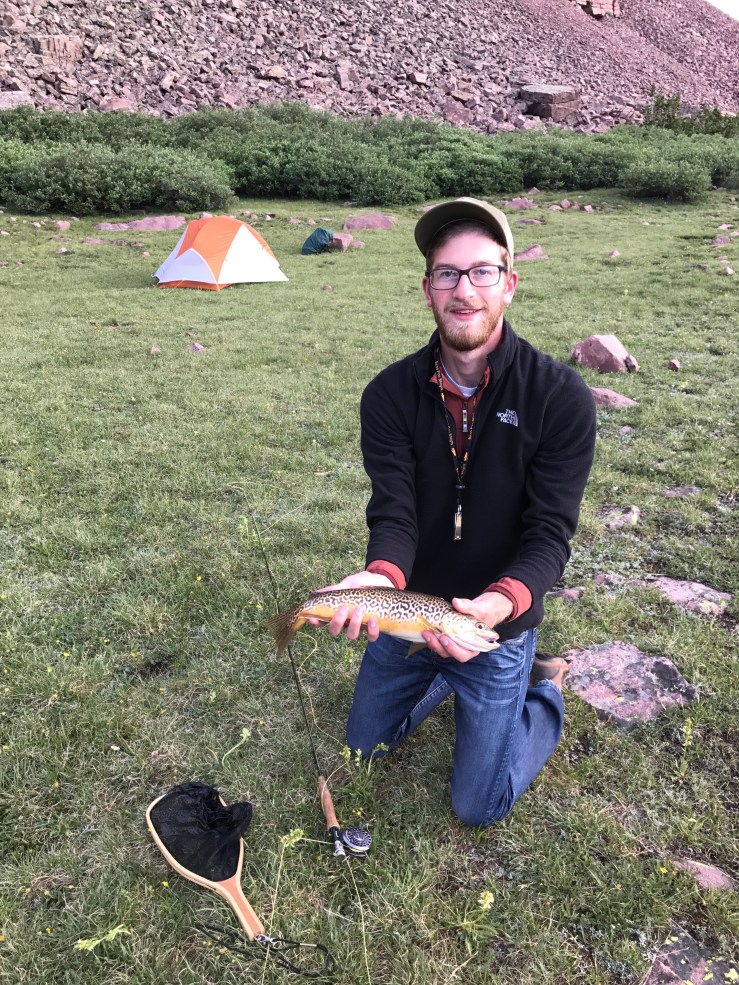
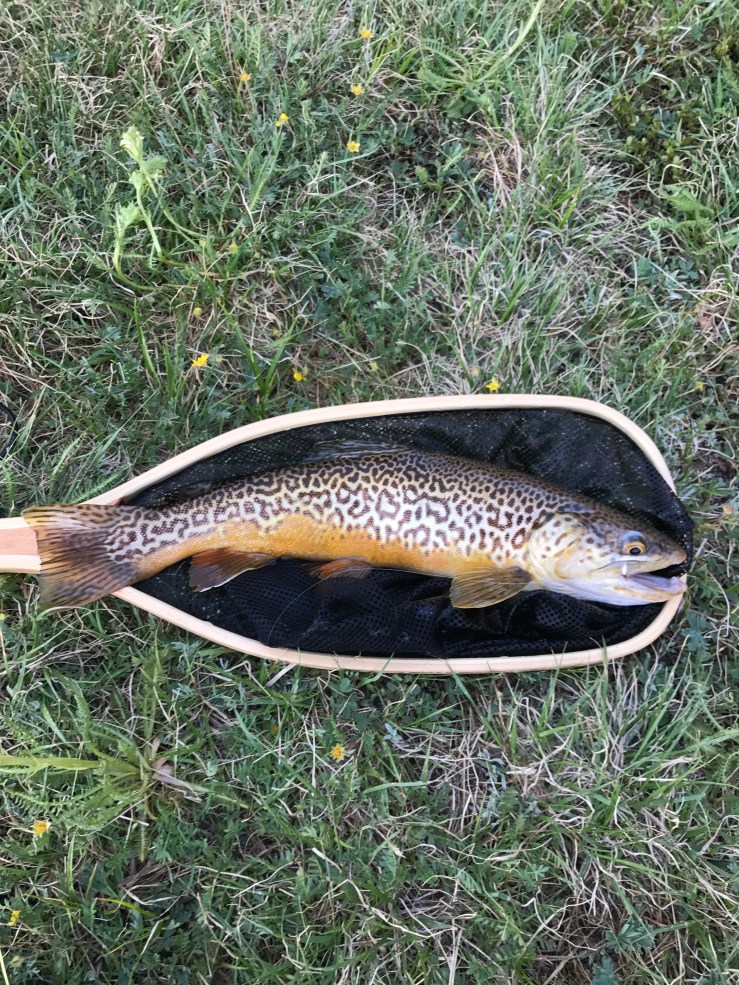
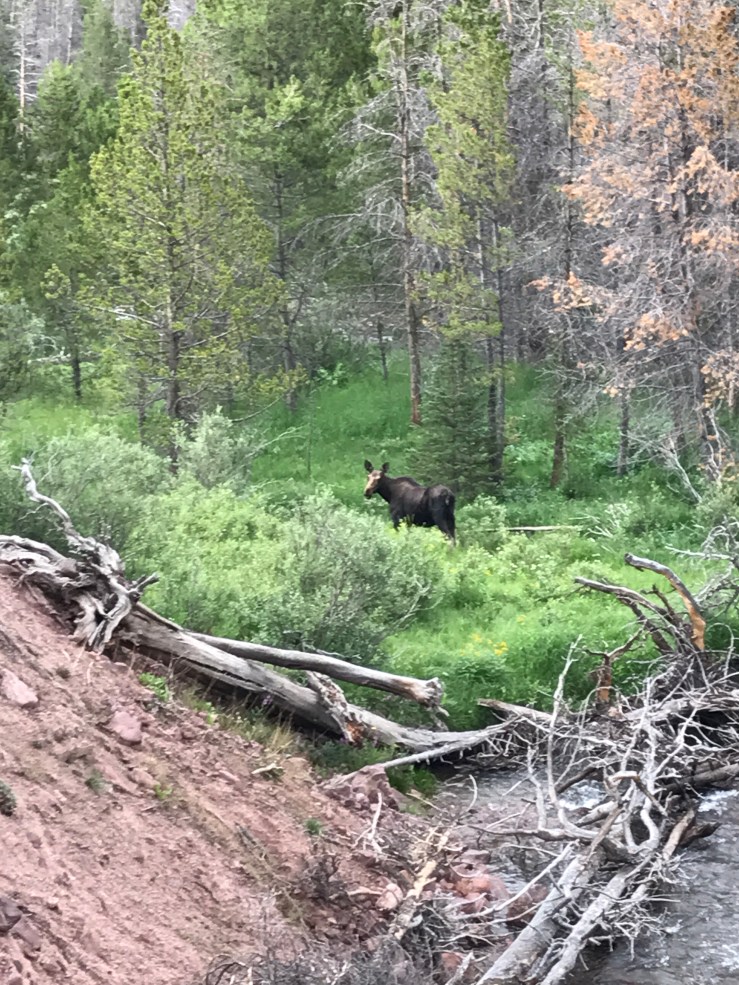
After releasing and photographing, we ate our normal breakfast of 2 Clif bars and broke camp. The hike back was a long and physically demanding 12 miles. We both were starting to cramp up and fatigue real hard about halfway through, but we soldiered on and completed the hike out in 4 and a half hours. About a half mile from completing the hike, I looked down into the ravine below and spotted a moose foraging near the river. I was quite excited, as I’ve never seen a wild one before and we were quite fortunate that we didn’t have to cross paths with it on the trial.
All in all, we hiked 32 miles in a span of 37 hours. It’s taken a toll on my energy levels this week, but I wouldn’t trade the experiences for the world. I hope I have the fortune to return to the High Uintas Wilderness and do it all over again someday.
Discover more from The Path Less Fly Fished
Subscribe to get the latest posts sent to your email.

 The Path Less Fly Fished
Once again, a great story and an amazing experience with beautiful photos! You know me… Your ending brought tears to my eyes! So glad you have this blog going to document your amazing summer!
LikeLike
[…] of bumpy forestry roads. While this stream was very close in proximity to the trailhead of my Uinta backpacking trip, it did not require 31 miles of hiking to reach. On the contrary, it intersected a forestry road […]
LikeLike