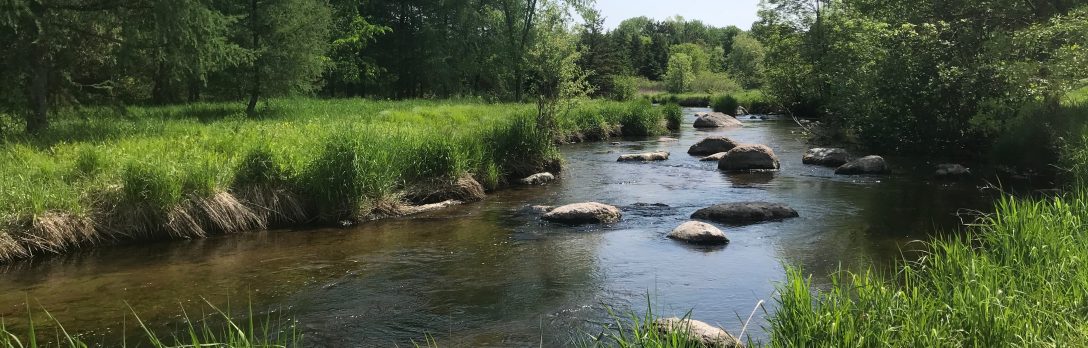
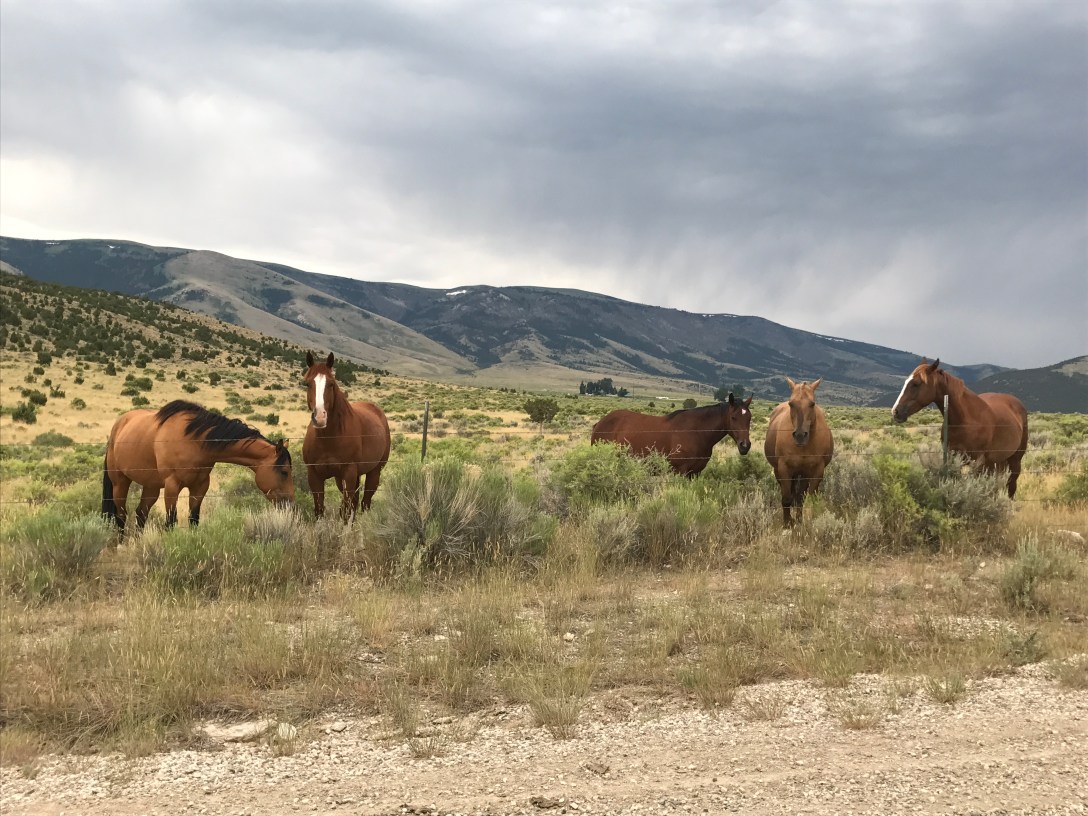
This is the first installment of a 4 part series on the pursuit of Utah’s native cutthroat trout. I will be writing these a bit out of order from the succession of what order I actually pursued them in, but that makes little difference. This first post is about what’s generally regarded as the hardest of the 4 species to catch and that’s the Yellowstone cutthroat trout. I hope you enjoy.
This weekend I decided to make the 3 hour trip to the Raft River mountain range in search of a trout species that’s been on many conservation watch lists over the past 20 years; the Yellowstone cutthroat trout. Most prevalent inside the borders of its namesake national park, these cutthroat have suffered a severe degradation in numbers over the past two decades. Mining, logging, and competition in their native waters with alien trout species such as lake, brook, and rainbow trout has seen their environmental status drop to near critical. Wyoming is their last real strong hold. Because of their presence in the Snake River drainage, they can be found within Utah borders in the northwestern corner. Even within this mountain range, they are quite rare.
Pre-trip research consisted of multiple different sources. The first came directly from the Cutthroat Slam website, which lists 3 different creeks where Yellowstone cutts are rumored to be present. Because there is very little to no published info on the Raft River mountains, your best bet is to locate one of the 138 people who have actually caught a Yellowstone cutthroat here. I was able to track down a guy on Instagram who had been there within the past year (with no success), he assisted with GPS coordinates to a couple of access points. My last source came from a guy named Wade who manages the local fly shop in Ogden. He hadn’t been there before but knew of guys who had. We scoured over a few topographical and Google maps to devise myself a plan of action.
“Yeah, I started carrying a pistol on me when I go up into these mountain ranges. Never can be too sure what you might come across.”
I asked about bears and he says, “I’m not sure which is worse. The grizzlies will dismember you and then leave you there but the black bears will eat you alive.”
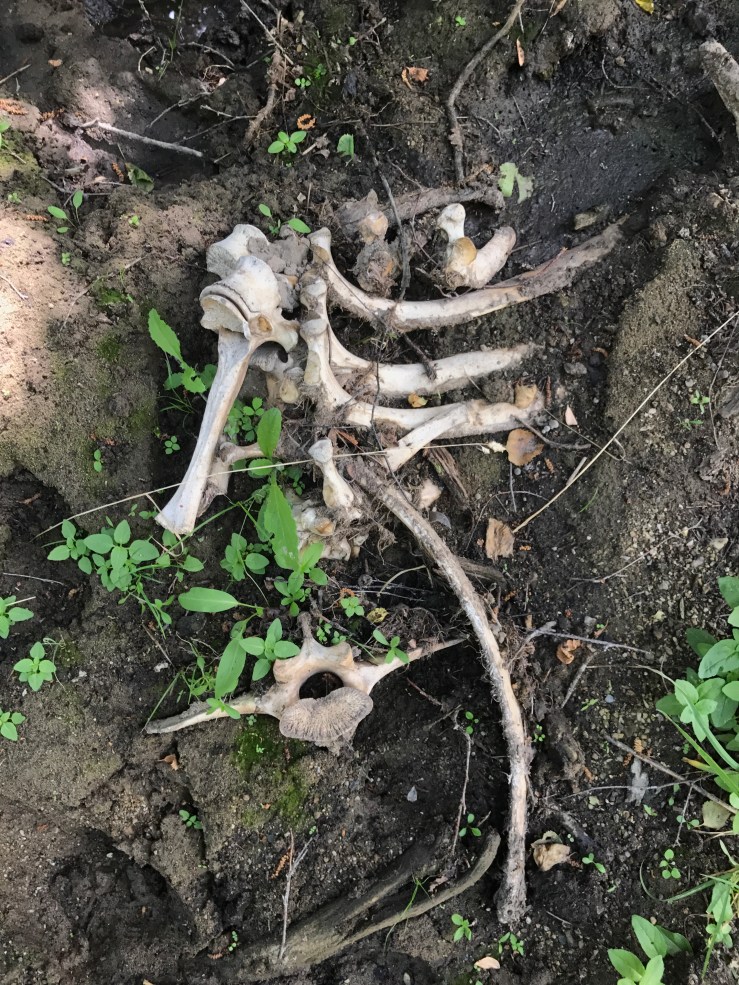
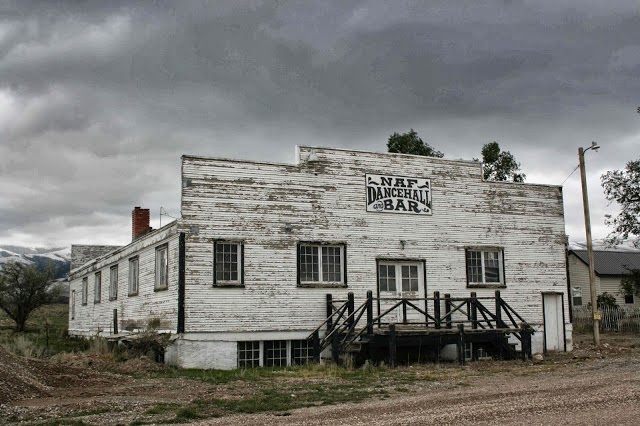
So with that graphic in mind, I packed up my gear and headed out around 8am Sunday morning. Soon after leaving the city of Ogden, you get the idea that this place is really out there. It isn’t until you reach the small town of Snowville, Utah (population 167) that this becomes a reality. The sign in town reads “No Services: Next 100+ Miles” and they really mean it. After that, you’re on your own. I topped off the gas tank at a pretty hopping truck stop for safe measure. The next establishment you come across isn’t until crossing the Idaho border, where you pass through the town of Naf. Don’t blink or you’ll surely miss it. Estimates put the population around 5 on a crowded holiday weekend. The town consists of a cluster of 3 or 4 broken down houses. The Naf Dancehall Bar in particular piqued my interest (see pic).
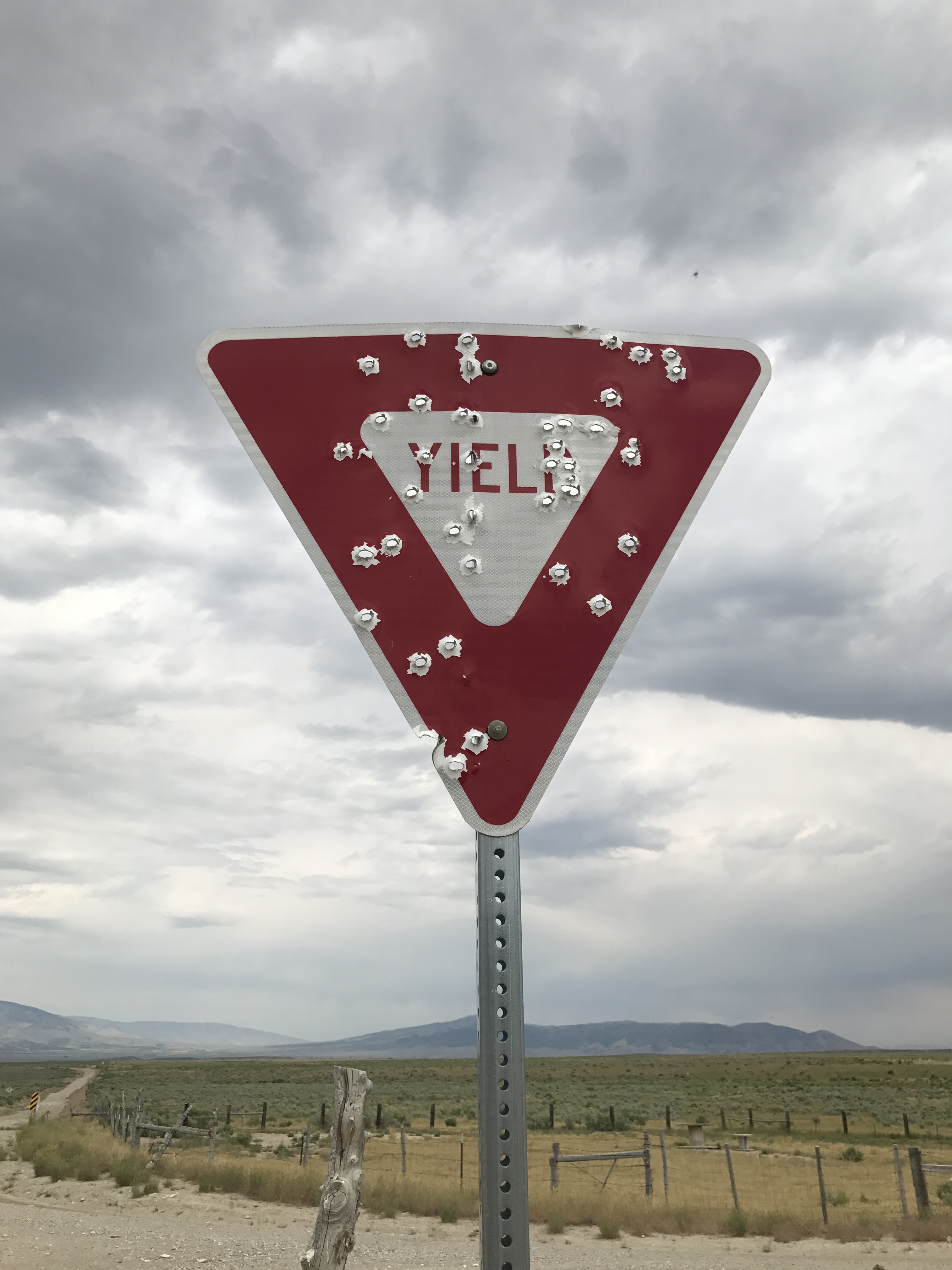
Road signs that looked like swiss cheese from target practice were pretty much par for the course. This is some inhospitable land that man had tried and failed at taming. Old, broken down farming equipment and crumbling log cabins were evidence of this.
I continued on to an old forestry road (FRs as they’re marked) and entered into the Sawtooth National Forest. The first creek I encountered was Onemile Creek. It’s hard to picture the “creeks” in this mountain range, but most are not much more than a trickle than can be easily jumped over or straddled..or overlooked entirely for that matter. How they are able to sustain a trout population at all still remains a mystery to me. I was only able to access about 25 yards of this creek before being stopped by a double barbed wire fence with a no trespassing sign complete with customary bullet holes. I decided to move on.
The next creek, George Creek was supposed to be my best bet. Yet I failed to find a stretch that I could access without trespassing. The view of the creek from behind the barbed wire fence definitely looked fishable. Possibly could have found a way in with a bit more research but I was under the assumption that national forest land was public property? Guess that’s no longer the case.
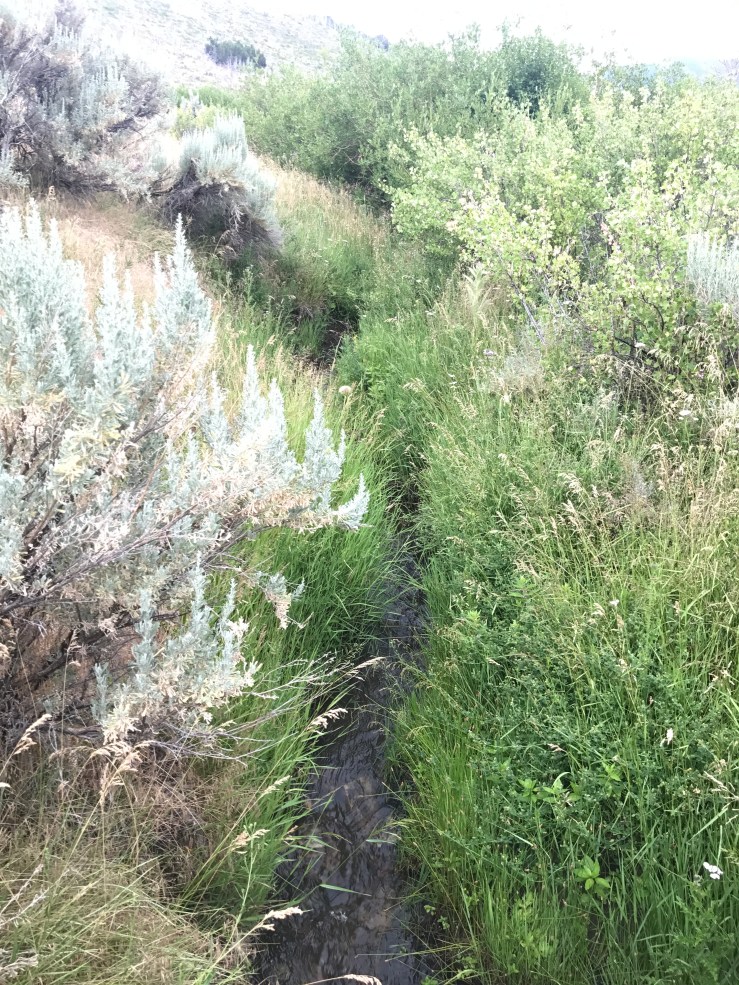
A creek that was accessible to the public was Wildcat Creek. This was the smallest creek I fished, roughly 1 foot across in most places, yet it was the only in which I saw a Yellowstone cutthroat. One foul move and it bolted downstream of me. Casting is impossible on streams this size, rather you have to “dap” with only a small section of tippet exposed through your last guide hole. I dapped about 50 yards upstream before heavy brush stopped me from going further. I returned to the car and traveled upstream, only to find that the remainder of the stream was also enveloped in this impenetrable canopy.
This exhausted all of my pre-planned options and I was forced to do a bit of freestyling (bluelining as its commonly referred to) The strategy being to look at a map and head to the nearest blue squiggly line you see. PRO TIP is to download an offline map for the area you plan on fishing/hiking on the Google Maps app. This allows you to still use navigation features without service. Without it, I have no clue how I would have found my way out on the maze of single laned forestry roads.
My blue lining effort took me to a slightly larger creek called Johnson creek. While the flows were larger, it required a lot of bushwhacking and crawling under foliage (pretty difficult feat with a 9 ft. fly rod) to reach the stream. I fished a good number of pools and anywhere the flow created a back current or eddy with no luck. I drove further upstream in hopes that the stream would open up but was stopped when the path forward required you to drive through the stream. Getting stuck probably meant hiking for help in an area where there are no services within 100 miles. At this point I threw the white flag of defeat and made the 3 hour trek back to Ogden.

Was quite dejected on the ride back, but had it not been for this challenge, I would have no reason to be exploring this unique part of the country only ever visited by a handful of people. Perhaps I will make a return trip at some point in my next 3 weeks in the Beehive state.
Discover more from The Path Less Fly Fished
Subscribe to get the latest posts sent to your email.

 The Path Less Fly Fished
Wow! What an adventure! I can’t wait to read more of your submissions!
LikeLike
Grandson. It takes courage to wonder unknown country, bullet ridden signs and the like, in search for your passion; fish. It also takes a great author to enable a reader to feel and participate in your adventure; I could actually smell the overgrown brush and little bits of water/creeks!! Write on Grandson – I want to smell fish!! Love you, Grandma B
LikeLike
Wow! You are quite the adventurer!!
And you are doing this ALONE? I’m anxious to hear about your adventures at The Naf Dancehall Bar when you go back 🙂
Looking forward to hearing more!!!
LikeLike